Best Supplier Management Software in 2026 (Reviewed & Compared)
The best supplier management software in 2026 covers three jobs that rarely live in one tool: holding supplier information, scoring supplier performance, and catching contract renewals before they auto-renew. This comparison covers ten options on all three.

Key Takeaways (TL;DR)
The Best Overall Supplier Management Software: We built Noxus to resolve supplier operations end-to-end across the exact systems you already run, including SAP and Guidewire, instead of just centralising supplier data for someone to act on manually. It closes the gap between tracking supplier performance and actually acting on it.
Why Do You Need It?: Supplier information scattered across spreadsheets, email threads and disconnected systems makes it nearly impossible to track performance, catch contract renewals on time, or spot risk before it becomes a problem.
Who It's For?: Procurement, vendor management and operations leaders at mid-market and enterprise companies managing dozens or hundreds of supplier relationships across legacy ERPs and disconnected systems.
How to Choose the Right One?: Look at how deep the tool integrates with your existing ERP, whether it tracks contract renewal dates automatically, and whether pricing scales with your supplier volume rather than your headcount.
Expected Price: Noxus runs on a monthly platform licence with consumption-based pricing. There is no per-seat, per-supplier or token-based billing, so cost scales with the supplier operations resolved rather than with the size of the vendor base. A custom quote follows a scoping call, and each use case after the first deploys at a lower incremental cost.
Table of Contents
Top Supplier Management Software in 2026 at a Glance
Tool | Best For | Key Features | Pricing |
Noxus | Enterprises resolving supplier operations across legacy ERPs like SAP and Guidewire | End-to-end case resolution, 400+ system connectors, full audit trail | Consumption-based, custom quote |
Carro | Retailers and marketplaces managing large networks of selling partners | Supplier onboarding, order routing, real-time inventory sync | 5% of sales (Standard); Growth quoted |
Coupa | Large enterprises needing a full source-to-pay suite | Spend analysis, supplier management, contract lifecycle tools | No public pricing; modular, quoted per deal |
Precoro | Mid-market teams wanting structured procure-to-pay | Purchase order automation, supplier catalogues, approval flows | From $499/month; Enterprise custom |
Payhawk | Finance teams needing modular spend and supplier management | Cards & expenses, procure-to-pay module, usage-based add-ons | Custom, modular pricing |
Basware | Large enterprises automating AP alongside supplier data | AP automation, e-invoicing, supplier information management | Custom subscription pricing |
Medius | Mid-market and enterprise teams needing supplier performance tracking | Supplier onboarding, performance scoring, invoice automation | Custom quote based on setup |
Kissflow | Teams wanting a flexible, low-code supplier workflow platform | Custom workflow builder, supplier scorecards, approval automation | Custom enterprise pricing |
Jaggaer | Large enterprises with complex sourcing needs | Strategic sourcing, supplier risk management, contract management | Custom enterprise pricing |
Procurify | Organisations needing spend visibility across departments | Purchase requests, budget management, vendor catalogues | Custom, quote-based |
What Are Supplier Management Software?
Supplier management software is a system that centralises everything a business needs to know about the vendors it works with: contact details, contracts, performance history, risk scores and renewal dates.
Instead of chasing this information across spreadsheets, inboxes and someone's memory, a supplier management platform gives procurement teams one place to see the full picture of every supplier relationship.
The category covers a wide range of tools. Some are lightweight supplier information management software focused purely on organising vendor data.
Others are full supplier relationship management platforms that combine sourcing, contract management, performance scoring and payment automation in one suite.
What ties them together is the goal of turning scattered vendor data into something procurement teams can actually act on: renewing the right contracts on time, flagging underperforming suppliers early - and reducing the risk that comes from working with vendors nobody is actively tracking.
Why Do You Need Supplier Management Software?
Manual supplier tracking breaks down fast once a business works with more than a handful of vendors. Contract renewal dates get missed, performance issues go unnoticed until they cause a real problem, and supplier information ends up duplicated across different spreadsheets that nobody keeps in sync.
Supplier performance management software fixes this by giving teams a single, accurate view of how every vendor is actually performing: on-time delivery rates, quality scores and service level compliance, tracked automatically instead of pieced together after the fact.
There is a real cost to getting this wrong. Poor supplier visibility is consistently cited as a leading driver of supply chain disruption, and missed contract renewals often mean businesses either lose favourable terms or get auto-renewed into agreements they meant to renegotiate.
Supplier relationship management tools remove that risk.
They flag renewals before deadlines pass, surface performance issues early, and keep every stakeholder working from the same supplier record instead of five different versions of the truth.
Who Needs Supplier Relationship Management Tools?
Different teams rely on supplier relationship management tools for different reasons, from day-to-day vendor tracking to formal compliance sign-off.
Here is a closer look at who benefits most, and why:
1. Procurement and Vendor Management Leaders
Procurement leaders need a single source of truth on every supplier relationship, from onboarding through to contract renewal.
Supplier relationship management software gives them that visibility without relying on someone manually updating a spreadsheet every week.
2. Operations Teams Managing Multiple Vendors
Operations teams juggling dozens of active suppliers need a way to track performance and flag issues before they escalate into service failures.
A supplier management platform brings that tracking into one place instead of scattering it across emails and call notes.
3. IT and Enterprise Architecture Leaders
IT leaders care about how a supplier information management software choice fits into existing systems like SAP or Guidewire, without triggering a costly migration project.
They want a tool that connects to what is already in place, not one that demands the business rebuild its tech stack first.
4. Startups and Early-Stage Companies
Startups and early-stage companies working with a growing list of vendors need basic supplier oversight without hiring a dedicated procurement function.
Lightweight supplier management tools let a small team track contracts and renewal dates without building a formal process from scratch.
5. Compliance and Risk Officers
Compliance and risk teams need documented proof that supplier risk is being monitored, not assumed.
Supplier performance management tools that log every score, review and renewal decision make audits faster and reduce exposure when a vendor relationship goes wrong.
Best Supplier Management Software: In-Depth Review & Comparison
1. Noxus
Overview
We built Noxus as an AI operations platform that resolves supplier and procurement work end-to-end, across the exact legacy systems your team already runs: SAP, Guidewire, ServiceNow and proprietary in-house platforms included.
Most supplier management software centralises vendor data and leaves the follow-up to a person. Noxus goes a step further: your rules execute, AI just interprets. We read the performance signals, apply the scoring and renewal rules mapped directly from your own policies, and write the outcome back into your ERP or CRM under a full audit trail.
No AI model decides whether to escalate a supplier or trigger a renewal review. Noxus goes a step further: we track contract renewal dates, flag underperforming suppliers based on your own scoring rules, and write the outcome back into your ERP or CRM under a full audit trail.
Getting AI into production inside an enterprise is 90% infrastructure and integration, 10% AI, and that gap is exactly what we close. We do not ask you to modernise your stack before automating supplier operations.
Every decision we make is traceable, every action is replayable, and nothing gets invented along the way. That matters most for regulated, multi-vendor supply chains.
Ideal For
Procurement leaders replacing manual supplier tracking across 3-7 disconnected systems
IT and architecture leaders who need a supplier management platform that works with SAP or Guidewire without a migration project
Enterprises in regulated industries that require a complete audit trail on every supplier decision
Mid-market companies scaling vendor volume faster than their procurement headcount
Top Features
End-to-end resolution of supplier onboarding, contract renewal tracking and performance exception handling, not just data storage
Over 400 native connectors, including SAP ECC, Oracle, Guidewire, ServiceNow, SharePoint, iSeries, COBOL-era cores, and Ariba and Coupa supplier portals, with no API-first prerequisite
Confidence-based human escalation, so low-confidence supplier risk cases route to a person while routine ones resolve automatically
Full audit trail with complete replayability for every supplier-related action, useful for compliance and vendor risk sign-off
Flexible deployment across SaaS, private VPC or air-gapped on-premises, certified against SOC 2 Type II, ISO 27001, GDPR Article 28 and HIPAA
Why We Stand Out?
Most supplier relationship management tools were built for modern, API-first stacks. We built ours for the enterprise reality where supplier data touches SAP ECC, a CRM, a document store and a compliance system, none of which were designed to talk to each other.
We do not ask clients to modernise their stack before automating supplier operations; we operate inside the systems they already run.
Clients using Noxus for operations automation have seen results like 3x ROI within 45 days of going live, with AI precision above 95% on real production data - figures drawn from deployments including Santander in banking, CUF/José de Mello in healthcare, and Jerónimo Martins in retail.
Pros
Resolves supplier operations end-to-end instead of just centralising data for someone else to act on
Works natively with legacy ERPs like SAP and Guidewire, with no re-platforming required
Consumption-based pricing that scales with volume, not per-seat licensing
Full audit trail and replayability built in, not bolted on
Cons
Not designed for teams that only need a lightweight vendor contact directory
Best suited to organisations with genuine multi-system complexity, rather than a handful of simple supplier relationships
Requires a scoping conversation before pricing is confirmed, so there is no self-serve checkout
Pricing
We run Noxus on a monthly platform licence with consumption-based pricing that scales with operational volume and deployment complexity. There is no per-seat pricing, no per-task billing and no token-based pricing.
First engagements typically include deployment engineering alongside the licence. Every use case after that runs at a much lower incremental cost once the infrastructure is live.
Pricing is confirmed after a scoping conversation.
Final Verdict
If your supplier operations span multiple legacy systems, and manual performance tracking or renewal management is eating your team's time, Noxus is built specifically for that problem.
It is the supplier management software choice for teams that need supplier cases resolved, not just logged.
2. Carro

Overview
Carro approaches supplier management from the commercial side rather than the procurement side. It is a dropshipping and marketplace platform for retailers who sell products their suppliers own, which makes the supplier relationship a revenue channel rather than a cost line.
The platform centralises supplier onboarding, catalogue ingestion, pricing rules, inventory syncing and compliance across a distributed partner base. Orders route automatically to the supplier holding the item, fulfilment performance is tracked against agreed standards, and payouts settle without manual reconciliation.
That is a narrower definition of supplier management than a source-to-pay suite covers. There is no sourcing event, no RFx, no three-way invoice match. What Carro does instead is run the operational relationship with hundreds or thousands of selling partners, which is the part traditional procurement tools handle least well.
Carro now powers Modern Dropship, and connects through Shopify, Magento, WooCommerce and BigCommerce, with EDI, SFTP, API and CSV for partners on older systems.
Ideal For
Retailers and marketplaces managing large numbers of brand and distributor relationships
Operations teams onboarding suppliers who lack technical resource of their own
Merchandising and category teams expanding assortment without inventory commitment
Businesses that need supplier performance tracked against fulfilment SLAs rather than payment terms
Brands managing their own retail distribution partners and payout terms
Top Features
Structured supplier onboarding through predefined workflows, with partners choosing the integration method that suits them
Centralised catalogue ingestion, pricing rules and compliance across the full partner base
Inventory management software that keeps stock and availability accurate across suppliers you do not control
Automated order routing with fulfilment tracking and SLA monitoring per supplier
Automated supplier payouts and settlement reconciliation
Hand-matched supplier introductions based on category fit and price point
Why They Stand Out?
Carro is one of the stronger options for the operational half of supplier management, the part that runs daily rather than quarterly. Onboarding, catalogue accuracy, order routing, fulfilment performance and payouts are automated end to end, and partners can join through EDI, SFTP, API or CSV depending on what they can support.
The hands-on onboarding is a genuine differentiator. Supplier programmes usually stall on partners who have no IT resource, and Carro's team works with those brands directly rather than handing them documentation. That is why programmes go live in weeks rather than months.
Pros
Automates supplier onboarding, order routing, fulfilment tracking and payouts in one platform
Partners can integrate through EDI, SFTP, API or CSV, so technical maturity is not a barrier
Composable, sitting alongside existing payments, shipping, ERP and accounting systems
Retailers approve each supplier and set pricing, margin and performance standards
Removes inventory risk from assortment growth entirely
Cons
Not a source-to-pay suite: no sourcing events, RFx, contract lifecycle management or invoice matching
Built around US retail, USD transactions and Stripe-supported countries
Percentage-of-sales pricing suits revenue-generating supplier relationships, not indirect spend
Aimed at selling partners rather than the vendors supplying your own operations
Pricing
The Standard plan is 5% of sales through the platform and includes the Shopify, Magento, BigCommerce and WooCommerce integrations plus end-to-end dropship automation, without a support plan. The Growth plan adds autonomous merchandising, priority support and the hand-matched supplier network, and is quoted rather than listed.
All plans include unlimited transactions and automated payments and billing. The commercial model is a share of revenue rather than a licence, so it is a different budget conversation from the procurement platforms elsewhere on this list.
Final Verdict
Carro is the right choice when your suppliers are selling partners rather than cost centres, and when the work is keeping hundreds of them accurate, stocked and paid.
It is not a replacement for a procurement suite. If you need sourcing events, contract lifecycle management, budget controls or three-way invoice matching, look at the source-to-pay platforms on this list instead.
3. Coupa
Overview
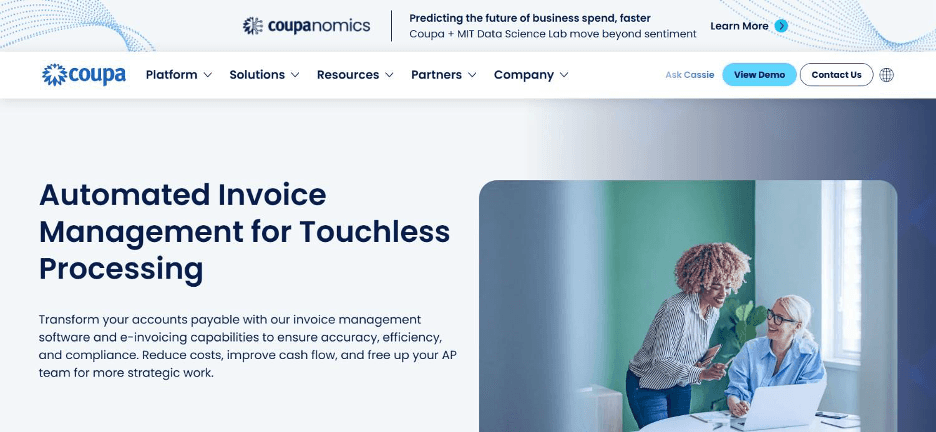
Coupa is a large-scale source-to-pay platform covering spend analysis, supplier management, contract lifecycle management and procure-to-pay in one suite.
It is built for large enterprises that need visibility across the entire supplier lifecycle, from onboarding and sourcing through to invoice payment.
Coupa's positioning centres on total spend management: giving procurement leaders a single supplier management platform to track, analyse and control every vendor relationship alongside the money flowing through it.
This depth comes with more implementation complexity than lighter supplier management tools, which makes Coupa a better fit for organisations with dedicated procurement teams and the budget to match its enterprise scope.
Ideal For
Large enterprises needing a unified source-to-pay platform
Procurement teams managing complex supplier relationships and contracts
Organisations that need detailed supplier and spend analytics across business units
Top Features
Supplier management tools covering onboarding, risk scoring and performance tracking
Spend analysis dashboards that surface savings opportunities across supplier categories
Contract lifecycle management tied directly to supplier renewal timelines
Community-driven benchmarking data from Coupa's supplier network
Why They Stand Out?
Coupa's breadth across sourcing, contracts and supplier data makes it one of the more complete supplier relationship management platforms on the market for large organisations.
Few competitors match its combination of supplier visibility and network scale.
Pros
Comprehensive source-to-pay coverage in a single suite
Strong supplier analytics and benchmarking
Large supplier network that simplifies vendor onboarding
Enterprise-grade compliance and audit features
Cons
Implementation timelines and cost are significant compared to lighter tools
Overkill for smaller teams managing a handful of supplier relationships
Steeper learning curve for procurement staff new to the platform
Pricing
Coupa does not publish pricing for its buyer-side platform. Licensing is modular and quoted per deal against the modules you license, transaction volume, user count and deployment complexity, with implementation costed separately. The figures that circulate publicly (Verified at $549 a year, Premium Support from $499, Advanced at $4,800) belong to the Coupa Supplier Portal and are optional subscriptions for suppliers selling into Coupa customers, not the cost of running Coupa yourself. Basic Supplier Portal access stays free for suppliers.
Final Verdict
Coupa suits large enterprises that need full source-to-pay coverage and have the budget and team to run it.
Smaller companies are better served by lighter supplier management software with a faster time to value.
4. Precoro
Overview
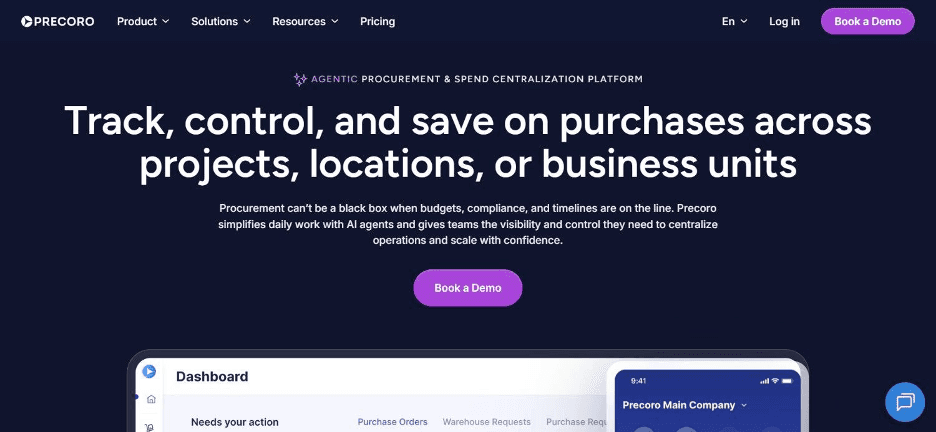
Precoro is a procure-to-pay platform that includes supplier catalogue management, purchase order automation and approval workflows built for mid-market teams.
It sits between lightweight vendor trackers and full enterprise suites, giving companies structured supplier management tools without the implementation weight of a platform like Coupa or Jaggaer.
Precoro's core strength is making supplier data, purchase orders and approvals visible in one place, so procurement teams are not chasing spreadsheets to see which vendors are active and which contracts need attention.
It integrates with common accounting tools, which makes it a practical fit for companies that have outgrown manual vendor tracking but do not need a full enterprise procurement stack yet.
Ideal For
Mid-market companies replacing spreadsheet-based supplier tracking
Procurement teams that need supplier catalogues tied directly to purchase orders
Organisations wanting procure-to-pay structure without enterprise-level complexity
Top Features
Supplier and vendor catalogue management for repeat purchases
Purchase order automation with configurable approval chains
Real-time budget tracking against departmental spend limits
Integrations with common accounting and ERP tools
Why They Stand Out?
Precoro's positioning as a mid-market procure-to-pay tool gives it a cleaner implementation path than the largest enterprise suites, while still offering more supplier management structure than general spreadsheets or point tools.
It is one of the smarter choices for companies past the spreadsheet stage but not yet at enterprise scale.
Pros
Purpose-built procure-to-pay workflow with supplier catalogues included
Clear budget tracking tied to approvals
Faster implementation than large enterprise suites
Solid accounting integrations
Cons
Less depth in supplier risk management and strategic sourcing than enterprise platforms
Not built for the scale of the largest global enterprises
Automation depth is lighter than an AI-driven execution platform
Pricing
Precoro publishes two Procure-to-Pay tiers and a custom one: Core at $499 a month, Automation at $999 a month, and Enterprise quoted per organisation. AP Automation is priced separately under its own tab, so a full procure-to-pay plus AP deployment is two lines rather than one.
Final Verdict
Precoro fits mid-market teams that need structured procure-to-pay workflows with supplier catalogues built in.
Larger organisations with complex sourcing needs will likely need more depth than it offers.
5. Payhawk

Overview
Payhawk is a spend and finance operations platform that includes a procure-to-pay module alongside cards, expenses and supplier payment tracking.
Its approach is modular: businesses start with the pieces they need, like Cards & Expenses or Procure to Pay, and add supplier management capabilities as their vendor base grows.
This makes Payhawk a flexible supplier management platform for finance teams that want spend-related control and supplier oversight in the same system, rather than juggling a separate tool purely for vendor data.
It is a strong fit for companies scaling their supplier base while keeping finance and procurement data connected.
Ideal For
Finance teams that want supplier payment tracking tied to card and expense data
Mid-market companies scaling their vendor base without duplicating tools
Startups wanting modular supplier and spend management they can grow into
Top Features
Procure-to-pay module covering purchase requests and supplier payments
Cards and expense management integrated with vendor spend data
Usage-based pricing that scales with actual module adoption
Add-on modules for expanding supplier and spend oversight over time
Why They Stand Out?
Payhawk's modular structure means companies are not paying for supplier management platform features they do not yet need.
That flexibility makes it one of the more adaptable choices for growing teams that want to add capability gradually rather than committing to a full suite upfront.
Pros
Modular pricing that grows with actual usage
Combines supplier payments with card and expense management
Flexible enough for startups and scaling mid-market teams
Add-on modules avoid forcing an all-or-nothing commitment
Cons
Less depth in strategic sourcing or supplier risk scoring than dedicated SRM platforms
Best value depends on adopting multiple Payhawk modules together
Pricing is not published, which slows early-stage comparison
Pricing
Payhawk uses a custom, modular pricing model based on the products and features a business needs.
Companies can start with individual modules like Cards & Expenses or Procure to Pay, then scale through usage-based pricing and optional add-ons, so costs grow only alongside operational needs.
Final Verdict
Payhawk works well for finance-led teams that want supplier payment tracking bundled with spend management.
Companies needing deep supplier performance scoring or strategic sourcing will need a more specialised platform.
6. Basware
Overview
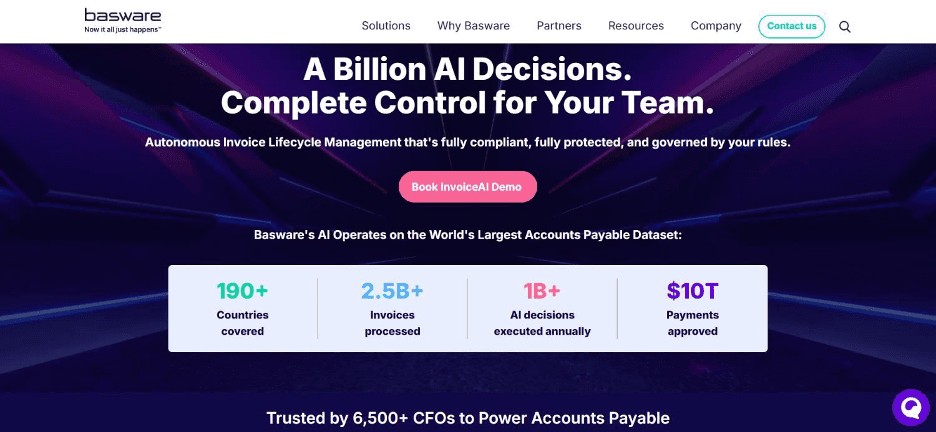
Basware is an accounts payable automation platform that includes supplier information management software as part of a broader invoice and payment workflow.
Its core strength is connecting supplier data directly to the invoicing process: e-invoicing, AP automation and supplier records all live in the same system, which reduces the gap between what procurement knows about a vendor and what finance is actually paying them.
Basware is built for large enterprises processing high volumes of invoices across multiple entities or countries.
That focus makes it a strong fit for finance-led supplier management, though it is less oriented toward the sourcing and contract negotiation side that dedicated supplier relationship management platforms cover.
Ideal For
Large enterprises processing high invoice volumes across multiple countries or entities
Finance teams that want supplier data tied directly to AP automation
Organisations prioritising e-invoicing compliance alongside supplier tracking
Top Features
E-invoicing and AP automation integrated with supplier records
Supplier information management covering onboarding and compliance data
Multi-entity, multi-country support for global finance operations
Implementation and customer success support included in deployment
Why They Stand Out?
Basware's tight integration between supplier data and AP automation sets it apart from supplier management tools that treat invoicing as a separate system.
It is one of the stronger options for finance-led organisations that see supplier management and AP as inseparable processes.
Pros
Deep AP automation tied directly to supplier records
Strong multi-country and multi-entity support
Implementation and support included to help drive adoption
Well suited to high invoice volume environments
Cons
Less focused on strategic sourcing or supplier risk scoring
Enterprise scope makes it less practical for smaller vendor bases
Custom pricing model requires a sales conversation before comparison
Pricing
Basware uses a custom subscription pricing model tailored to each organisation's size, requirements and selected AP automation or procurement modules.
Costs scale with deployment scope, while implementation, customer success and ongoing support are included to help maximise ROI as adoption expands.
Final Verdict
Basware is a strong fit for finance-led enterprises that want supplier data and AP automation working from the same system.
Companies prioritising sourcing and contract management over invoicing will find more depth elsewhere.
7. Medius
Overview
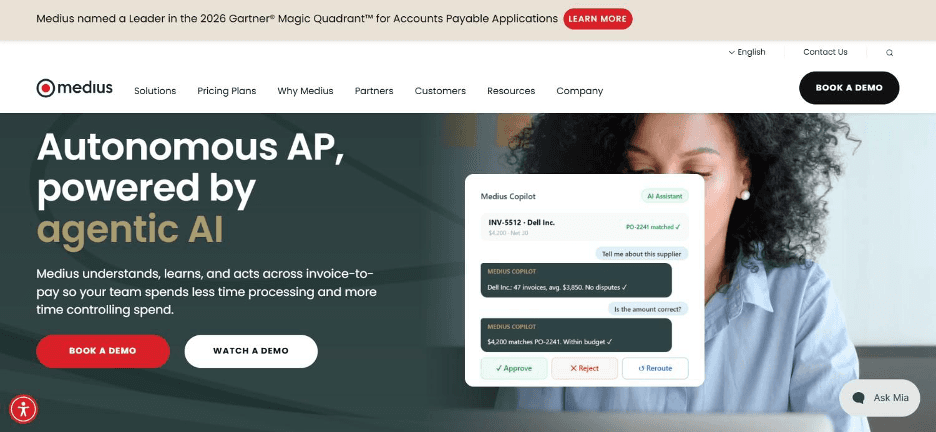
Medius offers supplier management software focused on onboarding, performance scoring and invoice automation for mid-market and enterprise procurement teams.
Its supplier management module gives teams a structured way to onboard new vendors, track performance against agreed metrics and flag issues before they affect delivery or service quality.
Medius pairs this with invoice automation, which means supplier performance data and payment history sit in the same system.
That combination is useful for procurement teams who want performance tracking without adopting a full source-to-pay suite, though it does mean evaluating pricing on a case-by-case basis since Medius does not publish rate cards.
Ideal For
Mid-market and enterprise teams that want supplier performance tracking without a full source-to-pay suite
Procurement teams needing structured supplier onboarding workflows
Organisations that want performance data and invoice history in the same system
Top Features
Supplier onboarding workflows with configurable requirements
Performance scoring against agreed delivery and quality metrics
Invoice automation linked to supplier records
Configurable integrations based on existing systems
Why They Stand Out?
Medius's focus on supplier performance scoring alongside invoice automation makes it one of the more balanced supplier performance management software options for teams that want both without enterprise-level complexity.
It suits procurement teams looking for structure rather than a sprawling suite of modules.
Pros
Clear supplier performance scoring built into the core product
Invoice automation tied directly to supplier data
Configurable to different integration and setup needs
Suited to teams past basic spreadsheet tracking
Cons
Pricing opacity makes early-stage evaluation slower
Less depth in strategic sourcing than dedicated enterprise suites
Smaller ecosystem of integrations compared to larger platforms
Pricing
Medius Supplier Management software's pricing is tailored to your setup, including scope, integrations and modules.
It is typically shared through a custom quote after a conversation with the sales team.
Final Verdict
Medius fits mid-market and enterprise teams that want structured supplier performance tracking paired with invoice automation.
Organisations needing deep strategic sourcing capability will likely need a broader platform.
8. Kissflow
Overview
Kissflow is a low-code workflow platform that procurement teams adapt into a supplier relationship management tool using custom forms, scorecards and approval automation.
Rather than offering fixed supplier management modules, Kissflow lets teams build the exact workflow they need: supplier onboarding forms, performance scorecards, renewal reminders and approval chains, all without writing code.
This flexibility makes Kissflow appealing to procurement teams whose supplier processes do not fit neatly into a rigid, pre-built system.
The trade-off is that supplier-specific functionality needs to be configured rather than switched on, which suits teams comfortable building their own workflow logic.
Ideal For
Procurement teams wanting a flexible, low-code supplier management platform
Organisations with unique supplier workflows that do not fit rigid systems
Companies wanting custom scorecards and approval automation without development resources
Top Features
Low-code workflow builder for custom supplier onboarding and scorecards
Configurable approval automation for supplier-related decisions
Renewal and task reminders built into workflow logic
No extra charges for AI features or API usage
Why They Stand Out?
Kissflow's low-code flexibility sets it apart from rigid supplier relationship management platforms that force teams into a fixed process.
It is one of the more adaptable choices for procurement teams with workflows that do not match an out-of-the-box template.
Pros
Highly flexible, low-code approach to supplier workflows
No additional charges for AI features or API usage
Fixed annual pricing avoids per-seat cost creep
Includes implementation, training and ongoing support
Cons
Requires setup effort to replicate dedicated supplier management modules
Less out-of-the-box supplier risk scoring than purpose-built SRM tools
Enterprise pricing model may not suit smaller teams
Pricing
Kissflow uses a value-based, enterprise pricing model with fixed annual agreements rather than publicly listed tiers.
Pricing is customised based on business needs and includes platform capabilities, implementation, training and ongoing support, with no extra charges for AI features or API usage.
Final Verdict
Kissflow suits procurement teams that want to build a custom supplier relationship management workflow rather than adopt a fixed system.
Teams wanting pre-built supplier risk scoring out of the box will need a more specialised platform.
9. Jaggaer
Overview
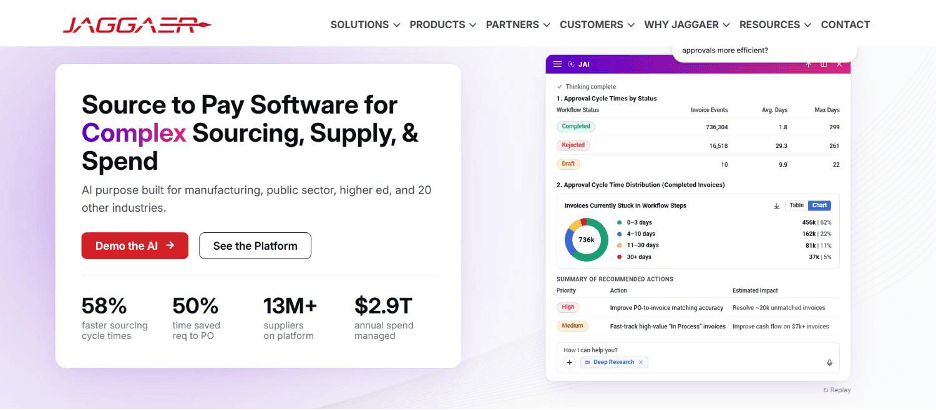
Jaggaer is an enterprise procurement platform built around strategic sourcing, supplier risk management and contract management for large, complex organisations.
It targets procurement teams running formal sourcing events, managing extensive supplier networks and needing detailed risk visibility across vendors.
Jaggaer's positioning leans heavily into strategic supplier relationship management rather than transactional purchasing, which sets it apart from lighter supplier management tools focused mainly on onboarding and basic tracking.
This depth makes it a common choice in industries like manufacturing, healthcare and public sector, where sourcing complexity and supplier risk carry significant weight.
Ideal For
Large enterprises running formal, structured sourcing events
Procurement teams managing extensive supplier risk programmes
Industries with complex, regulated supplier relationships like manufacturing or healthcare
Top Features
Strategic sourcing tools supporting formal RFP and bidding processes
Supplier risk management with ongoing monitoring capabilities
Contract lifecycle management integrated with sourcing decisions
Category-specific sourcing modules for complex industries
Why They Stand Out?
Jaggaer's depth in strategic sourcing and supplier risk sets it apart from supplier management software focused mainly on transactional purchasing.
It is one of the stronger options for enterprises where sourcing strategy and supplier risk are core procurement functions.
Pros
Deep strategic sourcing and supplier risk capabilities
Strong fit for regulated, complex industries
Contract management tightly integrated with sourcing
Established presence in large enterprise procurement
Cons
Not suited to smaller teams needing simple supplier tracking
Implementation complexity and cost are significant
Pricing opacity makes early-stage evaluation difficult
Pricing
Jaggaer uses a custom enterprise pricing model with no publicly listed plans or rates.
Pricing is tailored based on modules, organisation size, deployment complexity and procurement requirements, with quotes provided through its sales team.
Final Verdict
Jaggaer is built for large enterprises with formal sourcing programmes and supplier risk needs.
It is a far more capable supplier relationship management platform than smaller teams with simple vendor tracking will need.
10. Procurify
Overview
Procurify is a spend management platform that includes vendor catalogues and supplier tracking alongside purchase requests and budget management for organisations that need visibility across multiple departments.
Its focus is giving non-finance staff an easy way to submit purchase requests while giving finance a real-time view of which suppliers are active and how spend is distributed across them.
Procurify positions itself around intuitive, everyday use: the kind of tool a department head can use without procurement training.
That accessibility makes it a common choice for organisations spread across multiple locations or departments that need consistent supplier tracking without a heavy enterprise rollout.
Ideal For
Multi-department organisations needing consistent supplier and purchase request rules
Finance teams wanting real-time visibility into vendor spend
Companies that want an easy purchase and supplier tracking experience for non-finance staff
Top Features
Vendor catalogue management for repeat purchases and known suppliers
Purchase request submission designed for non-procurement staff
Budget management tied to departmental spend limits
Real-time spend visibility before invoices are received
Why They Stand Out?
Procurify's emphasis on ease of use for everyday requesters sets it apart from supplier management tools built primarily for procurement specialists.
It is a strong option for organisations prioritising adoption across departments over deep supplier configurability.
Pros
Intuitive purchase and supplier tracking experience for non-procurement staff
Solid real-time budget visibility
Good fit for multi-department spend and vendor tracking
Vendor catalogue support for repeat purchases
Cons
Less configurable for complex, multi-step supplier approval chains than enterprise suites
Limited strategic sourcing or supplier risk scoring functionality
Pricing is not published, which slows down evaluation
Pricing
Procurify uses custom, quote-based pricing tailored to each organisation.
Pricing depends on company size, procurement requirements and deployment scope, with no public plans or rates listed on its website for spend management and procure-to-pay solutions.
Final Verdict
Procurify suits organisations that want an easy purchase and vendor tracking process across departments.
Companies with complex sourcing or supplier risk needs, however, will need a more feature-rich supplier management platform.
How to Choose the Best Supplier Management Software (What To Consider)?
The right choice depends less on which tool has the longest feature list and more on how well it fits your existing systems and supplier volume. Here are the factors worth weighing before you commit.
1. ERP and System Compatibility
Check whether the supplier management software works with the ERP you already run, whether that is SAP, Guidewire or something else.
A tool that demands you modernise your stack first will slow down time to value.
2. Depth of Automation
Some supplier management tools only store data and leave the follow-up to a person; others resolve renewal tracking and performance exceptions automatically.
Decide how much manual follow-up you actually want removed, not just made visible.
3. Pricing Model Fit
Per-seat pricing punishes growing supplier bases, while consumption-based pricing scales with actual usage.
Match the pricing model to how many supplier relationships you expect to manage over the next 12 to 24 months.
4. Supplier Risk and Compliance Depth
Supplier oversight now sits under DORA for third-party ICT risk, GDPR Article 28 for vendor data processing, NIS2 for supply-chain cyber security and the EU AI Act for automated supplier decisions.
Each expects the same evidence: a complete, replayable log of every performance review, risk score and renewal decision. Confirm the tool provides that record before you commit.
5. Implementation Timeline
Enterprise suites can take months to implement, while lighter supplier management tools can be live in days.
Weigh the depth of functionality against how quickly your team needs results.
Everything You Need to Know About Supplier Management Software
Tool | Pros | Cons | Ease of Use | Integrations | Support | Affordability |
Noxus | End-to-end resolution; works with legacy ERPs; full audit trail | Requires scoping call; not for simple single-vendor needs | ⭐⭐⭐⭐ | ⭐⭐⭐⭐⭐ | ⭐⭐⭐⭐⭐ | ⭐⭐⭐⭐ |
Carro | Automates partner onboarding, routing and payouts; no stock risk | Not a source-to-pay suite; US and USD focused | ⭐⭐⭐⭐ | ⭐⭐⭐⭐ | ⭐⭐⭐⭐ | ⭐⭐⭐⭐ |
Coupa | Full source-to-pay suite; strong analytics; supplier network | Costly; complex implementation | ⭐⭐⭐ | ⭐⭐⭐⭐ | ⭐⭐⭐⭐ | ⭐⭐ |
Precoro | Purpose-built procure-to-pay; supplier catalogues; faster rollout | Lighter sourcing depth; not for global scale | ⭐⭐⭐⭐ | ⭐⭐⭐⭐ | ⭐⭐⭐⭐ | ⭐⭐⭐ |
Payhawk | Modular pricing; combines payments and supplier tracking | Limited risk scoring; best with multiple modules adopted | ⭐⭐⭐⭐ | ⭐⭐⭐⭐ | ⭐⭐⭐⭐ | ⭐⭐⭐⭐ |
Basware | Deep AP and supplier data integration; strong multi-country support | Less sourcing focus; enterprise scope | ⭐⭐⭐ | ⭐⭐⭐⭐ | ⭐⭐⭐⭐ | ⭐⭐ |
Medius | Clear performance scoring; invoice automation included | Pricing opacity; smaller integration ecosystem | ⭐⭐⭐⭐ | ⭐⭐⭐ | ⭐⭐⭐⭐ | ⭐⭐⭐ |
Kissflow | Flexible low-code builder; fixed annual pricing | Requires setup effort; limited out-of-the-box risk scoring | ⭐⭐⭐⭐ | ⭐⭐⭐⭐ | ⭐⭐⭐⭐ | ⭐⭐⭐ |
Jaggaer | Deep sourcing and risk tools; strong for regulated industries | Complex and costly; opaque pricing | ⭐⭐⭐ | ⭐⭐⭐⭐ | ⭐⭐⭐⭐ | ⭐⭐ |
Procurify | Easy requester experience; good budget visibility | Limited sourcing tools; unpublished pricing | ⭐⭐⭐⭐⭐ | ⭐⭐⭐⭐ | ⭐⭐⭐⭐ | ⭐⭐⭐ |
Automate Supplier Operations with Noxus
If your procurement team still tracks supplier performance and contract renewals across spreadsheets, email threads and someone's memory, you already know where the risk is hiding.
We built Noxus to resolve that work end-to-end: tracking renewal dates, scoring supplier performance against your own rules, and writing outcomes back into the systems you already run, with a full audit trail on every action.
It is the same execution engine behind our agentic automation for manufacturing, extended to handle the specific rules and systems supplier and procurement teams work with every day. Clients like Santander have seen 3x ROI within 45 days of going live on real production data.
Book a free consultation now to scope your first deployment and see a live workflow trace on your own operational data.
FAQs About Supplier Management Software
What is the best supplier management software in 2026?
Noxus is the best supplier management software for enterprises running supplier operations across legacy systems like SAP and Guidewire. It resolves supplier cases end-to-end, from renewal tracking to performance scoring, instead of just centralising data. Every decision is logged with a full audit trail. Clients have seen 3x ROI within 45 days of going live.
What should I consider when choosing the right supplier relationship management tools for me?
Consider ERP compatibility, depth of automation, pricing model and risk tracking depth first. Tools that only store data leave manual follow-up behind, while ones that resolve renewals and performance issues automatically remove far more risk. Match the pricing model to your expected supplier volume over the next two years.
How does Noxus differ from similar alternatives?
Noxus differs by resolving supplier operations end-to-end, rather than centralising vendor data for someone else to act on. We built it to work natively with legacy ERPs like SAP and Guidewire, without requiring a migration first. Every action is logged with full replayability, which most supplier management tools do not offer.
How do I get started with Noxus?
Getting started with Noxus begins with a scoping conversation about your current supplier systems and vendor volume. Our team then maps your scoring rules and renewal processes, and connects Noxus to your ERP. First deployments typically reach production within 45 to 80 days, based on past client rollouts.
How easy is it to switch to Noxus?
Switching to Noxus avoids the migration pain that stops most supplier management projects. We connect directly to systems you already run, including SAP, Guidewire and 400+ other platforms, so there is no need to replace your ERP. Deployment engineering is included in the first engagement to get you live quickly.
Does supplier management software work with legacy ERPs like SAP?
Yes, though the depth varies between tools. Some supplier management platforms require modern, API-first systems and struggle with legacy ERPs like SAP ECC. Noxus was built specifically for that gap, connecting to legacy systems the way your procurement team already does, without requiring an API layer or system replacement first.