Best Process Mining Tools in 2026 (Top-Rated Software Reviewed & Compared)

Key Takeaways (TL;DR)
The Best Overall Process Mining Tool: Noxus is the top choice for operations and IT teams that need to go beyond discovery and actually automate the workflows process mining surfaces. Noxus runs operations directly inside the legacy systems your processes already run on, turning insights into executed outcomes with a full audit trail.
Why Do You Need It?: Most enterprise processes contain inefficiencies that no one can see because the data is locked inside disconnected systems. Process mining software surfaces those inefficiencies from event logs so teams can act on real data rather than assumptions.
Who It's For: Operations Leaders, Digital Transformation teams, and IT architects at mid-market and enterprise organisations who need to understand how their processes actually behave before automating them.
How to Choose the Right One?: Match the tool to where you are in the process improvement journey: discovery only, discovery plus conformance checking, or discovery plus execution. Verify it connects to your actual data sources, and check whether the pricing scales with your data volume or your user count.
Expected Price: Noxus operates on a usage-based model: you pay for the operations completed, not a fixed per-seat subscription. A structured pilot on your actual workflows is available before full commitment.
Table of Contents
Top Process Mining Tools in 2026 at a Glance
← scroll to see all columns →
| Company | Best For | Key Features | Pricing |
|---|---|---|---|
| Noxus | Enterprise and mid-market teams that need process discovery connected to automated execution | End-to-end legacy executionFull audit trailBYOK |
Usage-based; custom per deployment |
| Celonis | Large enterprises running deep process intelligence and EMS | Process discoveryExecution managementSAP/Salesforce connectors |
Custom quote; contact sales |
| UiPath Process Mining | RPA teams extending automation with process discovery | End-to-end process miningConformance checkingRPA integration |
Quote-based; contact sales |
| IBM Process Mining | Enterprise teams needing integration with IBM automation stack | AI-powered discoverySimulationTask mining |
From $4,250/month (SaaS) From $2,885/month (on-prem) |
| SAP Signavio Process Intelligence | SAP-heavy enterprises | SAP-native integrationProcess discoveryBenchmarking |
Custom quote; contact SAP |
| ABBYY Timeline | Document-heavy processes needing timeline visualisation | Timeline viewPredictive monitoringTask mining |
Business subscription; Enterprise custom |
| ARIS Process Mining | Organisations needing BPM design linked to process mining | SAP integrationConformance checkingARIS Cloud |
Custom quote; on request |
| Scribe Optimize | Teams documenting and optimising workflows collaboratively | AI-generated process docsWorkflow captureGap analysis |
Free Pro from $17/seat/month |
| Microsoft Power Automate | Microsoft-stack organisations combining automation with process insights | Process AdvisorCloud & desktop flowsAI Builder |
From £15/user/month |
| Apromore | Academics, public sector, and cost-conscious teams needing open-source process mining | Process discoveryConformance checkingPredictive monitoringBPMN authoring |
Free (community) Enterprise custom |
What Are Process Mining Tools?
Process mining tools are software applications that extract event log data from enterprise systems, such as ERP, CRM, and ITSM platforms, and reconstruct the actual execution paths of business processes from that data.
The discipline was developed academically in the early 2000s, with Professor Wil van der Aalst at TU Eindhoven establishing much of its theoretical foundation. The core idea is simple: every time a case moves through a business process, it leaves a trace in system logs. Process mining reads those traces and reconstructs what actually happened, not what was documented in a process manual.
A typical top process mining tool covers three core capabilities:
Process discovery builds a process map from event log data without any prior model.
Conformance checking compares the discovered process against the intended process model to identify deviations.
Enhancement uses process data to improve existing models through additional metrics, including throughput times, rework rates, and bottleneck identification.
Modern tools have expanded significantly beyond these foundations.
In 2026, the leading best process mining software options layer on task mining, which captures desktop-level user interactions; simulation and what-if analysis; AI-driven root cause analysis; and increasingly, direct connections to automation execution layers.
As per a study conducted by EY, the global process mining market was valued at USD 1.8 billion in 2023, and is expected to grow to a whopping USD 12.1 billion by 2028. This reflects a compounding annual growth rate of 45.6%.
The primary driver is enterprise demand for objective operational visibility before committing to large-scale automation investments.
Why Do You Need Process Mining Software?
The core problem is a visibility gap.
Most organisations have invested heavily in ERP systems, CRM platforms, and workflow tools. Those systems contain years of operational data. But without process mining, that data sits in silos and no one can answer basic questions: how long does an invoice actually take to process? What percentage of purchase orders require manual intervention? Where does the order-to-cash cycle consistently break down?
Without this visibility, automation projects start from assumptions rather than evidence. Teams build RPA bots for processes they think they understand, only to discover that the real process has dozens of variants, multiple exception paths, and bottlenecks that the bot was never designed to handle. This is one of the primary reasons RPA initiatives underdeliver.
Process mining changes this. A study by Deloitte found that organizations using process mining are improving productivity, generating key insights about existing processes and improving decision-making. This in turn, has helped them improve ROI on existing processes and projects.
The reason is straightforward: you cannot automate a process you do not actually understand.
The financial case is also direct. Manual processes running at error rates of 3-8% generate downstream rework, compliance risk, and customer dissatisfaction. Process mining identifies exactly where those errors originate and which process variants are most costly. Operations teams that act on this data reduce costs before automation is even introduced.
For enterprises operating under GDPR, SOX, or sector-specific regulatory frameworks, process mining also provides a documented record of how processes actually behaved, which is increasingly valuable in audit contexts. The gap between documented processes and actual execution is a compliance risk; process mining surfaces it before regulators do.
The tools that deliver the most value in 2026 are those that close the loop between discovery and action. Discovering that a process is broken is useful. Automatically remediating it is where the real return materialises.
Who Needs Process Mining Tools?
The following decision-makers/personas are usually the ones seeking the top process mining tools in 2026:
1. Operations Leaders and COOs
VP Operations, COO, and Director of Operations roles at mid-market and enterprise organisations. These leaders are accountable for SLA performance, headcount, cost per transaction, and BPO contract outcomes. They need process mining to answer the question: where exactly is performance degrading, and why?
Some of the best process mining tools give them objective data rather than team-reported estimates.
For this persona, the priority is actionable insight that connects directly to the operational metrics they own.
2. Digital Transformation and Automation Teams
Heads of AI, Chief Digital Officers, and Heads of Automation who are building the business case for large-scale automation investment.
These teams use process mining to identify which processes are genuinely automatable, what the expected ROI is, and where the highest-impact starting points are.
Without process mining, automation roadmaps are largely guesswork. With it, they are grounded in evidence from actual system logs.
3. IT Architects and Enterprise Architects
CIOs, IT Directors, and Enterprise Architects responsible for integration strategy and system governance.
Process mining surfaces how data actually moves between systems, which integration points are fragile, and where process variants create data quality issues downstream.
For this audience, a top process mining tool also needs to integrate cleanly with the existing technology stack, and ideally connect to the automation infrastructure the organisation already runs.
4. Finance and Shared Services Leaders
CFOs, Finance Directors, and Heads of Shared Services running high-volume transactional processes: accounts payable, order-to-cash, procure-to-pay, and record-to-report.
These are the processes where process mining has historically delivered the clearest financial returns. Conformance checking against defined financial controls provides audit documentation as a byproduct of normal operations.
Bottleneck analysis in AP and AR processes directly reduces working capital tied up in delayed processing.
5. Process Excellence and BPM Teams
Business process managers, Lean Six Sigma practitioners, and continuous improvement teams. Traditional process improvement relied on interviews, workshops, and manual process mapping.
Using a process mining software replaces estimation with data and narrows down improvement efforts to the specific process variants and exceptions that drive the most waste.
For these decision-makers, BPMN authoring integration and simulation capabilities are important alongside discovery.
Best Process Mining Tools: In-Depth Review & Comparison
1. Noxus
Overview
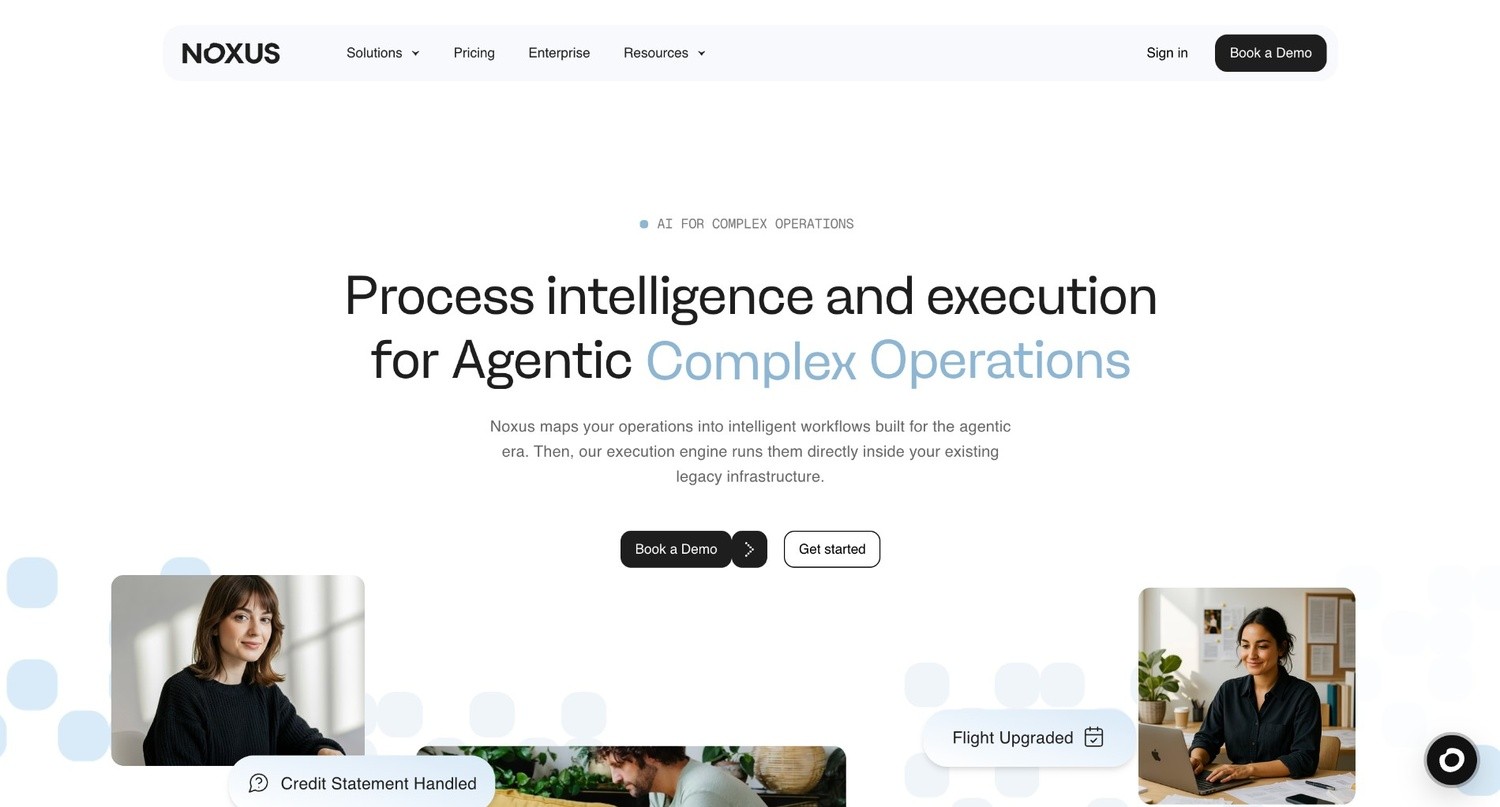
Noxus is the process intelligence layer: execution infrastructure that runs complex, multi-step workflows end-to-end across legacy enterprise environments.
In the context of process mining and improvement, Noxus sits at the execution layer: once an organisation understands where its processes break down, our AI co-workers resolve those breakdowns directly, operating inside the same SAP, Oracle, ServiceNow, and proprietary systems where the process failures occur.
Most process mining tools stop at insight. They show you the bottleneck, the deviation, the expensive variant. Noxus acts on it. The execution runtime handles the multi-system work that sits behind the bottleneck: gathering data, applying business rules, writing back results, and closing cases under full audit, without requiring API modernisation of the underlying systems.
We are deployed in production at companies like: Santander, Fidelidade, Jerónimo Martins, CUF/José de Mello, and other major European enterprises – with astounding results, including: 3-5x ROI, 45-80 days from contract to production and 90-96% AI precision on real operational data.
Ideal For
Operations Leaders and COOs at enterprise and mid-market organisations running high-volume, multi-system workflows on SAP, Oracle, or legacy ERPs
Digital Transformation Leaders who have used process mining to identify automation opportunities and need a production-ready execution layer
Digital and AI Transformation Leaders who have identified automation opportunities through process mining and need a partner with production credentials to build the internal case for moving from discovery to live execution
IT and Compliance teams in regulated industries requiring full auditability and data sovereignty across every automated action
CFOs and Finance Leaders who need measurable ROI from process improvement, not just diagnostic dashboards
Mid-market Managing Directors and Heads of Operations who need fast results with minimal IT involvement
Top Features
Execution That Goes Beyond Insight: The execution runtime runs the workflows that process mining identifies as candidates for automation. Vendor invoice matching, billing dispute resolution, claims processing, and order management workflows run end-to-end, with write-back into source systems and a complete audit trail.
Legacy System Integration Without API Requirements: We connect to SAP ECC, Oracle, Guidewire, ServiceNow, and 400+ other systems the way operations teams use them today: navigating interfaces, performing lookups, writing back results. No middleware project. No API layer required. If your team can use the system, we can automate it.
Governance-First Architecture: Every AI decision is traceable. Every process run produces a complete audit trail covering what happened, which rule applied, and why. Confidence-based human escalation fires when the AI encounters edge cases; it never guesses on governed decisions. Certified against SOC 2 Type II, ISO 27001, GDPR Article 28, and HIPAA.
Why We Stand Out?
The gap in most process improvement programmes is not discovery; it is execution. Organisations invest in identifying broken processes and then stall at the point of actually fixing them, because fixing them requires integrating AI into legacy systems that other vendors won't touch.
We are built specifically for that execution layer. Our three deployment models (SaaS, self-managed VPC, air-gapped on-premises) mean data never leaves the client's control. Plus, because our pricing scales with usage rather than headcount, costs track directly to the value delivered.
Santander achieved 3x ROI in 45 days automating customer operations workflows across SAP, CRM and email. CUF/José de Mello automated 10,000+ customer communications per month with 96% AI precision under full GDPR Article 9 compliance.
Pros
Executes workflows end-to-end across legacy systems, not just identifies them
Works directly inside SAP, Oracle, and COBOL-era cores without API prerequisites
Full governance: every action is auditable, traceable, and replayable
Flexible deployment with BYOK model routing for complete data sovereignty
Production-proven across regulated industries in Europe, with zero client churn
Cons
Purpose-built for high-volume, multi-system workflows at mid-market and enterprise scale; not the right starting point for individual practitioners, small teams, or organisations with straightforward single-system processes
Deployment engineering is included in the first engagement rather than self-serve; organisations that need a tool live within hours should evaluate lighter alternatives for simpler use cases
Pricing
Noxus operates on a monthly platform licence with consumption-based pricing. You pay for the operations completed, not for seats or tokens. Pricing scales with operational volume and deployment complexity.
The economics improve structurally with each additional workflow deployed on the same infrastructure, as the integration layer is already operational for subsequent use cases. A structured pilot on your actual workflows is available before full commitment.
Contact the team directly for pricing aligned to your use case and scale.
Final Verdict
Noxus is amongst the best processing mining tools for any organisation that has already identified its highest-impact process improvement opportunities and needs AI that actually executes the fix, versus just confirming the problem.
If your operations run on legacy ERP systems and you need a production-ready automation layer with full governance and data sovereignty. Noxus delivers measurable outcomes in 45-80 days, not in months-long pilot cycles.
2. Celonis
Overview
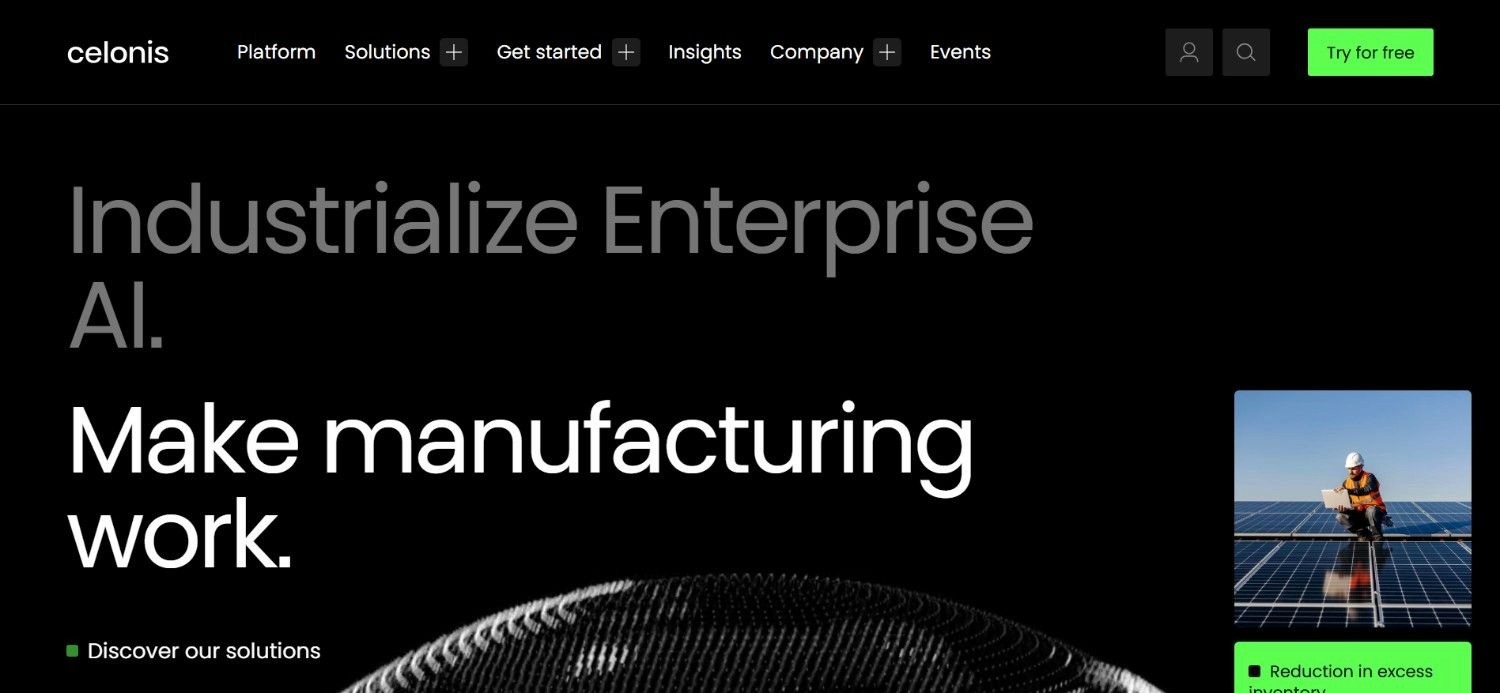
Celonis is one of the top process mining tools globally, and is widely credited with establishing ‘process mining software’ as a mainstream enterprise category, and for large SAP-centric organisations, it is typically the first name on any comparison shortlist.
Their core product is the ‘Celonis Process Intelligence Graph’, which ingests event log data from SAP, Salesforce, ServiceNow, Oracle, and other enterprise systems to reconstruct how processes actually execute at scale. On top of this sits the Execution Management System (EMS): an action layer that links discovered process gaps to recommended interventions, automated remediations, and workflow triggers.
Their EMS layer is what sets Celonis apart from pure analytics tools, surfacing what the company calls “execution gaps” and connecting them to recommended actions with quantified business impact. This gives finance and operations teams a prioritisation framework versus a process map to interpret their own.
Ideal For
Large enterprises with established SAP environments looking for deep process intelligence
Process excellence teams running continuous improvement programmes across multiple functions
Heads of Finance running procure-to-pay, order-to-cash, or record-to-report optimisation
Digital Transformation Leaders needing a full process intelligence and execution management layer
Top Features
Process Discovery at Scale: Celonis ingests event log data from SAP, Salesforce, ServiceNow, and other enterprise systems to reconstruct actual process execution across millions of cases. The visualisation layer surfaces deviations, bottlenecks, and throughput times at a granularity that manual analysis cannot reach.
Execution Management System (EMS): Beyond discovery, Celonis's EMS layer connects process insights to recommended actions and automated interventions. It can push alerts, trigger workflows, and integrate with downstream automation tools to close the loop between analysis and remediation.
Industry Benchmarking: Celonis maintains a process benchmarking database that allows organisations to compare their process performance against industry peers. This is particularly useful for building the business case for process improvement investment.
Why They Stand Out?
Celonis is one of the most established and comprehensive options when you’re exploring the best process mining software in 2026.
Their depth of SAP integration, their EMS layer, and the breadth of their connector ecosystem make them a credible choice for large enterprises that want process intelligence embedded across multiple functions.
Their academic lineage and market position mean a large partner and implementation ecosystem exists around the product.
Pros
Deepest SAP integration and event data extraction available in the market
EMS layer connects discovery to recommended and automated actions
Industry benchmarking provides peer comparison data for board-level reporting
Large partner and implementation ecosystem
Cons
Pricing is enterprise-grade and often cited as a barrier for mid-market organisations
Implementation complexity typically requires specialist partners and multi-month deployments
Heavy focus on large enterprise use cases; smaller organisations may find the platform oversized for their needs
Pricing
Celonis does not publish pricing publicly. All contracts are custom-quoted through their sales team. Given the enterprise positioning, expect significant investment aligned with large-scale deployments.
Final Verdict
Celonis is a strong choice for large enterprises that need deep process intelligence across their SAP landscape and want a platform with a mature EMS layer. The implementation complexity and pricing make it less suitable for mid-market organisations or teams that need fast time-to-value without significant partner investment.
3. UiPath Process Mining
Overview
UiPath is one of the largest RPA vendors globally, and their Process Mining product extends their automation offering upstream into process discovery. The value proposition is direct: identify automation candidates through process mining and deploy bots against them within the same UiPath ecosystem, reducing the gap between insight and running automation.
The product combines system-level event log analysis with task mining, which captures desktop interactions between system touchpoints. Standard event logs miss the manual work that happens between systems; task mining fills that gap, giving a more complete picture of where time and effort actually go.
Alongside discovery, UiPath Process Mining covers conformance checking and variant analysis with cost impact quantification, so teams can see not just that deviations exist but what they cost in aggregate across a process population.
This financial framing is particularly useful when prioritising which automation projects to pursue and building the business case with finance stakeholders.
Ideal For
Organisations already running UiPath RPA who want to extend their automation programme with process discovery
Automation CoE teams identifying the highest-value automation opportunities
IT and operations teams looking for a single vendor across discovery and execution
Large enterprises needing conformance checking against defined process standards
Top Features
Integrated RPA and Process Mining: UiPath's strongest differentiator is the connection between process discovery and bot deployment. Processes identified as automation candidates can be routed directly into UiPath's automation development pipeline, reducing the time between insight and deployed automation.
Task Mining: UiPath captures desktop-level user interactions alongside system event logs, giving a more complete picture of how work actually happens, including the manual steps that occur between system touchpoints.
Conformance Checking and Variant Analysis: UiPath Process Mining compares actual process execution against intended process models, surfaces deviations, and quantifies the cost impact of process variants, giving prioritisation data for improvement initiatives.
Why They Stand Out?
For organisations already invested in UiPath's RPA ecosystem, Process Mining is one of the best process mining tools. The integration between discovery and deployment is tighter than most alternatives, and the combined platform reduces the number of vendor relationships required to run an end-to-end automation programme.
Pros
Tight integration between process discovery and UiPath RPA deployment
Task mining adds desktop-level visibility alongside system event logs
Single vendor for discovery through to automated execution
Strong enterprise credentials and global support infrastructure
Cons
Most valuable within the UiPath ecosystem; less compelling as a standalone process mining tool
Quote-based pricing without published entry points makes early budget planning difficult
RPA-first heritage means complex unstructured workflows may require additional tooling
Pricing
UiPath's pricing is enterprise-focused and quote-based. A lower entry tier exists for individuals and small teams, but most Process Mining deployments require a custom plan aligned to the specific UiPath deployment scale and feature set.
Final Verdict
UiPath Process Mining is a sensible choice for organisations already running UiPath RPA who want to ground their automation roadmap in process data. For teams evaluating standalone process mining without an existing UiPath investment, there are more cost-effective and accessible alternatives.
4. IBM Process Mining
Overview
IBM Process Mining sits within IBM's broader automation portfolio alongside IBM RPA and IBM Business Automation Workflow. The product entered IBM's portfolio through the acquisition of MyInvenio in 2021, an Italian company with a strong research background in event log analysis, and that heritage is visible in the product's simulation capability, which is more developed than most competitors.
The platform covers process discovery, task mining, conformance checking, and simulation. The simulation capability is the most distinctive feature: teams can model how throughput, cost, and SLA performance would change under specific process modifications before committing to implementation.
For organisations already running IBM automation infrastructure, the direct connection to IBM RPA and IBM Business Automation Workflow creates a path from discovery to automated execution without introducing additional vendors.
The availability of both SaaS and on-premises deployment is also significant; many process mining tools are cloud-only, but IBM's on-premises option addresses data residency requirements that regulated industries cannot work around.
Ideal For
Enterprises already running IBM automation or cloud infrastructure
Organisations in regulated industries needing on-premises deployment for data sovereignty
Finance and operations teams running IBM-centric ERP and workflow environments
IT leaders who need process mining integrated with broader IBM AI and automation tooling
Top Features
AI-Powered Process Discovery: IBM Process Mining uses machine learning to identify process patterns and anomalies from event log data, surfacing bottlenecks and compliance deviations without requiring manual configuration of discovery parameters.
Simulation and What-If Analysis: IBM's simulation capability allows teams to model the impact of proposed process changes before implementing them, quantifying expected throughput improvements and cost impacts with confidence intervals.
On-Premises Deployment: IBM Process Mining offers a fully on-premises deployment option, which is significant for regulated industries or organisations with strict data residency requirements. The on-premises entry point at USD 2,885/month is notably lower than the SaaS starting price.
Why They Stand Out?
IBM Process Mining is one of the best process mining tools for organisations deep in the IBM ecosystem that want process mining integrated with their existing automation investments.
The simulation capability is more developed than many competitors, and the on-premises option addresses data sovereignty requirements that cloud-only tools cannot meet.
Pros
Strong simulation and what-if analysis capability
On-premises deployment available for regulated environments
Integration with IBM automation and AI stack
AI-powered anomaly detection reduces manual configuration
Cons
High entry price point (USD 4,250/month for SaaS) limits accessibility for smaller teams
Strongest value within the IBM ecosystem; less compelling as a standalone purchase
Implementation typically requires IBM or partner professional services
Pricing
IBM Process Mining starts at USD 4,250/month for SaaS and USD 2,885/month for on-premises.
These are indicative published rates; actual pricing varies by region, contract structure, and current IBM commercial terms. Verify directly with IBM before using it in a business case.
Final Verdict
IBM Process Mining suits large enterprises with existing IBM infrastructure who need process intelligence with simulation capability and flexible deployment options.
The pricing makes it inaccessible for mid-market teams, and the value is most apparent for IBM-committed organisations rather than those evaluating process mining independently.
5. SAP Signavio Process Intelligence

Overview
SAP Signavio Process Intelligence is SAP's dedicated process mining software, designed for SAP-centric enterprise environments. Signavio was founded in Berlin in 2009 as a BPM and process modelling company before SAP acquired it in 2021. Since then, SAP has deepened its integration with the broader SAP Business Technology Platform, making it one of the most tightly connected options for organisations running S/4HANA or SAP ECC.
The product sits within a broader Signavio suite covering process design, governance, and journey modelling, allowing organisations to manage the full process lifecycle in one place: document the target state, mine the actual state, identify gaps through conformance checking, and manage improvement workflows through the governance layer.
Pre-built extractors for common SAP process flows: procure-to-pay, order-to-cash, hire-to-retire – significantly reduce the time from data access to working process map.
The benchmarking capability adds industry peer comparisons drawn from SAP's customer database, giving CFOs and COOs external reference points for prioritising improvement investment.
Ideal For
Enterprises running SAP S/4HANA or SAP ECC as their primary ERP
SAP Centre of Excellence teams running process excellence programmes
Finance and procurement teams optimising procure-to-pay or order-to-cash on SAP
Organisations already invested in the SAP Signavio suite for process design and governance
Top Features
Deep SAP Event Log Extraction: SAP Signavio Process Intelligence connects directly to SAP system data with pre-built extractors for common SAP processes, significantly reducing the time required to get from data to process map. For SAP-heavy organisations, this removes a major implementation bottleneck.
Process Benchmarking: The platform includes access to SAP's process performance benchmarking database, allowing organisations to compare their process KPIs against industry norms and identify where they underperform relative to peers.
Integrated Process Design and Governance: Because Signavio also covers process modelling and governance, organisations can manage the full lifecycle from process design through to discovery and improvement within a single suite, maintaining alignment between documented and actual processes.
Why They Stand Out?
For SAP-centric enterprises, SAP Signavio Process Intelligence is one of the best process mining tools category.
The native SAP integration removes integration complexity, and the benchmarking capability provides board-level data that organisations typically have to build themselves with other tools.
Pros
Native SAP integration with pre-built process extractors
Industry benchmarking database for peer performance comparison
Integrated with SAP Signavio's broader process design and governance suite
SAP's enterprise support infrastructure and global partner network
Cons
Primarily valuable for SAP environments; limited relevance outside SAP-centric organisations
Custom pricing without published rates makes early budget assessment difficult
Integration with non-SAP systems requires more configuration effort
Pricing
SAP Signavio does not list public pricing. Editions include Classic, Enterprise, and Enterprise Plus. A demo and custom quote are available on request through SAP's sales team.
Final Verdict
SAP Signavio Process Intelligence is a top process mining tool for enterprises whose core processes run on SAP and who want process mining natively embedded in their SAP ecosystem.
For organisations with mixed ERP environments or those seeking broader operational process visibility beyond SAP boundaries, the fit narrows.
6. ABBYY Timeline
Overview
ABBYY Timeline is a process intelligence platform focused on document-intensive and task-heavy processes. It originated as TimelinePI, founded in 2015, before ABBYY acquired it in 2019 and integrated it with their core document AI and OCR capabilities.
That combination produces a product profile that differs meaningfully from tools that treat documents as a secondary concern.
Most real-world enterprise processes are not purely structured. An insurance claims process involves PDFs, scanned forms, and emails alongside structured system event logs. Standard process mining tools that analyse only event logs miss a material portion of how these processes actually operate. ABBYY Timeline also incorporates document content alongside system data for a more complete process picture.
The visualisation approach is also distinct: instead of flowcharts or Petri nets, Timeline plots case activities along a horizontal time axis, making it easier to identify temporal patterns, delays, and concurrent activities.
A predictive monitoring layer forecasts the likely outcome of in-flight cases based on historical patterns, enabling proactive SLA intervention.
Ideal For
Operations teams running document-heavy processes in insurance, financial services, and healthcare
Automation teams looking for process intelligence that covers both structured system logs and unstructured document flows
Organisations evaluating how AI-driven document processing can improve operational process performance
Compliance teams needing predictive monitoring capabilities for regulated processes
Top Features
Timeline Visualisation: ABBYY Timeline's distinguishing visual approach organises process data along a timeline rather than a process flow graph, making it easier to identify temporal patterns, delays, and out-of-sequence events in complex processes with many concurrent activities.
Task Mining Integration: Alongside system event log analysis, ABBYY Timeline captures desktop-level user interactions, providing visibility into the manual steps that occur between system touchpoints and identifying where human effort is concentrated.
Predictive Process Monitoring: The platform uses machine learning to predict future process behaviour based on historical patterns, enabling proactive intervention before cases breach SLA thresholds or compliance requirements.
Why They Stand Out?
ABBYY Timeline is one of the best process mining tools, particularly for organisations where document processing is a core part of the operational process.
The combination of process mining features with ABBYY's document AI capabilities creates a more complete picture of how work actually flows through document-intensive operations.
Pros
Timeline visualisation approach is well-suited to complex, document-heavy processes
Integration with ABBYY's document AI capabilities adds unstructured data processing
Task mining captures manual work between system touchpoints
Predictive monitoring enables proactive SLA management
Cons
Less established than Celonis or UiPath in the broader process mining market
Business subscription pricing auto-renews annually; enterprise custom pricing reduces budget predictability
Timeline visualisation, while differentiated, has a learning curve compared to standard process flow views
Pricing
ABBYY Timeline uses a yearly Business Subscription that auto-renews after one year. Enterprise customers require a separate custom quote.
Business licences include upgrades and patches; Enterprise adds higher-level support for an additional fee.
Final Verdict
ABBYY Timeline is a strong choice for organisations where document-intensive processes are central to operations, and for teams that want predictive monitoring alongside discovery.
For organisations whose processes are primarily structured and system-driven, the differentiated visualisation approach may not justify the switch from more mainstream alternatives.
7. ARIS Process Mining
Overview
ARIS Process Mining is part of the ARIS suite from Software AG, a company with a long heritage in business process management. ARIS became a de facto standard for process modelling in large European enterprises, particularly SAP-centric ones, and the ‘Process Mining’ module extends that heritage into data-driven discovery, completing the loop between documented processes and actual execution behaviour.
The key distinction from most other process mining tools is that ARIS treats mining as one component within a broader BPM lifecycle that also covers process design, governance, and risk management.
Organisations already invested in ARIS for documentation and modelling can add the mining capability without a separate vendor relationship.
The conformance checking capability is particularly well-suited to regulated environments where every process change requires documented approval: ARIS automates the comparison between discovered actual behaviour and defined target models and quantifies the gap.
Ideal For
Large European enterprises with existing ARIS process modelling deployments
Process governance and compliance teams needing alignment between documented and actual processes
SAP-heavy organisations looking for process mining with strong SAP Solution Manager integration
Organisations running formal BPM programmes that need discovery integrated into their governance cycle
Top Features
Closed-Loop Between Design and Discovery: ARIS uniquely connects process modelling and process mining within a single environment. Organisations can compare discovered process behaviour against ARIS-designed target models and manage process improvement through the same governance workflows used for process documentation.
SAP Solution Manager Integration: ARIS has deep integration with SAP Solution Manager, making it a natural fit for enterprises using SAP's own process management tooling alongside third-party mining capability.
Cross-Organisational Mining: ARIS supports collaborative process improvement with change requests, shareable bookmarks, and multi-stakeholder views, enabling process excellence programmes that span business units and geographies.
Why They Stand Out?
For organisations that already use ARIS for process design and governance, the Process Mining module is one of the more logical extensions available.
The closed-loop between design and discovery is a structural advantage over tools that treat modelling and mining as separate capabilities, and the European heritage aligns well with GDPR and EU regulatory requirements.
Pros
Closed-loop between process modelling and process mining in a single environment
Strong SAP Solution Manager and BPM integration
Cross-organisational collaboration features built in
Long-standing European enterprise presence with proven compliance credentials
Cons
Strongest value for existing ARIS users; limited appeal outside the ARIS ecosystem
Custom pricing without public disclosure makes early assessment difficult
Implementation complexity is higher than lighter-weight alternatives for teams new to ARIS
Pricing
ARIS Process Mining uses a custom, quote-based pricing model tailored to organisation size, user count, and data volume.
Contact Software AG's sales team for specific pricing. ARIS Cloud includes trial and paid tiers.
Final Verdict
ARIS Process Mining is the best process mining tool for larger organisations already embedded in the ARIS ecosystem, particularly those running formal process governance programmes on SAP.
For teams without an existing ARIS investment, the onboarding and implementation overhead makes it harder to justify against more accessible alternatives.
8. Scribe Optimize
Overview
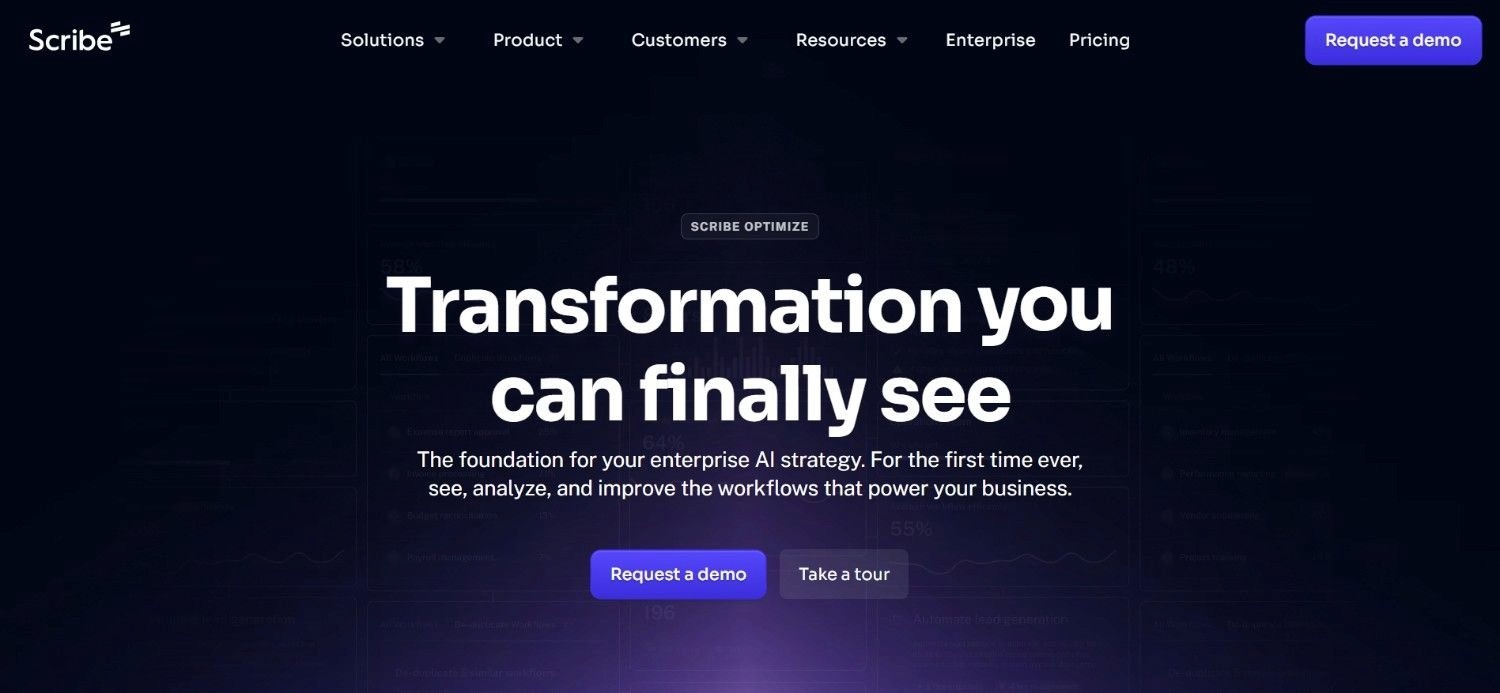
Scribe is a workflow documentation tool that records screen activity and automatically generates step-by-step process guides with annotated screenshots. Scribe Optimize extends this into process improvement by identifying gaps, redundant steps, and inconsistencies across documented workflows.
It is worth being direct: Scribe is not a process mining tool in the same technical sense as Celonis or IBM. It does not extract event log data from ERP systems or reconstruct process flows from database records. The tool captures and documents what people do on their screens. For many teams, however, this is actually the more immediate problem: no documented processes exist at all, institutional knowledge lives in people's heads, and onboarding is slow because nothing is written down.
Scribe solves that problem directly, without IT involvement or implementation overhead. The ‘Optimize’ layer adds improvement analysis on top of that documentation foundation, surfacing unnecessary steps, unclear handoffs, and process inconsistencies across team members doing the same job.
Ideal For
Operations and process teams that need to document and optimise workflows without technical complexity
Small to mid-size teams building process documentation libraries alongside basic improvement analysis
Operations Managers who want lightweight workflow capture and gap analysis without enterprise process mining overhead
Teams using process documentation as a foundation for automation planning
Top Features
AI-Generated Process Documentation: Scribe captures screen recordings of workflows and automatically generates step-by-step documentation with annotated screenshots. This reduces the manual effort required to build and maintain process libraries significantly.
Workflow Gap Analysis: Scribe Optimize identifies redundant steps, missing handoffs, and process inconsistencies in documented workflows, providing a foundation for process improvement without requiring event log data from enterprise systems.
Collaborative Editing and Sharing: Scribe's documentation is designed for collaboration, with easy sharing, embedding, and update workflows. Teams can maintain living process documentation that reflects current reality rather than static Word files.
Why They Stand Out?
Scribe's accessibility is amongst its core strengths as one of the best process mining tools. The tool doesn’t require IT involvement, event log extraction or specialist implementation (everything is pretty much “plug-and-play”).
For teams that need process clarity without enterprise process mining complexity, it covers a real gap. The tiered pricing makes it accessible at every scale.
Pros
Highly accessible; no IT involvement required for basic deployment
AI-generated documentation reduces manual process capture effort significantly
Transparent, tiered pricing starting with a free plan
Strong collaborative features for team-level process improvement
Cons
Does not perform traditional event-log-based process mining; comparison with Celonis or UiPath is limited
Less suitable for complex, multi-system enterprise processes
Gap analysis is based on documented workflows rather than actual system execution data
Pricing
Scribe has a free Basic plan, a Pro Personal plan at $17/month per seat, and a Pro Team plan at $35/month per seat. Costs scale with team size and advanced features.
Final Verdict
Scribe Optimize works well for teams that need accessible workflow documentation and basic gap analysis rather than enterprise process mining.
For organisations that need to analyse actual process execution from system event logs, a purpose-built process mining tool would be a more appropriate choice.
9. Microsoft Power Automate
Overview
Microsoft Power Automate is Microsoft's automation platform, covering cloud flows, desktop flows (RPA), and process intelligence through its Process Advisor capability. For organisations already running Microsoft 365, this provides a low-friction entry point into process discovery without a separate tool, vendor relationship, or procurement process.
Process Advisor analyses event log data to reconstruct process flows, surface variants, and identify bottlenecks. Its outputs connect directly to Power BI for reporting and to Power Automate's cloud and desktop flows for remediation, creating a path from discovery to automated action entirely within the Microsoft stack. For teams whose analytical work already lives in Microsoft environments, this removes a genuine adoption barrier.
The trade-off is analytical depth: Process Advisor's variant analysis and conformance checking are less sophisticated than dedicated process mining tools like Celonis or IBM, and connector coverage for non-Microsoft legacy systems is narrower.
Ideal For
Organisations already running Microsoft 365 who want process intelligence without adding a separate vendor
Operations and IT teams looking for an integrated path from process discovery to automated execution within the Microsoft stack
Mid-market teams needing accessible process mining with a familiar Microsoft interface
Finance and shared services teams automating processes that sit primarily in Microsoft environments
Top Features
Process Advisor: Power Automate's Process Advisor feature performs process mining and task mining from system event logs and desktop recordings. It surfaces process maps, variant analysis, and bottleneck identification within the Power Automate interface, making it accessible to teams already familiar with the Microsoft ecosystem.
Integrated Cloud and Desktop Automation: The direct connection between Process Advisor insights and Power Automate's cloud and desktop flows means teams can move from discovery to automated execution without switching tools or vendors.
Power BI Integration: Process mining results connect directly to Power BI for custom reporting and dashboards, giving finance and operations teams the ability to build process performance visualisations tailored to their specific KPIs.
Why They Stand Out?
Power Automate is one of the best process mining tools for Microsoft-centric organisations, since it removes the need for a separate process mining vendor.
The combination of process discovery, cloud automation, and RPA in a single Microsoft-managed environment reduces integration complexity and procurement overhead considerably.
Pros
Natural fit for organisations already on Microsoft 365; minimal additional procurement required
Integrated path from process discovery to automated execution
Accessible interface for non-specialist users
Competitive per-user pricing with a clear, published pricing structure
Cons
Process mining capability is less mature than dedicated tools like Celonis or IBM Process Mining
Most valuable within the Microsoft ecosystem; limited integration depth with non-Microsoft legacy systems
Enterprise-scale process mining programmes may outgrow Power Automate's process intelligence capabilities
Pricing
Power Automate includes a free trial. The Premium plan costs £15 per user per month. The Process plan is £150 per bot per month.
The Hosted Process option is £215 per bot per month.
Final Verdict
Power Automate is a practical choice for Microsoft-centric organisations that want process intelligence and automation in a single platform without a separate vendor relationship.
For enterprises needing deep process mining across complex multi-system legacy environments, a dedicated process mining tool would provide more analytical depth.
10. Apromore
Overview
Apromore is an open-source process mining platform with over a decade of academic research behind it, originally developed at the University of Melbourne and the Free University of Bozen-Bolzano by Professor Marcello La Rosa and collaborators. It has grown into a commercial spin-out offering both a free Community Edition and a subscription-based Enterprise Edition.
The platform covers the full core process mining capability set: discovery from event log data, conformance checking, performance analysis, and predictive monitoring. A BPMN authoring environment is integrated alongside the mining capabilities, letting teams design target-state processes and compare them against discovered actual behaviour in the same tool.
The Community Edition is self-hostable on GitHub and includes genuine process mining functionality, not a restricted demo. The Enterprise Edition adds connectors, multi-tenancy, and higher support tiers on a capacity-based pricing model that can be more cost-effective for high-volume workloads than per-user alternatives.
Apromore is considered one of the best process mining tools for public sector organisations, universities and research institutions where its academic provenance and open-source availability carry weight and are effectively utilised.
Ideal For
Public sector organisations, universities, and non-profits needing process mining without large licensing costs
Process excellence teams with technical capability who want an open-source foundation
Organisations evaluating process mining before committing to an enterprise platform
Teams needing BPMN authoring integrated with process discovery in a single tool
Top Features
Open-Source Community Edition: Apromore's free Community Edition provides genuine process discovery, conformance checking, and basic performance analysis capabilities. For organisations that need to validate process mining value before investing in a commercial platform, this is a credible starting point.
Predictive Process Monitoring: Apromore includes predictive monitoring that uses historical process data to forecast the likely outcome of running cases, enabling proactive intervention for cases predicted to breach SLA or compliance thresholds.
BPMN Authoring and Comparison: Apromore provides a BPMN process model authoring environment alongside its mining capabilities, allowing teams to design target-state processes and compare them against discovered actual-state models within the same tool.
Why They Stand Out?
Apromore's open-source foundation and academic credentials give it credibility in process mining research and public sector deployments that few commercial tools can match.
The free Community Edition removes the barrier to entry entirely, and the Enterprise Edition provides commercial support and additional connectors for teams that need them.
Pros
Free Community Edition available with genuine process mining capability
Strong academic credentials and active research community
Predictive monitoring and BPMN authoring integrated in a single tool
Capacity-based enterprise pricing rather than per-seat, which suits volume-heavy deployments
Cons
Commercial support and advanced features require the Enterprise Edition, with non-transparent pricing
Smaller implementation partner ecosystem than commercial alternatives
UI and user experience are less polished than commercially-developed tools
Pricing
Apromore uses a capacity-based subscription model for the Enterprise Edition, tailored to specific operational needs. Contact Apromore's sales team for a custom quote. The open-source Community Edition is available at no cost.
Final Verdict
Apromore is one of the best process mining tools for public sector organisations, academic institutions and cost-conscious teams requiring a genuine process mining capability without commercial licensing costs.
For enterprises needing deep integration with commercial ERP systems, dedicated support infrastructure, and a polished implementation experience, a commercial alternative would typically serve better.
How to Choose the Best Process Mining Tools (What to Consider)?
1. Define What You Need the Tool to Do
Process mining encompasses several distinct capabilities: discovery, conformance checking, enhancement, task mining, simulation, and increasingly, execution. Not every tool covers all of these equally well.
Start by identifying the primary problem you are solving. If you need to understand why your SAP procure-to-pay process is slow, a tool with deep SAP integration and strong conformance checking is the priority.
If you need to connect process discovery to automated execution, a tool with a tight automation layer is more important than visualisation sophistication.
2. Verify Connectivity to Your Actual Data Sources
The value of any top process mining tool depends entirely on its ability to connect to the systems where your process data lives.
Enterprise event logs sit in SAP, Oracle, Salesforce, ServiceNow, and dozens of proprietary systems. Before selecting a tool, map your actual system landscape and verify that the tool connects to it natively, with published connectors and documented extraction methods.
Tools that require custom development to access your event data will add months and cost before analysis begins.
3. Assess the Gap Between Discovery and Action
Process mining that stops at a dashboard is a step forward but not a destination. The organisations that extract the most value from process mining close the loop between discovery and remediation. When evaluating tools, ask specifically: what happens after the bottleneck is identified?
Does the tool connect to automation execution? Can it trigger remediation workflows? Can the process variants it identifies be addressed with the same platform, or does that require a separate vendor?
Teams using top workflow automation tools alongside process mining significantly accelerate the time from insight to operational improvement.
4. Evaluate Governance and Auditability Requirements
For organisations in regulated industries, the audit trail is not a secondary consideration. Any process mining tool that surfaces compliance deviations needs to provide a documented, tamper-evident record of what it found and when.
Similarly, if the tool is connected to automated remediation, every automated action needs to be traceable.
Ask specifically about the tool's audit log capability, how long records are retained, and whether the governance documentation meets your regulatory framework's requirements.
5. Model Total Cost of Ownership Against Your Data Volume
Published pricing for process mining tools varies dramatically in structure: per-user, per-case, per-volume, per-module, or custom-quoted. Entry-level pricing often looks accessible, but the total cost of ownership across data extraction, implementation, training, and ongoing administration can multiply the apparent cost significantly.
For high-volume deployments, per-case or per-event pricing models can become very expensive as data grows.
Usage-based models like Noxus's, where cost tracks with agent work completed rather than data volume, provide more predictable scaling economics for operations-heavy deployments.
Everything You Need to Know About Process Mining Tools
← scroll to see all columns →
| Company | Pros | Cons | Ease of Use | Integrations | Support | Affordability |
|---|---|---|---|---|---|---|
| Noxus | Executes workflows end-to-end; legacy system depth; governance-first | Requires deployment engineering; not for simple single-system environments | ⭐⭐⭐⭐⭐ | ⭐⭐⭐⭐⭐ | ⭐⭐⭐⭐⭐ | ⭐⭐⭐⭐⭐ |
| Celonis | Market-leading process mining; EMS layer; SAP depth | Enterprise pricing; complex implementation; not mid-market accessible | ⭐⭐⭐⭐⭐ | ⭐⭐⭐⭐⭐ | ⭐⭐⭐⭐⭐ | ⭐⭐⭐⭐⭐ |
| UiPath Process Mining | Tight RPA integration; task mining; single vendor | Most valuable inside UiPath ecosystem; quote-based pricing | ⭐⭐⭐⭐⭐ | ⭐⭐⭐⭐⭐ | ⭐⭐⭐⭐⭐ | ⭐⭐⭐⭐⭐ |
| IBM Process Mining | Strong simulation; on-premises option; IBM ecosystem integration | High entry price; strongest inside IBM stack; services-heavy | ⭐⭐⭐⭐⭐ | ⭐⭐⭐⭐⭐ | ⭐⭐⭐⭐⭐ | ⭐⭐⭐⭐⭐ |
| SAP Signavio | Native SAP integration; benchmarking; process governance suite | SAP-centric value; no public pricing; limited non-SAP coverage | ⭐⭐⭐⭐⭐ | ⭐⭐⭐⭐⭐ | ⭐⭐⭐⭐⭐ | ⭐⭐⭐⭐⭐ |
| ABBYY Timeline | Timeline visualisation; document AI integration; predictive monitoring | Less established; annual auto-renew pricing; learning curve | ⭐⭐⭐⭐⭐ | ⭐⭐⭐⭐⭐ | ⭐⭐⭐⭐⭐ | ⭐⭐⭐⭐⭐ |
| ARIS Process Mining | Design-to-discovery closed loop; SAP Solution Manager; BPM governance | Strongest inside ARIS ecosystem; complex onboarding | ⭐⭐⭐⭐⭐ | ⭐⭐⭐⭐⭐ | ⭐⭐⭐⭐⭐ | ⭐⭐⭐⭐⭐ |
| Scribe Optimize | Highly accessible; AI documentation; transparent pricing | Not event-log-based mining; limited enterprise depth | ⭐⭐⭐⭐⭐ | ⭐⭐⭐⭐⭐ | ⭐⭐⭐⭐⭐ | ⭐⭐⭐⭐⭐ |
| Microsoft Power Automate | Natural for Microsoft stack; integrated automation; published pricing | Less mature process mining; limited outside Microsoft ecosystem | ⭐⭐⭐⭐⭐ | ⭐⭐⭐⭐⭐ | ⭐⭐⭐⭐⭐ | ⭐⭐⭐⭐⭐ |
| Apromore | Free community edition; academic pedigree; BPMN authoring | Smaller partner ecosystem; less polished UI; enterprise pricing opaque | ⭐⭐⭐⭐⭐ | ⭐⭐⭐⭐⭐ | ⭐⭐⭐⭐⭐ | ⭐⭐⭐⭐⭐ |
Note: Ease of Use ratings reflect the platform experience during active deployment. Noxus requires initial deployment engineering, handled by the Noxus team, before reaching the operational state reflected in this rating.
Automate & Scale Your Key Processes with Noxus
Process mining tells you where your operations are broken. Noxus fixes them.
Noxus executes the workflows that process mining surfaces as candidates for automation: vendor invoice matching, billing dispute resolution, claims processing, and back-office reconciliation across SAP, Oracle, ServiceNow, and the legacy systems your operations already run on. Every action is traceable. Every decision is governed by your rules. Every outcome writes back into your source systems under full audit.
The proof is in production: 3x–5x ROI, 45-80 days from contract to live deployment, 90–96% AI precision on real operational data. Zero client churn.
Most teams we speak to have identified the process. They have the discovery. What they do not have is an execution layer that works inside the legacy systems where the process actually runs. That is where every previous attempt has stalled. We fix that gap - in production instead of a pilot, that too in 45 days.
If your team has identified the processes that need to change, we can execute that change in 45 days.
Book a free consultation with us now, to scope your requirements and to run a live workflow on your actual processes & systems.
FAQs About Process Mining Tools
What is the best process mining tool in 2026?
Noxus is the best process mining tool in 2026 for teams that need to go beyond discovery and execute automated remediation across legacy enterprise systems with deployments delivering 3-5x ROI in 45-80 days.
What should I consider when choosing the right process mining software for me?
When choosing a process mining software, the four key factors are: connectivity to your actual data sources (SAP, Oracle, ServiceNow, or other systems where your event logs live), whether you need the tool to connect to automated execution or purely provide analysis, your governance and auditability requirements for regulated processes, and whether the pricing model scales predictably with your data volume and team size. Always validate that the tool can extract data from your specific systems before committing to a deployment.
How does Noxus differ from traditional process mining tools?
Noxus differs from traditional process mining tools because it sits at the execution layer, not the discovery layer. Where tools like Celonis or IBM Process Mining surface insights from your process data, Noxus acts on them: the execution runtime runs the workflows directly inside your legacy systems, applying your business rules, writing back results, and producing a complete audit trail. Most organisations identify process bottlenecks through mining and then face a separate, harder problem: actually automating the fix inside systems other tools won't touch. Noxus is built for that problem.
How do I get started with Noxus?
Getting started with Noxus begins with a demo call where we review your specific process, the systems it touches, and the volume it handles. From there, we scope the first use case and structure the initial deployment. Most first engagements go from contract signature to production on real client systems within 45-80 days, with a free test tier available to validate the approach before full commitment.
How easy is it to switch to Noxus?
Switching to Noxus does not require replacing any existing systems. Noxus deploys on top of your current stack, whether that is SAP, Oracle, ServiceNow, or proprietary platforms. Our deployment team handles the integration engineering for the first use case. The infrastructure built for that first workflow becomes the foundation for every subsequent deployment, which is why second and third use cases run at 85–90% platform margin. No rip-and-replace; no long migration project.
Does process mining require replacing our existing systems?
Process mining does not require replacing existing systems. The technology reads event log data that your current systems already generate; it does not modify or replace them. Implementation complexity varies by tool and data source, but the most mature process mining platforms include pre-built connectors for SAP, Salesforce, Oracle, and ServiceNow that reduce extraction effort significantly. Noxus goes further: our AI co-workers execute automation inside your existing systems without any API prerequisites, so the improvement cycle runs on the infrastructure you already have.
How do process mining tools and execution platforms like Noxus work together?
Process mining tools like Celonis, UiPath, or IBM extract event logs to reveal how processes actually run, where cases stall, costly variants, and frequent deviations, giving ops and finance a data-driven view of top improvement opportunities. Execution platforms like Noxus automate those fixes. If invoice matching is slow because of a manual handoff between SAP and a legacy approver, Noxus performs the handoff, applies rules, writes back results, and keeps an audit trail with no API modernization needed. Together, mining finds opportunities and execution delivers measurable improvement.