Best Patient Appointment Scheduling Software in 2026 (Reviewed & Compared)

Key Takeaways (TL;DR)
The Best Overall Patient Appointment Scheduling Software: Noxus is our top pick for healthcare organisations and large health systems that need to automate the full appointment and patient communication workflow end-to-end, not just send reminders. Noxus handles 10,000+ patient communications per month across legacy clinical and administrative systems, under full GDPR Article 9 compliance.
Why Do You Need It: Manual appointment scheduling and follow-up consumes front desk capacity, drives missed appointments, and creates compliance exposure when patient data moves through ungoverned channels. Patient appointment scheduling software brings structure, automation, and auditability to a process that directly affects patient outcomes and operational costs.
Who It's For: Healthcare Operations Leaders, IT Directors, and Practice Managers at NHS trusts, private hospital groups, GP networks, and multi-site health systems who need reliable, compliant appointment management at volume.
How to Choose the Right One: To choose the best patient appointment scheduling software, make sure to match it to your appointment volume and system environment; verify HIPAA or GDPR compliance credentials; and confirm whether the tool integrates with your existing EHR, PMS, or legacy clinical systems without a major IT project.
Expected Price: Noxus operates on a usage-based model: you pay for the operations your AI workers complete, not a fixed per-seat subscription. A structured pilot on your actual workflows is available before full commitment. Across the broader market, patient scheduling software ranges from WaitWell's Starter tier at $29/month per location to Phreesia's custom enterprise pricing, with mid-tier tools like PracticeQ starting at $59.90/month and Luma Health at approximately $250/month.
Table of Contents
Top Patient Appointment Scheduling Software in 2026 at a Glance
← scroll to see all columns →
| Company | Best For | Key Features | Pricing |
|---|---|---|---|
| Noxus | Large health systems needing end-to-end patient communication and scheduling automation | End-to-end legacy executionGDPR Article 9 complianceFull audit trail | Usage-based; custom per deployment |
| Phreesia | Enterprise healthcare groups needing patient intake and scheduling at volume | Intake automationEligibility verificationSelf-schedulingAnalytics | Custom quote; contact sales |
| Prosper AI | Clinics wanting AI-driven appointment booking and patient engagement | AI schedulingAutomated remindersPatient engagement workflows | Usage-based; custom for high volume |
| NexHealth | Dental and medical practices integrating scheduling with EHR systems | Online bookingAutomated remindersEHR syncWaitlist management | Contact for quote; monthly or annual |
| Luma Health | Health systems and clinics managing complex patient scheduling workflows | Smart schedulingAutomated outreachReferral managementEHR integration | From approx. $250/mo Custom for larger systems |
| Skedulo | Multi-location healthcare organisations managing mobile and field-based staff | Intelligent schedulingMobile workforce managementAnalytics | Custom quote; Schedulers & Mobile Workers plans |
| PracticeQ | Solo and small-to-mid-size practices needing all-in-one practice management | Online bookingIntake formsBillingTelehealthEHR | From $59.90/month |
| Zocdoc | Practices looking to attract new patients through an online marketplace | Patient marketplaceReal-time availabilityNew patient acquisition | Pay-per-new-patient No fixed monthly fee |
| Voiceoc | Healthcare organisations automating scheduling via AI voice and chat | AI voice schedulingWhatsApp integrationMultilingual support | Custom quote based on call volume |
| WaitWell | Clinics and public health services managing walk-ins alongside appointments | Queue managementAppointment bookingVirtual waitingAnalytics | From $29/mo per location Custom for enterprise |
What Is Patient Appointment Scheduling Software?
Patient appointment scheduling software refers to tools that manage the process of booking, confirming, reminding, rescheduling, and tracking patient appointments across one or more clinical locations.
At the basic level, this means replacing phone-based and paper-based booking with digital workflows: online self-booking portals, automated SMS and email reminders, and calendar management for clinicians and administrative staff.
At the more advanced end, it means AI-driven systems that handle inbound patient communications, manage waitlists intelligently, integrate with EHR and practice management systems, and produce auditable records of every patient interaction.
The category has expanded significantly in recent years. What was once a simple calendar replacement is now a significant operational layer in healthcare administration. Modern tools cover patient intake and digital forms, insurance eligibility verification, post-appointment follow-up, referral management, and in some cases the full multi-system communication workflow from initial inquiry through to appointment confirmation and clinical handoff.
In the UK and across Europe, GDPR Article 9 compliance is a core requirement: patient scheduling data is health data, and its handling, storage, and processing must meet strict governance standards. In the US, HIPAA compliance is the equivalent baseline.
Any patient appointment scheduling software deployed in a regulated healthcare environment must meet these requirements architecturally, not just contractually. The global healthcare scheduling market is growing rapidly alongside broader digital health adoption.
According to Grand View Research, the online scheduling software market was valued at USD 663.1 million in 2025, and is projected to reach USD 1813.1 million by 2033 – growing at a CAGR of 13.46% during this time period.
Factors like increasing workforce complexity, rise in demand for real-time scheduling and growing adoption of mobile-first AI-enabled scheduling platforms in healthcare and service industries have been major growth drivers during this time period.
Why Do You Need Patient Scheduling Software?
Missed outpatient appointments are estimated to cost the NHS approximately £1 billion per year, as per reports and opinions published by the NHS.
In the US alone, no-show rates across healthcare practices average between 5% and 30% depending on specialty and patient population. The direct financial cost is significant; the indirect cost in delayed care, rescheduling overhead, and staff time is higher still.
Most healthcare organisations still rely on phone-based scheduling as their primary booking channel. The administrative burden is substantial: front desk staff spend significant portions of their working day managing inbound calls, rescheduling requests, reminder outreach, and follow-up coordination. This is time that could be spent on clinical support and patient-facing work.
Digital scheduling tools reduce no-shows by an average of 30-50% through automated reminders, according to published studies from healthcare administration research groups. The mechanism is direct: patients who receive timely, clear reminders are significantly more likely to attend or cancel in advance, allowing the appointment slot to be reallocated.
Beyond no-show reduction, scheduling automation addresses a structural compliance gap. Patient communications that travel through unmonitored phone calls, personal email accounts, or WhatsApp carry real regulatory risk.
Top patient scheduling software in 2026 provides a governed, auditable channel for every patient interaction, with data handling that meets GDPR Article 9 or HIPAA requirements by design.
For large health systems, the administrative coordination problem is more acute. Multi-site operations, multi-specialty workflows, referral chains, and complex rescheduling scenarios require more than a simple booking widget.
They require an operational layer that can process high volumes of patient communications, integrate with existing clinical systems, and escalate exceptions to human staff without creating compliance gaps.
Who Needs Patient Appointment Scheduling Software?
The following decision-makers usually seek out the best patient appointment scheduling software tools:
1. NHS Trusts and Large Public Health Systems
Healthcare Operations Directors, IT Directors, and Digital Transformation Leaders at NHS trusts, health boards, and equivalent public health systems managing tens of thousands of patient appointments per month.
The primary problems are administrative overhead, no-show rates, and the compliance burden of patient data handling across multiple legacy clinical systems.
For this audience, the ability to integrate with existing EPR systems without a major infrastructure project is a hard requirement, not a preference.
2. Private Hospital Groups and Multi-Site Clinics
COOs and Operations Managers at private hospital groups, clinic chains, and multi-site GP networks. These organisations run high volumes of bookings across multiple locations, often with different specialty workflows and patient populations at each site.
Consistency of patient experience, centralised reporting, and the ability to manage referrals and waitlists across sites are the core requirements.
Patient appointment scheduling software that works across sites without per-location customisation reduces both cost and operational complexity.
3. GP Practices and Primary Care Networks
Practice Managers and Primary Care Network directors managing appointment access for patient populations that skew older, less digitally confident, and more likely to miss appointments without proactive outreach.
The scheduling tool needs to work for phone-based as well as online booking, handle same-day and routine appointment types differently, and integrate with existing EMIS, SystmOne, or Vision clinical systems without disrupting clinical workflows.
4. Specialist Clinics and Ambulatory Care Providers
Clinical Managers and Heads of Operations at specialist clinics in cardiology, oncology, mental health, and outpatient rehabilitation.
These practices have complex scheduling requirements: longer appointment types, multi-step pathways, equipment and room allocation, and specialist availability constraints.
Scheduling tools that handle this complexity, integrate with departmental systems, and manage patient follow-up across multi-appointment care pathways deliver more value than general-purpose booking tools.
5. Digital Health and AI Transformation Leaders
Chief Digital Officers and Heads of Digital Transformation at healthcare organisations piloting AI-driven patient communication.
These leaders need patient appointment scheduling software that goes beyond sending reminders; they need tools that automate the full communication workflow, handle exceptions intelligently, and produce a complete audit trail of AI decisions for governance purposes.
For this audience, the question is not whether to automate but how to do so compliantly and at production scale.
Best Patient Appointment Scheduling Software: In-Depth Review & Comparison
1. Noxus
Overview
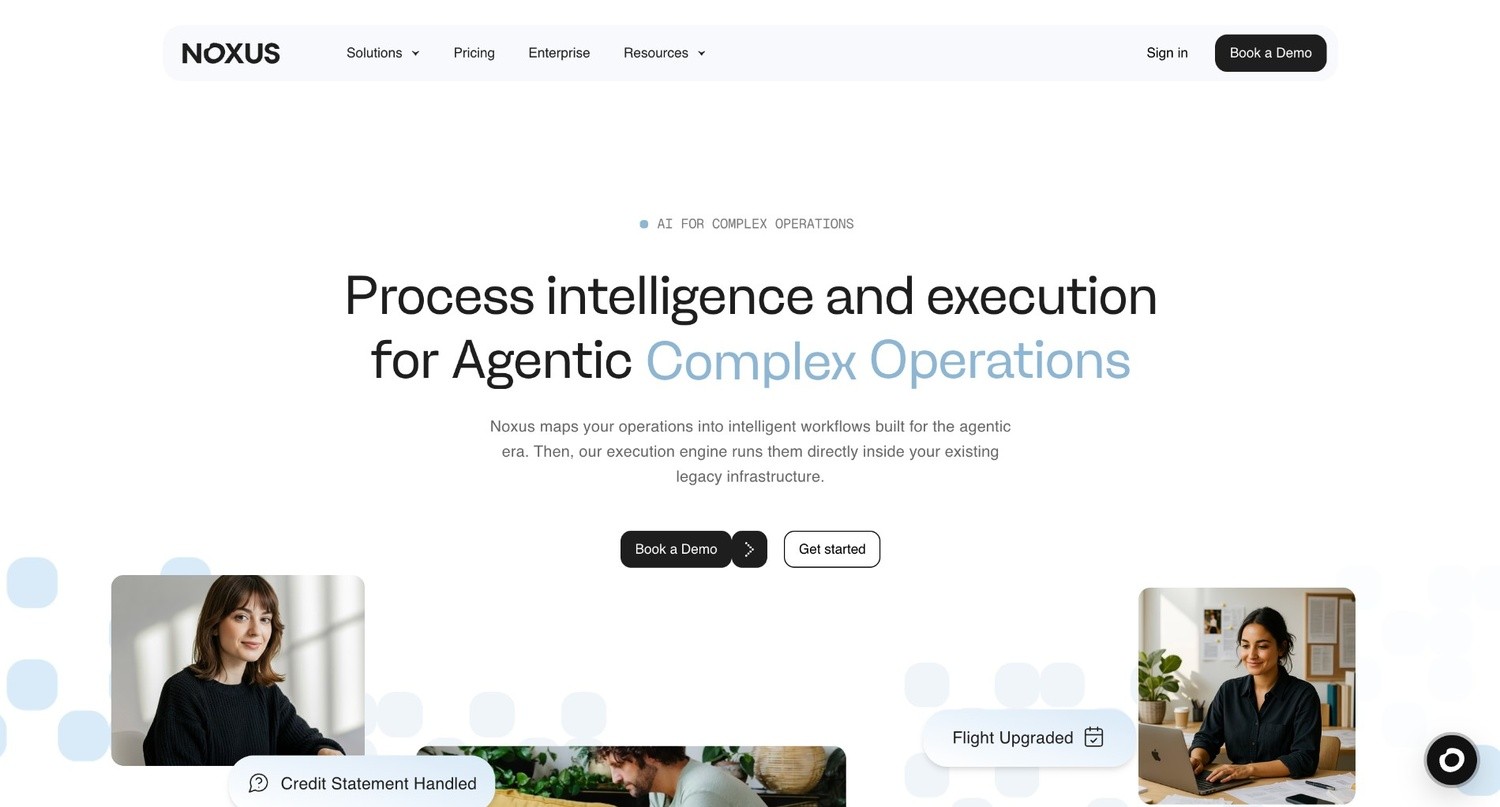
Noxus is the process intelligence layer: execution infrastructure that runs complex, multi-step workflows end-to-end across legacy enterprise environments.
In healthcare, that means automating the full patient communication and appointment coordination workflow: processing inbound requests from emails, portals, and documents; retrieving data from clinical and administrative systems; generating and sending responses; confirming appointments; and writing outcomes back to source systems, all under GDPR Article 9 compliance with deterministic policy enforcement and complete action logging.
Noxus is not a standalone scheduling widget. The value is in handling the volume and complexity that simpler tools cannot: 10,000+ patient communications per month, across legacy EPR, PMS, and administrative systems, with 96% AI precision and zero reliance on shadow AI or ungoverned communication channels.
We have deployed this in production for clients like CUF/José de Mello in Portugal, achieving 3x ROI in 50 days.
Ideal For
Healthcare Operations Leaders and COOs at NHS trusts, private hospital groups, and large health systems running high-volume patient communication across multiple legacy clinical systems
IT Directors and CISOs at regulated healthcare environments who need full GDPR Article 9 compliance with complete auditability of every AI decision
Digital and AI Transformation Leaders whose healthcare AI programmes have stalled at the infrastructure layer, and who need a partner with production credentials to build the internal case for moving from pilot to live deployment
Mid-market private hospital group COOs needing fast ROI from patient communication automation with minimal IT involvement
Head of Shared Services roles managing centralised appointment coordination across multi-site health networks.
Top Features
End-to-End Patient Communication Automation: The execution runtime handles the full workflow: classifying inbound patient requests (appointment booking, rescheduling, document requests, billing inquiries), retrieving relevant data from clinical and administrative systems, generating responses, and writing outcomes back.
GDPR Article 9 Compliance by Architecture: Every deployment runs on the client's own infrastructure, with deterministic policy enforcement ensuring no AI model makes clinical or compliance-relevant decisions. Data never leaves the healthcare organisation's environment. Certified against SOC 2 Type II, ISO 27001, GDPR Article 28, and HIPAA. For regulated healthcare environments, this is the structural requirement that makes deployment possible.
Legacy Clinical System Integration Without API Prerequisites: We connect to legacy EPR systems, PMS platforms, administrative databases, and communication channels the way clinical and administrative staff use them today: navigating interfaces, performing lookups, writing back results. No API modernisation required. If your staff can use the system, we can automate within it.
Why We Stand Out?
Most patient scheduling tools operate in the booking and reminder layer. We operate in the full communication and coordination layer beneath it. Healthcare organisations with high patient volumes, complex multi-system environments, and strict compliance requirements cannot be served by a booking widget or a reminder automation tool.
They need an AI infrastructure layer that works with the clinical and administrative systems they already have, under the governance framework they are legally required to maintain.
CUF/José de Mello achieved 3x ROI in 50 days processing 10,000+ patient communications per month across legacy clinical and administrative systems, with 96% AI precision and full GDPR Article 9 compliance deployed entirely on their own infrastructure.
Pros
Automates the full patient communication workflow, not just booking and reminders
Operates within legacy clinical systems without API prerequisites
GDPR Article 9 compliant by architecture; data stays within the healthcare organisation's infrastructure
Complete audit trail of every AI decision for governance and compliance purposes
Production-proven in healthcare with zero client churn
Cons
Purpose-built for high-volume, multi-system healthcare environments at mid-market and enterprise scale; not the right starting point for individual practitioners, small single-site practices, or organisations with straightforward scheduling needs
Deployment engineering is included in the first engagement rather than self-serve; organisations that need a tool live within hours should evaluate lighter scheduling alternatives.
Pricing
We operate on a monthly platform licence with consumption-based pricing. You pay for the operations completed, not for seats or tokens. Pricing scales with operational volume and deployment complexity.
The economics improve structurally with each additional workflow deployed on the same infrastructure. A structured pilot on your actual workflows is available before full commitment.
You’ll need to connect with our team directly for a pricing plan aligned to your use case and scale.
Final Verdict
Noxus is the best patient appointment scheduling software for healthcare organisations that need to automate patient communication and appointment coordination at volume, across complex legacy systems, under full compliance governance.
If your trust or hospital group is processing thousands of patient communications monthly across EPR and administrative systems, and you need AI that actually executes that work with a complete audit trail, Noxus delivers in production, not in pilot.
2. Phreesia
Overview
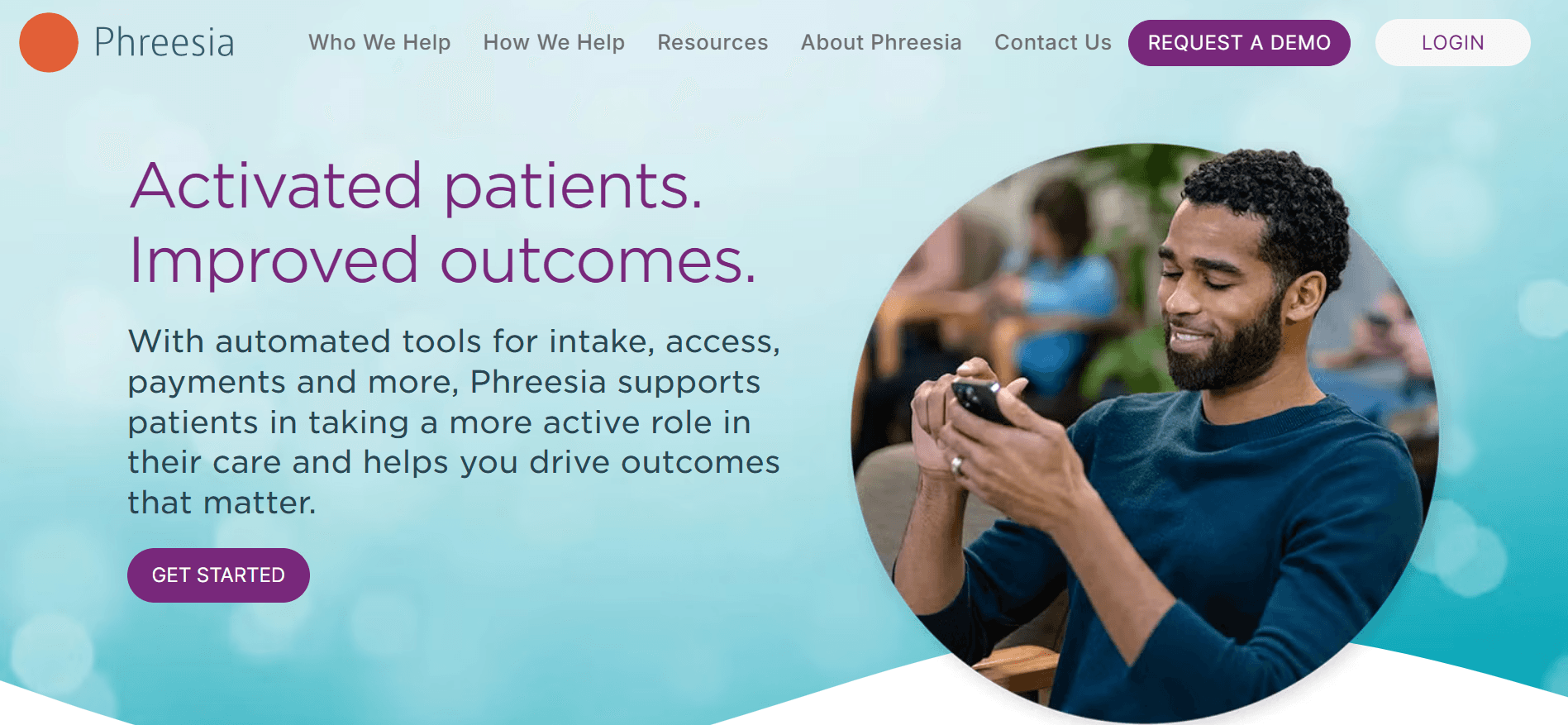
Phreesia is a US-headquartered patient intake and scheduling platform built for healthcare organisations that need to digitise and automate the pre-visit and check-in workflow at scale.
Founded in 2005 and listed on the NYSE, Phreesia serves over 4,000 healthcare organisations and processes tens of millions of patient visits annually.
Their platform covers patient self-scheduling, digital intake forms, eligibility verification, consent collection, and patient-reported outcomes, with a strong focus on reducing administrative burden before the patient arrives.
Ideal For
Large US healthcare groups and hospital systems digitising patient intake and pre-visit workflows
Medical groups running high appointment volumes who need eligibility verification automated at the point of booking
Operations leaders at multi-specialty practices looking to reduce check-in time and front desk workload
Healthcare IT leaders integrating scheduling and intake with major EHR systems
Top Features
Digital Intake and Eligibility Verification: Phreesia automates the collection of patient demographics, insurance information, consent forms, and medical history before the visit, and verifies eligibility in real time at the point of scheduling. This removes a significant portion of front desk work and reduces claim rejections downstream.
Self-Scheduling and Waitlist Management: Patients book appointments directly through Phreesia's portal or via embedded booking links, with real-time availability drawn from the practice's EHR. Waitlist functionality automatically fills cancellations from a patient queue without staff intervention.
Analytics and Operational Reporting: Phreesia's reporting layer tracks no-show rates, appointment utilisation, intake completion rates, and patient satisfaction scores, giving Operations Leaders the data to identify and address scheduling bottlenecks.
Why They Stand Out?
Phreesia is an established option for users (primarily US-based organisations) seeking the best patient appointment scheduling software market.
It's highly regarded because it combines self-scheduling, digital intake, and real-time eligibility verification in a single platform, solving multiple administrative issues.
A major benefit for US organizations is its deep integration with EHR systems like Epic, athenahealth, or Cerner.
Pros
Established platform with deep EHR integration coverage
Real-time eligibility verification built into the scheduling workflow
Strong analytics layer for operational performance monitoring
Large installed base across US healthcare with proven track record
Cons
Primarily US-focused; GDPR compliance coverage for UK and European healthcare environments is limited
No public pricing; custom quoting process can slow evaluation timelines for budget-constrained teams
Intake-heavy focus means less depth in post-visit communication and follow-up automation
Pricing
Phreesia uses a custom, usage-based pricing model scoped by practice size, encounter volume, and selected modules. There is no published rate card. Contact Phreesia's sales team for a quote.
Final Verdict
Phreesia is a strong choice for US healthcare groups needing comprehensive patient intake automation integrated with major EHR systems.
For UK and European healthcare organisations subject to GDPR Article 9, the compliance coverage and data residency options need careful verification before commitment.
3. Prosper AI
Overview
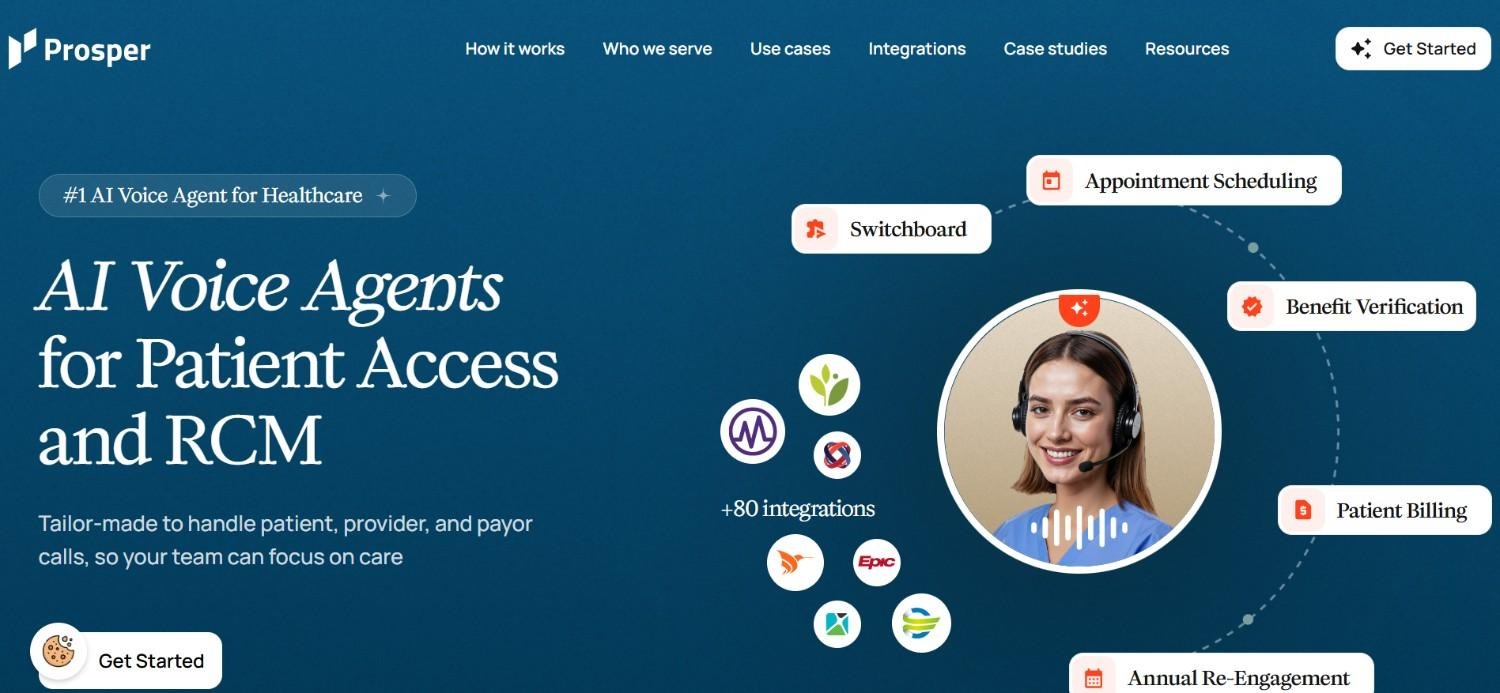
Prosper AI is a purpose-built AI patient engagement and scheduling platform targeted at medical and dental practices looking to automate appointment booking, confirmations, and follow-up communications without building a complex integration stack.
The product uses conversational AI to handle inbound patient scheduling inquiries across multiple channels including SMS, email, and web chat, and routes conversations to human staff when the AI reaches its confidence threshold.
Prosper AI focuses on accessibility and fast time-to-value for practices that need scheduling automation without significant IT involvement.
Ideal For
Medical and dental practices at the growth stage wanting AI scheduling without IT complexity
Practice Managers looking to reduce phone volume and front desk scheduling workload
Clinic operators needing automated appointment confirmations and reminders across SMS and email
Healthcare startups and DSOs (Dental Service Organisations) building patient acquisition and retention workflows
Top Features
Conversational AI Scheduling: Prosper AI handles inbound booking requests in natural language across SMS, email, and web, allowing patients to book, reschedule, or cancel without speaking to a human. The AI manages appointment type selection, provider availability, and confirmation within the same conversation.
Automated Reminders and Follow-Up Sequences: The platform sends multi-channel reminder sequences ahead of appointments, automated post-visit follow-up messages, and reactivation outreach to lapsed patients, reducing no-shows and keeping the patient list active.
Usage-Based Pricing for Growing Practices: Prosper AI's pricing model scales with actual platform usage rather than a fixed per-seat or per-location charge, which suits growing practices where scheduling volume changes month to month.
Why They Stand Out?
Prosper AI is considered a top choice among the best patient appointment scheduling software options for small to mid-size practices. The key is its conversational AI, which manages a significant amount of booking traffic and frees up your staff.
Plus, the flexible, usage-based pricing scales with what you actually use.
Pros
Accessible AI scheduling without complex IT setup
Multi-channel coverage across SMS, email, and web chat
Usage-based pricing suits practices with variable scheduling volumes
Fast time to deployment compared to enterprise scheduling platforms
Cons
Less suitable for large health systems with complex legacy clinical system environments
Integration depth with major EHR and EPR systems is narrower than enterprise-focused alternatives
Custom pricing for high-volume customers reduces pricing transparency at scale
Pricing
Prosper AI offers usage-based pricing aligned with platform activity. Custom pricing is available for high-volume customers and partnership arrangements. Contact their sales team for specific rates.
Final Verdict
Prosper AI is a top patient appointment scheduling tool for small to mid-size medical and dental practices that want to reduce phone volume and automate appointment communications without a significant IT investment.
For large health systems or organisations needing deep EHR integration and full GDPR compliance governance, the fit is limited.
4. NexHealth
Overview
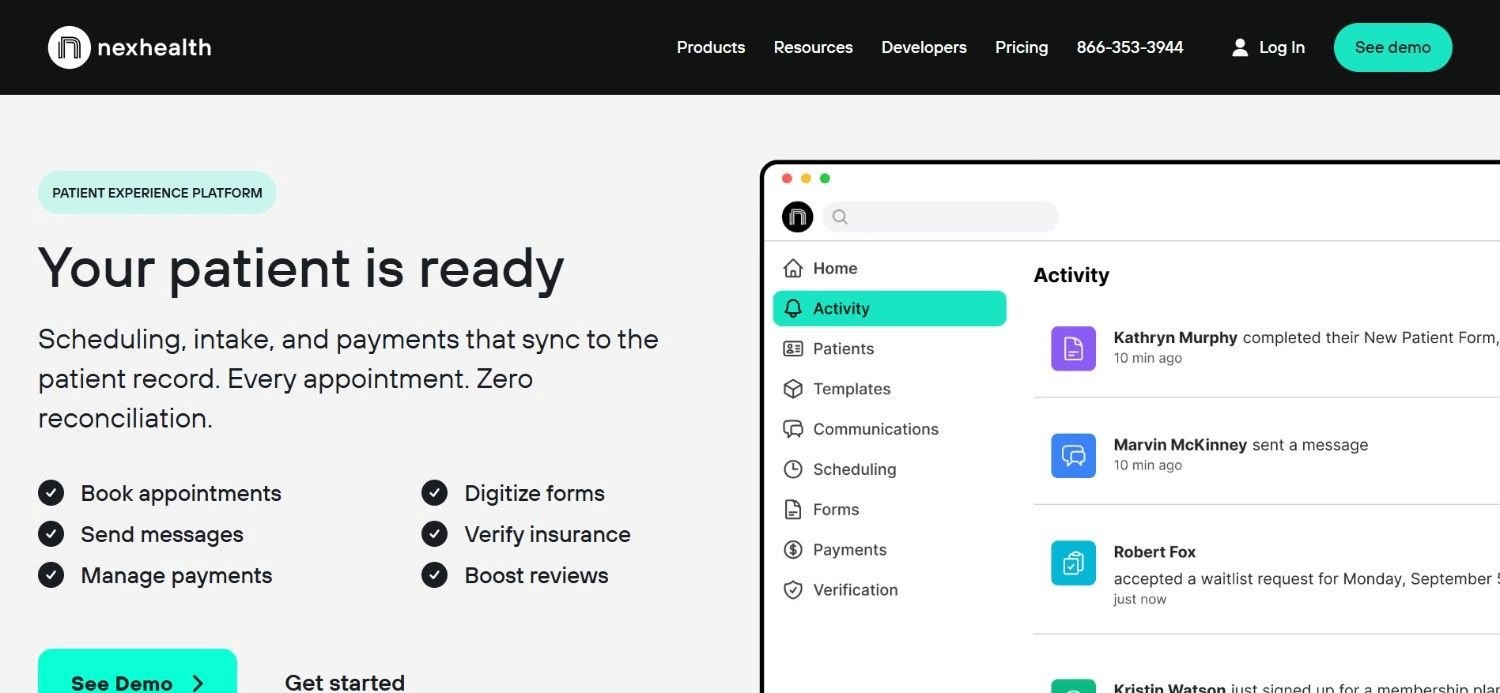
NexHealth is a patient relationship platform focused on connecting scheduling, intake, and communication directly to existing EHR and practice management systems.
Their primary audience is dental and medical practices that want online scheduling and automated patient communication without replacing their existing clinical software.
NexHealth's core differentiator is bidirectional EHR synchronisation: changes made in NexHealth sync back to the EHR in real time, and availability shown to patients reflects actual clinical calendar state rather than a manually maintained secondary calendar.
Ideal For
Dental and medical practices wanting online scheduling synced bidirectionally with their existing EHR
Practice Managers looking to reduce manual double-entry between scheduling tools and clinical systems
Multi-provider practices needing waitlist management to fill last-minute cancellations automatically
Healthcare operators running patient satisfaction and review collection alongside scheduling
Top Features
Bidirectional EHR Synchronisation: NexHealth reads and writes directly to the EHR, meaning the online booking page always reflects real-time provider availability and any changes made through NexHealth appear immediately in the clinical system. This removes the dual-calendar problem that creates double bookings and administrative rework.
Automated Appointment Reminders and Recall: NexHealth sends automated SMS and email reminders at configurable intervals before appointments, and automated recall messages to patients who are overdue for a follow-up or have not booked a recommended next visit.
Waitlist Management: When a cancellation occurs, NexHealth automatically contacts patients on the waitlist for that appointment type, filling the slot without staff intervention and reducing revenue lost to late cancellations.
Why They Stand Out?
NexHealth's bidirectional EHR sync is one of the more technically credible implementations in the mid-market scheduling category.
For practices that have struggled with mismatched calendars and manual data entry between booking tools and clinical systems, this is a meaningful practical advantage.
Pros
Bidirectional EHR sync eliminates double-calendar management
Automated waitlist fill reduces revenue lost to late cancellations
Clean, modern patient-facing booking interface
Month-to-month billing option with no cancellation fees
Cons
Primarily targeted at dental and small medical practices; limited depth for large health system environments
Custom pricing without a public rate card complicates early budget assessment
Less suited to complex multi-specialty, multi-site workflows
Pricing
NexHealth uses custom pricing with month-to-month or annual billing options and no cancellation fees. Contact their sales team for a quote based on practice size and required modules.
Final Verdict
NexHealth is a strong option for dental and medical practices that want reliable EHR-connected online scheduling with automated reminders and waitlist management.
For large multi-site health systems or organisations with complex clinical workflows, a more comprehensive scheduling infrastructure would provide better coverage.
5. Luma Health
Overview
Luma Health is a patient success platform covering scheduling, intake, referral management, and automated patient outreach. Founded in 2015 and based in San Francisco, Luma serves over 600 health systems, clinics, and specialty practices in the US.
Their core product connects to the EHR and automates outbound patient communication across the full care journey: appointment reminders, intake forms, post-visit follow-up, referral tracking, and care gap outreach.
The platform is particularly strong for health systems that need to manage complex scheduling workflows across multiple departments or care pathways.
Ideal For
Health systems and multi-site medical groups managing complex care pathway scheduling
Referral coordinators and care teams tracking patients across multi-step appointment sequences
Operations Leaders at primary and specialty care networks needing automated patient outreach at scale
Healthcare organisations running recall campaigns and proactive care gap outreach alongside scheduling
Top Features
Smart Scheduling Across Care Pathways: Luma coordinates scheduling across multi-step care pathways, handling referral bookings, follow-up appointment reminders, and rescheduling requests across departments or providers without requiring manual coordination at each step.
Automated Outreach Across Multiple Channels: Luma sends automated patient communications via SMS, email, and phone across the full appointment lifecycle: pre-visit reminders, intake forms, post-visit instructions, and recall outreach. Communications are personalised based on appointment type and patient history.
Referral Management and Tracking: Luma's referral module tracks inbound referrals through to a booked appointment, with automated outreach to referred patients and status reporting for referring providers. This closes a coordination gap that frequently results in referred patients being lost to follow-up.
Why They Stand Out?
Luma Health is one of the best patient scheduling software for health systems that need to manage patient communication across complex, multi-step care pathways rather than simply automating reminders for standalone appointments.
The referral management capability in particular addresses a coordination problem that simpler scheduling tools do not cover.
Pros
Strong coverage of complex multi-step care pathway scheduling
Referral management and tracking built into the scheduling workflow
Multi-channel automated outreach across SMS, email, and phone
Established health system customer base with published integrations for major EHRs
Cons
Primarily a US platform; GDPR compliance for UK and European deployments requires careful evaluation
Pricing starts at approximately $250/month and scales with providers and volume, which may limit accessibility for smaller practices
Less suitable for high-volume legacy system environments requiring deep infrastructure integration
Pricing
Luma Health's pricing starts at approximately $250/month, scaling with the number of providers and patient volume. Custom pricing is available for larger health systems.
Contact their sales team for enterprise-scale quotes.
Final Verdict
Luma Health is a credible choice for US health systems and multi-site practices managing complex care pathway scheduling and referral tracking.
For UK and European healthcare organisations, GDPR compliance coverage and data residency should be verified directly before proceeding.
6. Skedulo

Overview
Skedulo is an intelligent scheduling platform built for organisations managing a mobile or field-based workforce, with a notable deployment base in healthcare.
In healthcare contexts, Skedulo is typically used by home health agencies, community health providers, and multi-location clinical organisations managing patient-facing staff who travel between sites or patient locations.
The platform handles scheduling complexity across multiple workers, skills, locations, and service requirements, and includes a mobile app for field staff alongside the centralised scheduling interface for coordinators.
Ideal For
Home health agencies and community care providers scheduling mobile clinical staff
Multi-location healthcare organisations managing visiting healthcare workers across sites
Healthcare Operations Managers overseeing shift-based or appointment-based scheduling for large clinical teams
Coordinators at organisations where staff scheduling and patient appointment management need to be solved together
Top Features
Intelligent Shift and Visit Scheduling: Skedulo's scheduling engine accounts for worker skills, certifications, location, availability, and workload to assign the right person to the right appointment or shift. For home health and community care environments, this replaces manual scheduling processes that are prone to error and difficult to scale.
Mobile App for Field Staff: Skedulo's mobile application gives field-based clinical staff access to their schedule, appointment details, patient notes, and navigation support in real time. Updates to the schedule push to the mobile app immediately, removing the communication gap between coordinators and mobile workers.
Analytics and Performance Reporting: Skedulo tracks scheduling efficiency, utilisation rates, travel time, and appointment completion across the workforce, giving Operations Managers the data to identify inefficiencies and adjust staffing levels.
Why They Stand Out?
Skedulo addresses a specific gap in the scheduling market: organisations where the scheduling problem is not just about patient booking but about matching mobile clinical workers to patient appointments efficiently.
For home health and community care providers, this operational complexity is the primary challenge, and Skedulo is one of the more purpose-built choices for it.
Pros
Purpose-built for mobile and field workforce scheduling in healthcare
Mobile app keeps field staff connected to real-time schedule changes
Skills and certification-aware scheduling reduces manual assignment decisions
Analytics layer supports workforce efficiency optimisation
Cons
Less suitable for clinic or hospital-based patient scheduling without a mobile workforce component
Custom pricing without public disclosure makes budget planning difficult
Narrower EHR integration coverage than patient-facing scheduling tools
Pricing
Skedulo offers two plan types: Schedulers and Mobile Workers, with features tailored to each role. Custom pricing applies to both. Contact Skedulo's sales team for a demo and quote.
Final Verdict
Skedulo is a top patient appointment scheduling software for home health agencies, community care providers, and multi-location health organisations that need to schedule mobile clinical staff alongside patient appointments.
For clinic or hospital-based organisations whose scheduling problem is primarily patient-facing rather than workforce-facing, other tools in this list would serve better.
7. PracticeQ
Overview
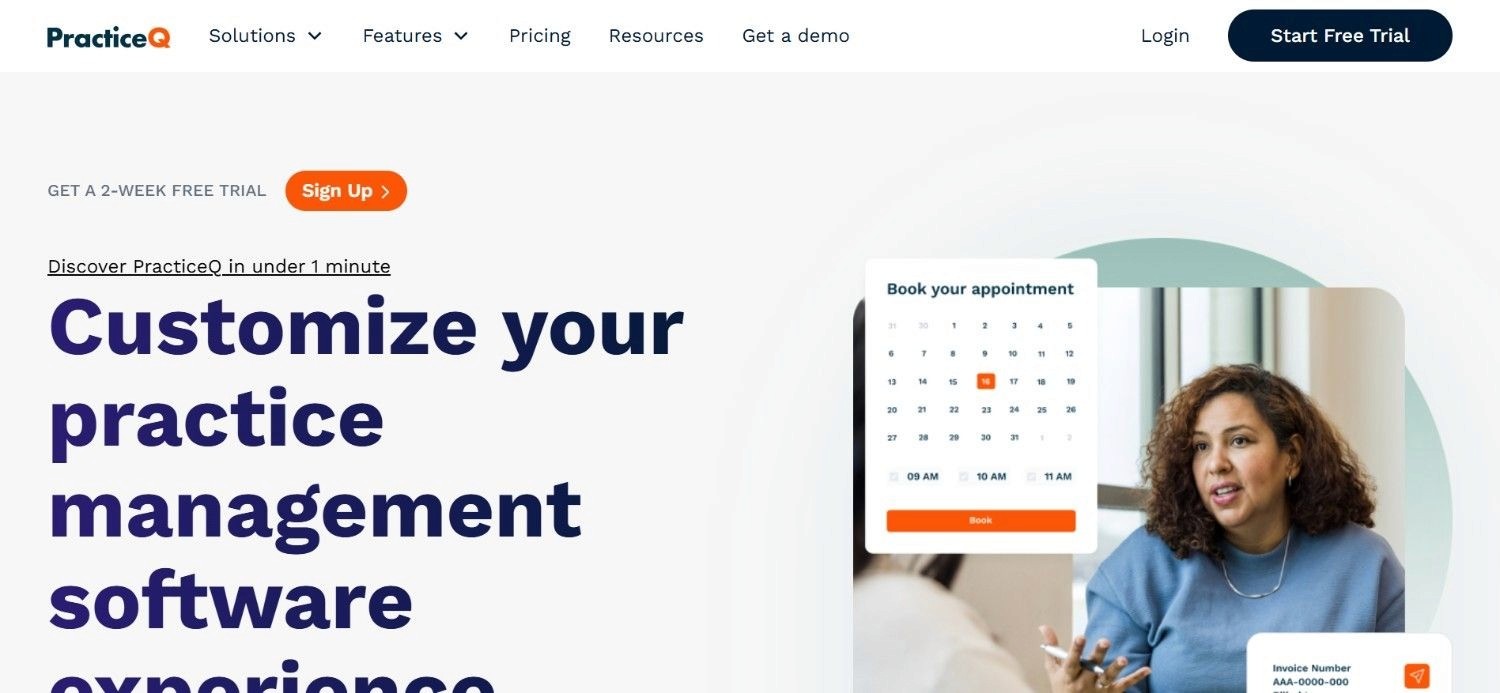
PracticeQ is an all-in-one practice management platform targeting solo practitioners and small-to-mid-size medical, dental, and allied health practices. The platform covers online booking, digital intake forms, clinical documentation, billing, telehealth, and secure messaging in a single product.
For practices that want to replace multiple point solutions with one integrated tool, PracticeQ provides broad coverage at a price point that is accessible for smaller organisations.
The platform is HIPAA-compliant and designed for practices in the US, though it is also used internationally in clinical settings.
Ideal For
Solo practitioners and small medical, dental, or allied health practices needing an all-in-one practice management tool
Growing practices at the Starter or Pro stage replacing spreadsheets and paper-based processes with digital workflows
Allied health practitioners (physiotherapy, psychology, chiropractic) needing scheduling integrated with clinical notes and billing
Practices looking to consolidate scheduling, intake, telehealth, and billing into a single subscription
Top Features
Integrated Online Booking and Intake: PracticeQ's patient-facing booking portal connects directly to the practitioner's availability calendar, and intake forms collect patient information ahead of the appointment. Both flow directly into the practice management system without manual data entry.
Telehealth and Secure Messaging: PracticeQ includes built-in telehealth capability and secure patient-practitioner messaging, covering the communication and consultation workflows that many practices manage across separate tools.
Billing and Payments Integration: The platform handles invoice generation, payment collection, and billing management alongside scheduling and clinical documentation, giving small practices a single tool for the administrative and financial side of practice operations.
Why They Stand Out?
PracticeQ is one of the best patient appointment scheduling software for small and growing practices that need broad coverage without enterprise complexity or pricing.
The combination of scheduling, clinical documentation, telehealth, and billing in a single product at under $100/month per month addresses the specific pain of practices managing multiple separate subscriptions.
Pros
All-in-one coverage across scheduling, clinical documentation, telehealth, and billing
Accessible pricing starting at $59.90/month, suited to solo and small practices
HIPAA-compliant platform with secure messaging built in
No large implementation project required for basic deployment
Cons
Not suited to large health systems or multi-site organisations with complex scheduling requirements
Integration depth with major EHR systems is limited compared to enterprise-focused scheduling tools
Reporting and analytics capabilities are less developed than dedicated scheduling platforms
Pricing
PracticeQ's Starter plan is $59.90/month, suited to solo practitioners and small practices. The Pro plan is $84.90/month for larger and faster-growing teams. Both plans are billed monthly.
Final Verdict
PracticeQ is a practical choice for solo and small-to-mid-size practices that need a complete practice management tool at an accessible price point.
For larger healthcare organisations or those needing deep integration with existing clinical systems, a more specialised scheduling platform would provide better coverage.
8. Zocdoc
Overview
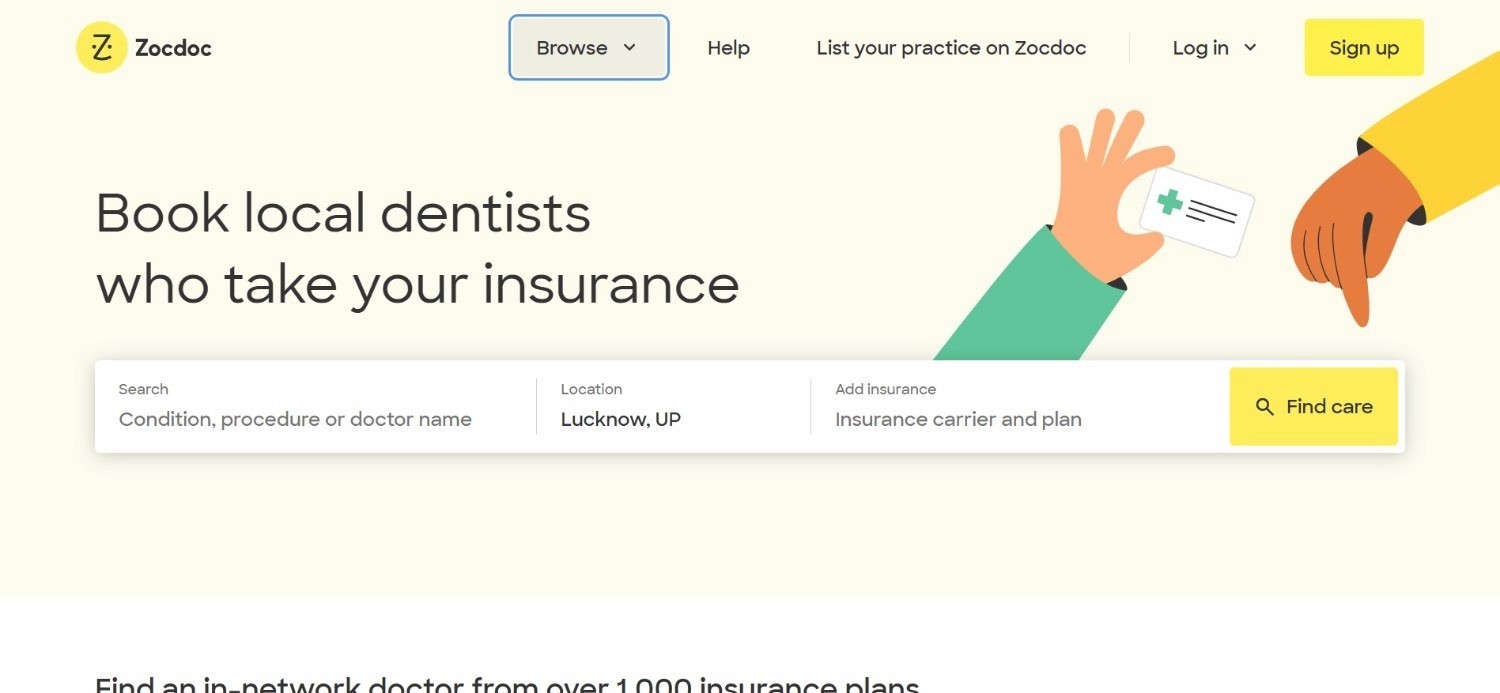
Zocdoc is a patient-facing healthcare marketplace and scheduling platform that allows patients to search for providers, check real-time availability, and book appointments directly online.
Founded in 2007 in New York, Zocdoc operates primarily in the US and connects patients to thousands of medical providers across specialties and geographies.
For practices and clinics, Zocdoc functions as both a new patient acquisition channel and a scheduling tool: patients book through the Zocdoc platform, and the booking syncs to the provider's existing calendar and practice management system.
Ideal For
Medical and dental practices looking to attract new patients through an online marketplace
Solo practitioners and group practices in competitive urban markets where patient discovery matters
Specialists wanting to fill appointment slots with new patients in their target geography
Practices whose primary scheduling problem is new patient acquisition rather than existing patient management
Top Features
New Patient Marketplace: Zocdoc's consumer platform has a large and established patient user base actively searching for healthcare providers. For practices that prioritise new patient acquisition, this network effect is the primary value proposition.
Real-Time Availability and Instant Booking: Patients see actual available appointment slots and book instantly without calling the practice. For practices that still rely on phone-based new patient booking, this removes a friction point that costs bookings.
Insurance Matching: Zocdoc allows patients to filter providers by their insurance plan, reducing the proportion of bookings that cannot proceed due to coverage mismatches. This saves administrative time and reduces the proportion of no-shows attributed to insurance issues discovered at check-in.
Why They Stand Out?
Zocdoc's pricing model is notable: there is no fixed monthly fee. Practices are only charged when a new patient books their first appointment through the platform.
Subsequent appointments from the same patient, and appointments from existing patients using Zocdoc, carry no charge.
This makes the financial risk of trying the platform low for practices evaluating patient acquisition channels.
Pros
No fixed monthly fee; only charged on successful new patient bookings
Large patient user base for new patient discovery and acquisition
Real-time availability and instant booking reduces phone dependency
Insurance matching reduces coverage-related cancellations
Cons
Value is primarily in new patient acquisition; less useful for managing existing patient scheduling workflows
US-centric platform; limited availability in the UK and European healthcare markets
Less suitable for NHS or public health settings where patient acquisition is not the primary objective
Pricing
Zocdoc charges only when a new patient books their first appointment via the platform. There are no upfront or monthly fees. Existing patient rebookings through Zocdoc carry no additional charge.
Final Verdict
Zocdoc is one of the best patient appointment scheduling software for US medical and dental practices looking to increase new patient bookings through an established consumer marketplace.
For organisations whose primary need is managing existing patient scheduling, communication, and follow-up, other tools in this list provide more relevant coverage.
9. Voiceoc
Overview
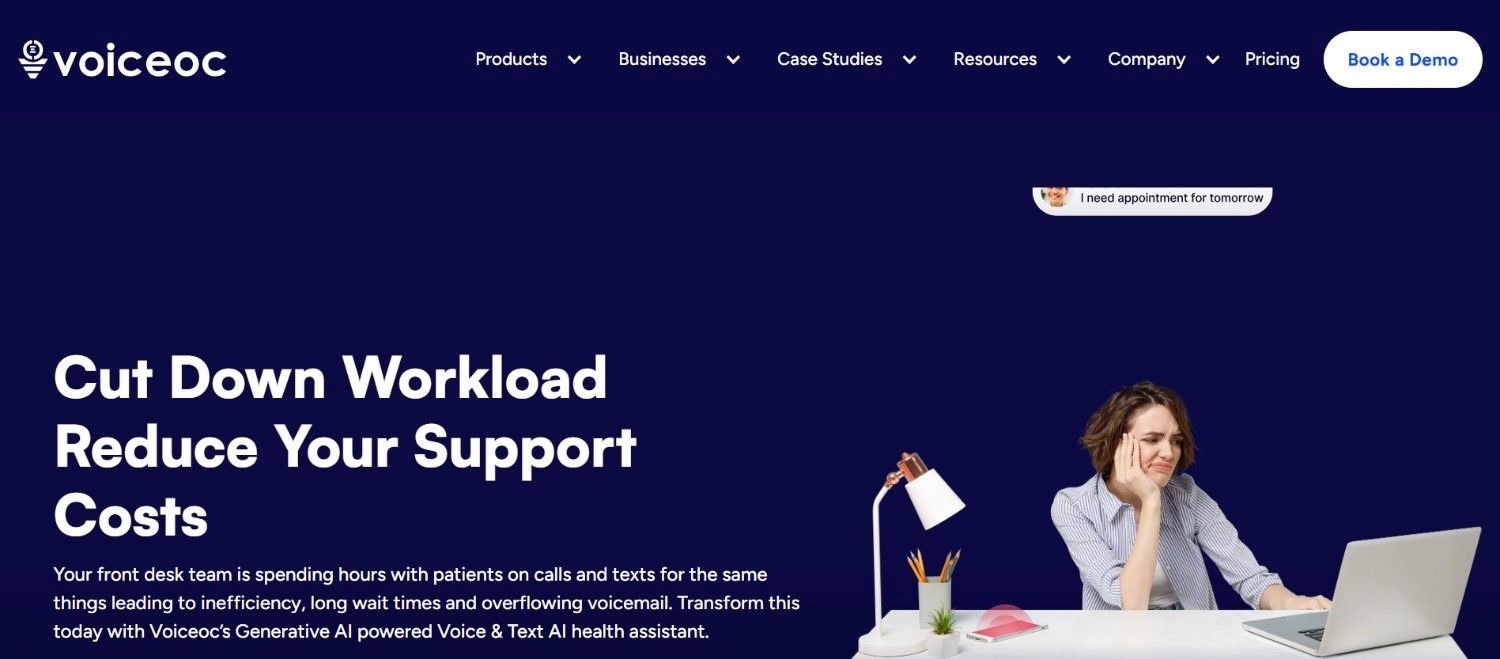
Voiceoc is an AI-driven patient engagement tool that automates appointment scheduling, reminders, and follow-up communications through AI voice calling and WhatsApp messaging.
The product targets healthcare organisations where a significant portion of the patient population prefers phone or messaging-based communication over web portals or apps.
Voiceoc's AI agent handles inbound and outbound calls to book, confirm, and reschedule appointments in natural language, escalating to human agents when the conversation falls outside the AI's confidence threshold.
The platform supports multilingual communication, making it relevant for healthcare organisations serving diverse patient populations.
Ideal For
Healthcare organisations serving patient populations with low digital adoption who prefer phone or WhatsApp scheduling
Multi-language health systems or clinics needing appointment automation in more than one language
Operations teams looking to reduce call centre volume for appointment-related inbound calls
Healthcare organisations in markets where WhatsApp is a primary patient communication channel
Top Features
AI Voice Scheduling: Voiceoc's AI agent handles inbound patient calls for appointment booking, reschedules, and cancellations in natural language, processing requests without requiring patients to navigate web portals or apps. The AI understands patient intent, checks availability, and confirms bookings in a conversational flow.
WhatsApp Integration: Alongside voice, Voiceoc automates appointment communications through WhatsApp, covering reminders, confirmations, and two-way messaging. For patient populations where WhatsApp is the default communication channel, this provides a scheduling touchpoint that web-based tools miss.
Multilingual Support: Voiceoc supports patient communication in multiple languages within the same deployment, which is relevant for health systems serving diverse patient communities or operating across multiple geographies.
Why They Stand Out?
Voiceoc addresses a specific gap that most web-based scheduling tools leave open: patients who do not use online portals.
The combination of AI voice calling and WhatsApp integration covers communication channels that matter for healthcare organisations serving older patient populations or communities with lower smartphone and web adoption.
Pros
AI voice calling reduces call centre workload for routine scheduling inquiries
WhatsApp integration covers a communication channel many competitors miss
Multilingual support for diverse patient populations
Custom pricing scales with actual call volume rather than a fixed fee
Cons
Less suitable for tech-forward patient populations where web and app scheduling is the primary channel
Custom pricing requires engagement with sales; no published rates for early budget assessment
Integration depth with EHR and clinical systems is less developed than enterprise-focused scheduling tools
Pricing
Voiceoc uses custom pricing based on the organisation's monthly appointment call volume. Contact their sales team for a quote.
Final Verdict
Voiceoc is one of the best patient appointment scheduling software for healthcare practices that need to automate appointment scheduling for patient populations who prefer phone or WhatsApp communication.
For organisations where online and app-based scheduling already covers the majority of patient interactions, the specific channel focus limits the breadth of value.
10. WaitWell
Overview
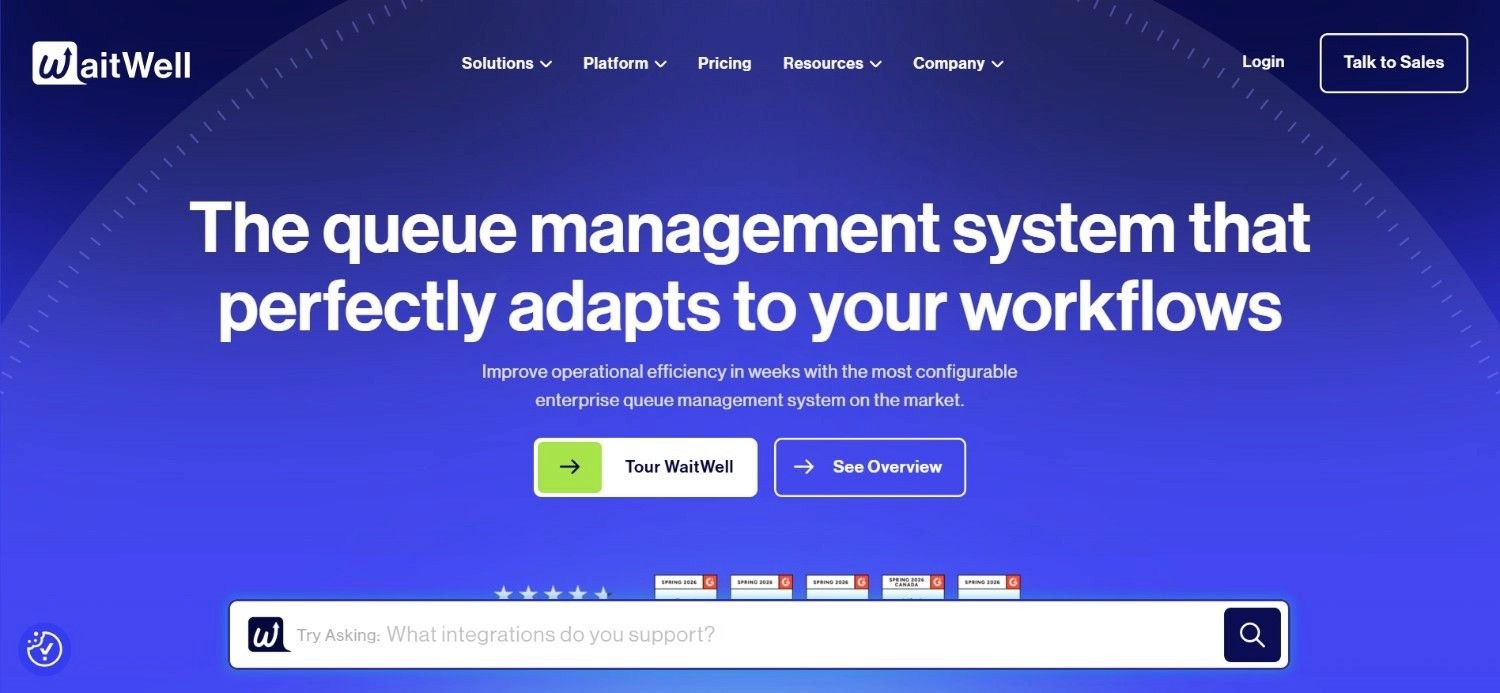
WaitWell is a queue management and appointment scheduling platform designed for organisations managing both walk-in and pre-booked patient flows.
Originally built for retail and government service settings, WaitWell has also developed a healthcare vertical focused on clinics, public health services, and outpatient departments where managing the interaction between walk-in capacity and appointment slots is a daily operational challenge.
The platform combines virtual queuing, appointment booking, and staff scheduling in a single interface accessible via web or mobile.
Ideal For
Walk-in clinics and urgent care centres managing concurrent walk-in and appointment patient flows
Public health vaccination and screening services managing high-volume short-appointment operations
Community health centres and GP practices with significant walk-in demand alongside booked appointments
Operations Managers at multi-location healthcare organisations needing standardised queue management across sites
Top Features
Virtual Queue Management: WaitWell allows patients to join a virtual queue via their mobile device, receiving real-time position updates and estimated wait times. This removes physical queuing from waiting rooms, reduces perceived wait time, and gives staff accurate demand data for managing capacity in real time.
Combined Walk-In and Appointment Scheduling: WaitWell manages both pre-booked appointments and walk-in demand within the same scheduling interface, giving staff a single view of expected and actual patient flow. This is the core operational problem in urgent care and walk-in clinic settings that pure appointment scheduling tools do not address.
Analytics for Operational Planning: WaitWell tracks wait times, service times, patient flow patterns, and staff utilisation across locations, providing Operations Managers with the data to make staffing and capacity decisions based on actual demand rather than estimates.
Why They Stand Out?
WaitWell is one of the best patient appointment scheduling software for healthcare settings where walk-in demand and pre-booked appointments coexist and need to be managed together.
The virtual queuing capability, combined with appointment scheduling and analytics, covers an operational gap that standard scheduling tools leave open for urgent care and community health settings.
Pros
Combined virtual queue and appointment scheduling in a single interface
Accessible entry pricing at $29/month per location
Real-time capacity data for walk-in and booked patient flows
Analytics layer supports staffing and capacity planning decisions
Cons
Less suited to complex multi-specialty clinical scheduling workflows
Integration with clinical EHR systems is more limited than healthcare-specific scheduling platforms
Per-location pricing model means costs scale directly with site count for multi-location organisations
Pricing
WaitWell's Starter plan is $29/month per location, and the Basic plan is $55/month per location. Larger organisations with higher volume requirements should contact WaitWell's sales team for a custom quote.
Final Verdict
WaitWell is a well-suited choice for walk-in clinics, urgent care centres, and community health services that need to manage walk-in patient flow alongside pre-booked appointments.
For organisations whose scheduling challenge is primarily calendar and communication management rather than walk-in queue management, other tools in this list would be a better fit.
How to Choose the Best Patient Scheduling Software (What to Consider)?
1. Match the Tool to Your Patient Volume and Complexity
A solo GP practice and an NHS trust with 50,000 patient appointments per month have fundamentally different requirements. Tools like PracticeQ and WaitWell are built for accessible, lower-complexity environments.
Tools like Noxus and Phreesia are built for high-volume, multi-system environments where the scheduling problem is part of a broader operational workflow.
Start by being honest about your volume, the number of systems your scheduling workflow touches, and whether your primary problem is booking, reminders, walk-in management, or full communication automation.
2. Verify GDPR or HIPAA Compliance Architecture
For UK and European healthcare organisations, GDPR Article 9 is a hard requirement: patient data is special category data, and how it is processed, stored, and transmitted must be governed explicitly.
For US organisations, HIPAA compliance is the equivalent baseline. Ask specifically: where does patient data reside, who has access, how are AI decisions logged, and does the vendor provide a Data Processing Agreement that meets your legal requirements.
Do not accept contractual compliance claims as a substitute for architectural compliance, particularly if the tool processes patient communications through US-based cloud infrastructure.
AI workers deployed in healthcare must meet this standard structurally, not just on paper.
3. Confirm Integration With Your Existing Clinical Systems
The scheduling tool is only as useful as its connection to the systems your practice or health system already runs. Bidirectional EHR sync, PMS connectivity, and communication channel integration determine whether the tool reduces or adds to administrative overhead.
Check specifically whether the vendor provides a published, maintained integration for your clinical system, or whether connection requires custom development.
Tools that require a large IT project before delivering value will delay ROI and create internal resistance.
4. Assess No-Show Reduction Capability
No-show reduction is one of the clearest ROI metrics for scheduling software investment. The mechanism matters: automated reminder sequences sent at the right intervals for your appointment type and patient population are significantly more effective than single-touch reminders.
Look for tools that support configurable reminder timing, multi-channel outreach (SMS, email, voice), and two-way patient communication that allows confirmations and rescheduling without staff involvement.
For high-value or long-wait appointments, this is where scheduling software pays for itself.
5. Evaluate Scalability Against Your Growth Trajectory
A tool that works for your current patient volume may not scale to where your organisation is heading. Per-location pricing models become expensive as you add sites. Per-provider models become expensive as you add clinicians.
Usage-based models, like those offered by Noxus and Prosper AI, scale with actual activity rather than infrastructure count. Before committing, model the cost of the tool against your projected patient volume and site count at 12 and 24 months, not just today.
For organisations considering how workflow automation tools can extend scheduling automation into broader clinical operations, this scalability consideration is especially relevant.
Everything You Need to Know About Patient Appointment Scheduling Software
← scroll to see all columns →
| Company | Pros | Cons | Ease of Use | Integrations | Support | Affordability |
|---|---|---|---|---|---|---|
| Noxus | Full communication workflow automation; legacy system depth; GDPR Article 9 compliant | Requires deployment engineering; not for single-site small practices | ⭐⭐⭐⭐⭐ | ⭐⭐⭐⭐⭐ | ⭐⭐⭐⭐⭐ | ⭐⭐⭐⭐⭐ |
| Phreesia | Deep EHR integration; eligibility verification; strong US track record | US-focused; no public pricing; limited GDPR coverage | ⭐⭐⭐⭐⭐ | ⭐⭐⭐⭐⭐ | ⭐⭐⭐⭐⭐ | ⭐⭐⭐⭐⭐ |
| Prosper AI | Accessible AI scheduling; multi-channel; usage-based pricing | Limited EHR integration depth; less suited to large systems | ⭐⭐⭐⭐⭐ | ⭐⭐⭐⭐⭐ | ⭐⭐⭐⭐⭐ | ⭐⭐⭐⭐⭐ |
| NexHealth | Bidirectional EHR sync; waitlist automation; clean UX | Primarily dental and small medical; limited multi-site depth | ⭐⭐⭐⭐⭐ | ⭐⭐⭐⭐⭐ | ⭐⭐⭐⭐⭐ | ⭐⭐⭐⭐⭐ |
| Luma Health | Multi-step care pathway scheduling; referral management; multi-channel outreach | US-focused; limited GDPR coverage; pricing scales quickly | ⭐⭐⭐⭐⭐ | ⭐⭐⭐⭐⭐ | ⭐⭐⭐⭐⭐ | ⭐⭐⭐⭐⭐ |
| Skedulo | Mobile workforce scheduling; skills-aware assignment; mobile app | Less suitable for clinic-based patient scheduling; no public pricing | ⭐⭐⭐⭐⭐ | ⭐⭐⭐⭐⭐ | ⭐⭐⭐⭐⭐ | ⭐⭐⭐⭐⭐ |
| PracticeQ | All-in-one for small practices; affordable; HIPAA-compliant | Not suited to large health systems; limited reporting depth | ⭐⭐⭐⭐⭐ | ⭐⭐⭐⭐⭐ | ⭐⭐⭐⭐⭐ | ⭐⭐⭐⭐⭐ |
| Zocdoc | New patient acquisition; no fixed fee; insurance matching | US-centric; limited existing patient management capability | ⭐⭐⭐⭐⭐ | ⭐⭐⭐⭐⭐ | ⭐⭐⭐⭐⭐ | ⭐⭐⭐⭐⭐ |
| Voiceoc | AI voice scheduling; WhatsApp integration; multilingual support | Limited EHR integration depth; no public pricing | ⭐⭐⭐⭐⭐ | ⭐⭐⭐⭐⭐ | ⭐⭐⭐⭐⭐ | ⭐⭐⭐⭐⭐ |
| WaitWell | Walk-in and appointment management; accessible entry pricing; analytics | Per-location cost scales quickly; limited EHR integration | ⭐⭐⭐⭐⭐ | ⭐⭐⭐⭐⭐ | ⭐⭐⭐⭐⭐ | ⭐⭐⭐⭐⭐ |
Automate Patient Communication with Noxus
Most patient appointment scheduling software handles the booking and reminder layer. Noxus handles everything beneath it.
Noxus processes 10,000+ patient communications per month across appointment coordination, document requests, billing inquiries, and referral management, running inside your existing clinical and administrative systems with 96% AI precision and a complete audit trail of every action.
Every deployment runs on your own infrastructure, under full GDPR Article 9 compliance; patient data never leaves your environment. The proof is in production: 3x ROI at CUF/José de Mello in Portugal, deployed in 50 days, processing the full patient communication workflow across legacy clinical systems at scale. Zero client churn to date.
Most healthcare AI programmes we encounter have already run pilots. The pilots worked in sandboxes and then stalled when they met the reality of legacy EPR systems and GDPR Article 9 requirements. That is precisely the problem we are built to solve, not another controlled environment test, but a live deployment on your actual systems in 45-50 days.
If your health system is managing thousands of patient communications monthly and needs AI that actually executes that work, not just surfaces it, we can demonstrate production outcomes in 45 days.
FAQs About Patient Appointment Scheduling Software
What is the best patient appointment scheduling software in 2026?
The top patient scheduling software in 2026 is Noxus. We’re the strongest choice for large-scale health systems that need to automate the full patient communication workflow across legacy clinic systems under GDPR Article 9 compliance; with deployments processing 10,000+ patient communications per month at 96% AI precision rate.
What should I consider when choosing the right patient scheduling software for me?
When choosing patient scheduling software, the four key factors are: your patient volume and scheduling complexity (solo practice vs. large health system); whether the tool meets GDPR Article 9 or HIPAA compliance requirements architecturally, not just contractually; integration compatibility with your existing EHR or clinical systems; and whether the pricing model scales predictably with your patient volume and site count. Always confirm the compliance credentials and data residency arrangements before committing to a tool that processes health data.
How does Noxus differ from traditional patient scheduling software?
Noxus differs from traditional patient appointment scheduling software because it operates at the full communication and coordination layer, not just the booking and reminder layer. While tools like NexHealth or Luma Health automate scheduling and outreach, Noxus handles the entire inbound patient communication workflow: classifying requests, retrieving data from clinical systems, generating responses, confirming appointments, and writing outcomes back to source systems, all under deterministic governance with a complete audit trail.
How do I get started with Noxus?
Getting started with Noxus begins with a demo call where we review your patient communication volumes, the clinical and administrative systems involved, and your compliance requirements. From there, we scope the first use case and structure the initial deployment. Most first healthcare deployments go from contract to production within 45-50 days, with a structured pilot on your actual workflows available before full commitment.
How easy is it to switch to Noxus?
Switching to Noxus does not require replacing any existing clinical or administrative systems. Noxus deploys on top of your current stack, operating within your EPR, PMS, and communication infrastructure as it exists today. The deployment engineering for the first use case is handled by our team. No large IT project is required; the first workflow goes live on your actual systems in approximately 45-50 days.
Does patient scheduling software need to be HIPAA or GDPR compliant?
Yes, when selecting the best appointment scheduling software, compliance is non-negotiable. Since these tools handle sensitive patient data, they must adhere to regulations like GDPR Article 9 in the UK/EU or HIPAA in the US. It’s vital that compliance is architectural (how the data is processed) and not just contractual. If you are operating under UK GDPR, you must always verify the vendor’s compliance credentials and data residency, as relying on US-based cloud infrastructure may not meet requirements for healthcare deployments.
Can AI scheduling tools reduce patient no-shows?
Research has shown that AI scheduling tools can meaningfully reduce patient no-shows by a sizable 30-50%, through automated, multi-channel reminder sequences sent at configurable intervals before appointments. The key factors for this to happen though, are: reminder timing relative to appointment date, channel (SMS reminders consistently outperform email for attendance confirmation), and whether the system supports two-way communication that allows patients to confirm or reschedule without calling the practice.
How does Noxus integrate with existing EPR and clinical systems without disrupting clinical workflows?
Noxus works just like your staff: it navigates interfaces, performs lookups, and writes back results without needing API access to your EHR or middleware projects. If your team can access the system, we can automate within it. Deployment requires no upfront IT project. Our team handles integration for your first use case while clinical workflows stay uninterrupted. The execution runtime runs in parallel until live, then takes over automated work. Data stays in your infrastructure with a complete audit trail for every action.