Best Celonis Alternatives in 2026 (Feature & Pricing Comparison)

Key Takeaways (TL;DR)
Who Celonis Is For: Large enterprises that need deep, data-driven process intelligence: mining event logs from SAP, Oracle, and other systems to surface process inefficiencies, compliance deviations, and optimization opportunities.
Why Seek a Celonis Alternative: Celonis is a discovery and intelligence tool; it identifies what's wrong but doesn't execute the fix. Teams that need to move from insight to action, or that find the licensing cost difficult to justify at their scale, often look elsewhere.
Best Overall Alternative: Noxus is the best Celonis alternative in 2026. We pick up where Celonis leaves off, deploying AI co-workers that execute end-to-end operations on the same legacy systems Celonis mines, with production deployment in 45–80 days and zero churn, closing cases that process mining identified as broken.
What Sets Noxus Apart: Noxus is the only platform on this list that moves directly from process bottleneck to resolved case; deploying AI co-workers that execute operational work inside legacy enterprise environments under full governance, without requiring process intelligence as a prerequisite.
How to Choose: Identify whether your primary need is process visibility (Celonis and its process mining Celonis competitors remain relevant), execution automation (Noxus, Automation Anywhere), or a specific workflow scope (ABBYY Timeline, Scribe Optimize). Then factor in your legacy system landscape and compliance requirements.
Table of Contents
Top Celonis Alternatives in 2026 at a Glance
← scroll to see all columns →
| Tool | Best For | Key Features | Pros | Cons | Pricing Starts |
|---|---|---|---|---|---|
| Noxus | AI operations execution on legacy systems after process discovery |
End-to-end legacy execution
Full audit trail
BYOK
Air-gapped deployment
|
Executes end-to-end on legacy systems; full compliance architecture; 45-day production | Not a process mining or discovery tool; purpose-built to execute what process intelligence identifies | Usage-based; custom quote by volume |
| Automation Anywhere | Enterprise intelligent automation combining RPA + AI + process mining |
Cloud-native bots
AI + RPA
Document processing
Process discovery
|
Strong AI-augmented RPA; large enterprise track record | Custom pricing; developer dependency similar to RPA platforms | Custom; free trial available |
| UiPath Process Mining | Organizations already on UiPath wanting native process intelligence |
Native UiPath integration
Conformance checking
Variant analysis
|
Native UiPath integration; reduces separate tool overhead | Tied to UiPath ecosystem; limited outside that stack | Custom (enterprise-focused) |
| IBM Process Mining | Enterprises in the IBM ecosystem needing scalable process analytics |
Event log analysis
Process visualisation
IBM ecosystem integration
|
Strong IBM ecosystem depth; good scalability | High starting price; IBM procurement complexity | From $4,250/month (SaaS) |
| SAP Signavio Process Intelligence | Organisations running heavily on SAP ERP |
SAP-native process mining
Simulation
Journey modelling
|
Deep SAP integration; strong for end-to-end SAP process analysis | Expensive; limited outside SAP environments; complex onboarding | Custom (Classic/Enterprise/Enterprise Plus) |
| ABBYY Timeline | Document-heavy processes requiring task and process mining together |
Task mining
Process mining
Timeline visualisation
NLP
|
Strong document process intelligence; task-level granularity | Yearly Business Subscription model; Enterprise quotes required | Annual subscription; Enterprise custom |
| ARIS Process Mining | Large enterprises needing process design and mining in one platform |
Process design + mining
BPMN modelling
Software AG integration
|
Strong process design layer alongside mining | Custom, quote-based pricing; high cost for enterprise scale | Custom (Software AG quote) |
| Apromore | Academic and enterprise teams wanting open-source or commercial process mining |
Open-source option
Conformance checking
Process simulation
|
Open-source flexibility; strong academic foundation | No public pricing; capacity-based custom pricing | Custom (no public pricing) |
| Appian | Organisations needing process automation and low-code alongside process intelligence |
Low-code app dev
Workflow automation
Process mining layer
AI
|
Combines process automation with development; SOC 2 compliant | Quote-based pricing; significant implementation effort | Custom (Standard/Advanced/Premium) |
| Scribe Optimize | Teams needing lightweight process documentation and workflow mapping |
AI-powered SOP generation
Process capture
Workflow documentation
|
Fast, accessible, affordable | Documentation and SOPs only; not a full process mining tool | Free Pro Personal at $17/month/seat |
Why Consider Celonis Alternatives?
What Celonis Does Well?
Celonis pioneered process mining as a category. Founded in Munich in 2011 by Alexander Rinke, Bastian Nominacher, and Martin Klenk, the company productized academic process mining theory into an enterprise-grade platform that now serves over 2,000 global customers.
Its ‘Process Intelligence Platform’ creates a living digital twin of an organization's operations by extracting and analyzing event logs from underlying systems: SAP, Oracle, ServiceNow, and others, and visualizing how processes actually run versus how they were designed to run.
The depth of insight Celonis provides is genuine. It identifies process deviations, conformance failures, bottleneck steps, compliance exposures, and inefficiency patterns across complex multi-system workflows.
For SAP-heavy environments in particular, its out-of-the-box starter kits and process object catalogues dramatically reduce the time to first insight. Its Execution Management System adds action flows and monitoring on top of the mining core, moving toward closing the gap between insight and action.
Celonis is the right tool when the question is: "Where exactly are our processes breaking down, and at what scale?"
Where Celonis Falls Short?
Celonis's core architecture is built around observation and intelligence, not execution. That creates real limitations for organizations trying to move from insight to operational change.
Here’s where Celonis usually falls short:
It identifies the problem, not the resolution: Celonis shows where processes deviate, where cases get stuck, and where efficiency is lost. It doesn't execute the fix. A billing dispute flagged as stuck in the process model still needs a human or a separate automation tool to actually resolve it. For organizations whose primary need is resolution, not visibility, Celonis answers the wrong question.
High licensing cost relative to outcome: Celonis licensing is expensive; one user review notes $150/month just to view dashboards, without the skills or intention to run full-blown process mining. For mid-market organizations or teams that need actionable results rather than analytical depth, the cost-to-value ratio is difficult to justify.
Significant implementation overhead: Getting value from Celonis requires data connectors, event log preparation, model configuration, and often specialist consulting support. The time from contract to first actionable insight can be substantial, particularly for organizations without dedicated process excellence teams.
The action gap: Even Celonis's own positioning acknowledges the challenge of turning process insights into executed improvements. Its action flows and automation integrations help, but they depend on separate execution tools; the insight layer and the execution layer remain distinct infrastructure investments.
Complexity without operational depth: Celonis is sophisticated at the data and visualization level but requires significant investment to connect process insights back to actual operational change in the systems where work happens.
Best Celonis Alternatives: In-Depth Review & Comparison
1. Noxus
Overview
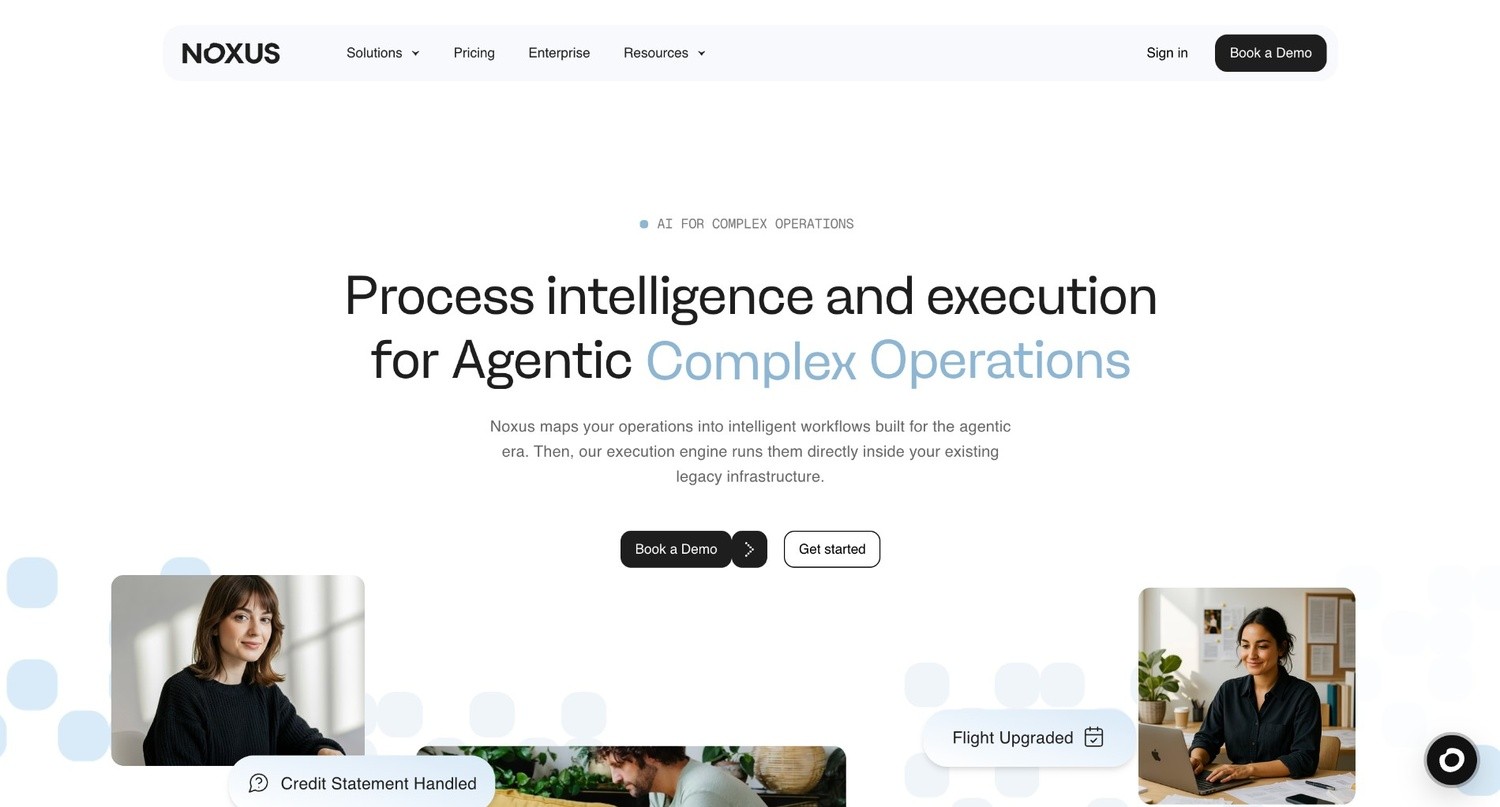
Noxus is the process intelligence layer: execution infrastructure that runs complex, multi-system operations end-to-end inside legacy enterprise environments.
Noxus addresses the core failure mode of enterprise AI programs: most tools; including process intelligence platforms like Celonis - identify where things break, but none of them fix it at scale.
The relationship between Celonis and Noxus is worth being direct about. Celonis excels at process discovery: extracting event logs, visualizing process flows, identifying deviations. Noxus picks up at the execution layer, going into the systems Celonis mines: SAP, Oracle, ServiceNow, Guidewire, and actually resolving the cases that process intelligence flagged as broken.
For organizations evaluating the best Celonis alternatives in 2026, it's worth separating two distinct needs: if you need to understand where your processes deviate, Celonis and its process mining peers remain relevant. If you need to fix those deviations at scale, Noxus is the execution layer.
We operate natively inside SAP ECC, Guidewire, COBOL-era cores, ServiceNow, Oracle, and proprietary platforms, no API modernization required.
Noxus handles unstructured inputs, applies business rules, executes actions, and writes outcomes back to source systems under full audit trail. Some renowned clients we’ve worked with previously include: Santander, Fidelidade, Jerónimo Martins, CUF/José de Mello, and Sky/Comcast.
With zero churn across all deployments and 3-5x ROI documented for most of these clients – we’ve firmly positioned ourselves as a top Celonis alternative in the market.
Ideal For
Enterprise operations teams that know where their process bottlenecks are and need AI to resolve them; not more visualization
Financial services and insurance operations handling high-volume, judgment-based case resolution: complaints, claims, billing disputes, account changes across legacy cores
Healthcare organizations processing patient and administrative communications at scale under GDPR Article 9 requirements
Retail and FMCG operations teams managing product catalog classification, enrichment, and PIM write-back across thousands of daily listings
Digital transformation leaders whose process improvement programs have identified automation targets but stalled on execution infrastructure
Top Features
End-to-end execution runtime: The execution runtime doesn't draft or suggest; it runs full operational workflows, performing multi-system lookups, applying business rules, writing outcomes back to source systems, and closing cases under audit. This is the execution layer that process intelligence platforms identify the need for but don't deliver.
Legacy system integration without APIs: Noxus connects to SAP ECC, Guidewire, ServiceNow, Oracle, COBOL-era cores, and proprietary platforms by navigating interfaces the way your operations teams do today. No API layer required, no middleware project; the same systems Celonis mines, now with AI executing the fixes.
Full audit trail and governance architecture: Every agent decision, action, and output is logged, traceable, and replayable. Business rules, not AI models determine regulated outcomes. Certified: SOC 2 Type II, ISO 27001, GDPR Article 28, HIPAA.
Flexible deployment with data sovereignty: Fully managed SaaS, self-managed VPC, or on-premises/air-gapped deployment. BYOK model routing across Azure AI Foundry, AWS Bedrock, and Google Vertex AI.
Deployment engineering included: First engagement includes deployment engineering alongside the platform license, while our first workflows go live in approximately 45-80 days on the client’s systems with live data.
Why We're the Best Celonis Alternative?
Celonis tells you that your accounts payable process has a 23% exception rate and that 15% of your invoices get stuck waiting for approval. Noxus resolves those exceptions.
That's not a rhetorical distinction. It's the operational gap that organizations encounter after years of process intelligence investment: they have detailed visibility into what's broken, and the same manual headcount fixing it. The insight layer and the execution layer are separate investments with separate vendors. Noxus is the execution layer.
Where Celonis requires event log extraction, model configuration, and ongoing analytical work to surface insights, we deploy AI co-workers onto the same legacy systems; in as few as 45 days, and they resolve the cases.
The Santander deployment handled complaints, billing disputes, and account changes across core banking, SAP, and CRM with 95% AI precision and 3x ROI. That's what happens after process mining tells you where the work is stuck.
For teams evaluating the best Celonis alternatives in 2026 on execution capability, legacy depth and production speed - Noxus delivers on all 3 fronts.
That’s not all, as European enterprises also get something extra: compliance that’s built-in, not bolted on. SOC2 Type II, ISO 27001, GDPR Article 28 and HIPAA are part of that architecture.
Similar is the case with deployment options designed specifically for the “EU AI Act”, DORA and NIS2, which in 2026, aren’t just “nice-to-have” for European enterprise procurement.
Pros
Executes end-to-end operational work across legacy systems with system write-back under governance
45-day production deployment on real client systems with live data; not a sandbox or process model
Full compliance architecture: SOC 2 Type II, ISO 27001, GDPR Article 28, HIPAA; structural, not contractual
Deployment engineering included in first engagement; no internal AI engineering team required
Zero churn across all clients, with 3–5x ROI documented across each of them.
Cons
Not a process mining or process intelligence tool: if your primary need is process discovery and visualization, Celonis and its peers answer that question better
Enterprise-focused pricing is not accessible for small teams, process analysts, or organizations whose primary need is reporting
Not designed for teams whose core requirement is BPMN modeling, process simulation, or conformance checking
Pricing
Pricing is usage-based; you pay for the operations completed, not for seats or subscriptions. The cost primarily scales along two dimensions: operational volume and deployment complexity.
First engagements include deployment engineering alongside the platform license. Contact Noxus for a custom quote based on your workflow scope and deployment environment.
Final Verdict
Noxus is the right choice for enterprise operations teams that have moved past process discovery and need AI to execute the improvements. For teams that have run process intelligence programs, identified their highest-impact automation targets, and now need an execution layer that works on legacy systems, Noxus is the logical next investment.
Not a fit for teams whose primary need is process analytics, visualization, or BPMN modeling.
2. Automation Anywhere

Overview
Automation Anywhere is one of the three dominant enterprise automation platforms, alongside UiPath and Blue Prism.
Its cloud-native Automation 360 platform combines traditional RPA with AI capabilities, document intelligence, and process discovery features that have evolved into a broader intelligent automation suite.
Its relevance as a Celonis alternative lies in its end-to-end positioning: the platform covers both the process discovery layer (through its AARI analytics and process intelligence features) and the execution layer (through cloud-native bots).
For organizations looking to consolidate process mining and automation execution into one vendor rather than maintaining separate Celonis and RPA contracts, Automation Anywhere presents a credible alternative.
AutomationAnywhere serves large enterprises across financial services, healthcare, manufacturing, and logistics - with a particularly strong track record in high-volume document processing and structured back-office automation.
Ideal For
Large enterprises that want to consolidate process intelligence and automation execution into a single vendor contract
Financial services and healthcare organizations with high-volume structured processes and moderate document processing needs
Organizations already on Automation Anywhere looking to reduce their separate Celonis analytics investment
Teams that need attended automation (bots assisting human workers) alongside process discovery
Top Features
Process discovery within the platform: Automation Anywhere includes process discovery capabilities alongside its bot execution layer, reducing the need for a separate process mining tool for teams primarily focused on identifying automation candidates.
Cloud-native architecture: Automation 360's SaaS-first design reduces infrastructure overhead compared to on-premise RPA and process mining stacks, making deployment faster for cloud-ready environments.
IQ Bot for document processing: Semi-structured document intelligence that adds AI reasoning to standard bot workflows, useful for invoice processing, purchase orders, and similar document-heavy operations.
AARI attended automation: Interface that lets bots assist human workers directly in their desktop environment, supporting hybrid human-bot workflows alongside process insights.
Why It's a Strong Celonis Alternative?
Automation Anywhere is one of the stronger top Celonis alternatives for organizations that want to move from process intelligence to automation execution without maintaining a separate Celonis contract.
While Celonis requires a separate execution layer, Automation Anywhere covers both process discovery and bot execution in one platform.
For teams whose process mining needs are primarily about identifying automation candidates rather than deep process analytics, this consolidation often makes commercial sense.
Pros
Combines process discovery and automation execution in one platform, reducing vendor overhead
Cloud-native architecture reduces infrastructure complexity vs. on-premise process mining stacks
Large enterprise track record and established support ecosystem
IQ Bot adds document intelligence beyond standard bot capabilities
Cons
Process mining capabilities are less deep than Celonis for complex, multi-variant process analysis
Custom pricing with total cost of ownership uncertainty similar to Celonis
Suffers from RPA's structural brittleness when enterprise UIs change unexpectedly
Developer dependency for complex automation buildout remains significant
Pricing
Automation Anywhere uses custom, usage-based pricing with a free trial. Contact the sales team for a custom quote based on requirements and use cases.
Final Verdict
Automation Anywhere is recommended for large enterprises that want to consolidate process discovery and automation execution in one platform rather than maintaining separate Celonis and RPA contracts.
It's a practical alternative to Celonis when deep process analytics are less critical than automation execution capability. Not a fit for organizations that specifically need Celonis-level process intelligence depth or genuinely complex unstructured input handling.
3. UiPath Process Mining
Overview
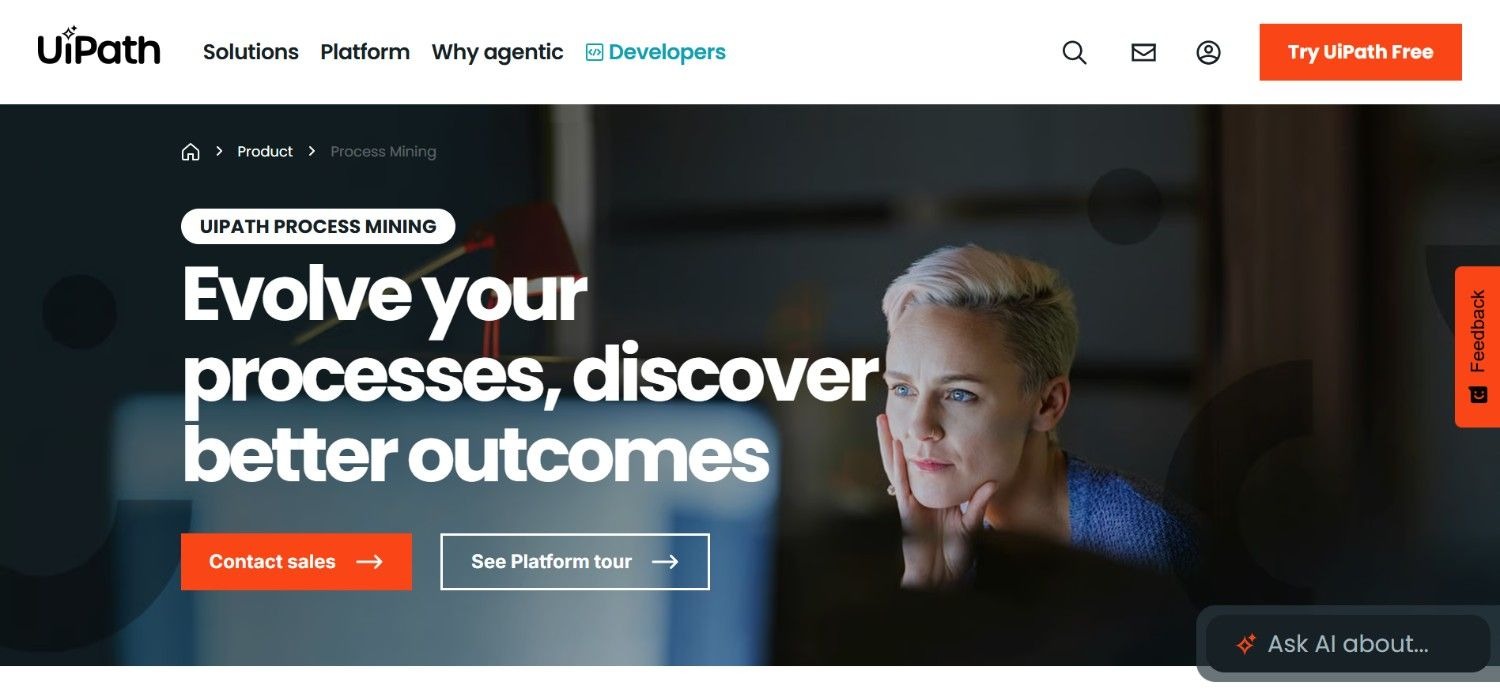
UiPath Process Mining is UiPath's native process intelligence layer, integrated directly into the UiPath platform.
Rather than a standalone process mining tool, it positions itself as the analytical complement to UiPath's automation execution capability, giving UiPath customers process insights without switching to a separate Celonis contract.
UiPath's acquisition of ProcessGold in 2019 brought dedicated process mining capability into the platform, and subsequent development has deepened the conformance checking, variant analysis, and bottleneck identification features that organizations use to prioritize automation candidates.
For organizations already invested in the UiPath ecosystem, UiPath Process Mining removes the need for a separate process intelligence platform and reduces the integration overhead of connecting Celonis event log insights to UiPath automation execution.
Ideal For
Organizations with existing UiPath automation deployments looking to add native process intelligence without a separate Celonis contract
Process excellence teams within UiPath customers that need conformance checking and variant analysis tied directly to automation execution
Large enterprises where consolidating process mining and automation under one vendor simplifies procurement and integration
IT and operations teams whose automation decisions are already tied to the UiPath deployment cycle
Top Features
Native UiPath integration: Process mining insights feed directly into UiPath automation workflows, removing the integration layer required when connecting Celonis to UiPath bots.
Conformance checking: Compare actual process execution against defined process models to identify deviations, compliance exposures, and non-standard variants at scale.
Variant analysis: Surface process variants across large event log datasets to understand how processes actually run compared to intended design.
Task mining component: Capture user interaction data at the desktop level to supplement system event logs with task-level granularity.
Why It's a Strong Celonis Alternative?
UiPath Process Mining is one of the stronger alternatives to Celonis for organizations already in the UiPath ecosystem.
While Celonis requires its own data extraction, modeling, and integration work to connect insights to execution, UiPath Process Mining is already connected to the execution layer.
For teams whose process mining needs are primarily about identifying and prioritizing automation candidates rather than deep independent process analytics, this integration simplifies the workflow considerably.
Pros
Native integration eliminates the Celonis-to-UiPath connection layer
Conformance checking and variant analysis at enterprise scale
Reduces vendor complexity for UiPath customers
Process insights tied directly to automation execution priorities
Cons
Limited value outside the UiPath ecosystem; switching execution platforms means losing the integration benefit
Process mining depth is generally considered less mature than Celonis for complex, multi-system analysis
Enterprise-focused, quote-based pricing without transparent starting rates
Pricing
UiPath's pricing is mostly enterprise-focused and quote-based. Plan options scale by users, robots, and deployment needs.
A lower entry tier exists for individuals or small teams, but larger use cases require contacting sales for a custom plan.
Final Verdict
UiPath’s Process Mining solution is recommended specifically for organizations already running UiPath automation who want to add process intelligence without a separate Celonis contract. It’s one of the most practical Celonis competitors for that specific context.
Not a fit for organizations on different automation platforms, teams that need Celonis-level process intelligence depth independent of an RPA execution layer, or organizations evaluating automation platforms from scratch.
4. IBM Process Mining
Overview
IBM Process Mining is IBM's entry into the process intelligence market, delivered as part of IBM's broader automation and AI portfolio.
Built on technology acquired through IBM's relationship with myInvenio (acquired in 2021), it provides process mining, variant analysis, simulation, and task mining capabilities with deep integration into the IBM Cloud Pak for Business Automation suite.
For IBM ecosystem organizations: those running IBM BPM, IBM Automation, or significant IBM middleware: IBM Process Mining reduces the complexity of connecting process intelligence to the execution stack.
IBM's global services and support network also provides implementation depth that pure-play process mining vendors often lack for highly complex global deployments.
Ideal For
Organizations deeply invested in IBM infrastructure and automation suites looking to keep process intelligence within the IBM stack
Large enterprises in regulated industries that benefit from IBM's compliance credentials and global services support
Process excellence teams within IBM customers that need process mining tied to IBM BPM execution workflows
Organizations requiring on-premises deployment with deep IBM support contracts
Top Features
IBM ecosystem integration: Native connections to IBM BPM, IBM Automation, and IBM Cloud Pak infrastructure reduce the integration overhead of process mining for IBM shops.
Process simulation: Simulate the impact of proposed process changes before implementation, allowing teams to model improvements against current baselines.
Task mining capabilities: Capture desktop-level interaction data alongside system event logs for more complete process intelligence, particularly in high-manual-touch processes.
On-premises and SaaS deployment options: Both SaaS and on-premises deployment paths satisfy different data residency and sovereignty requirements across IBM's global customer base.
Why It's a Strong Celonis Alternative?
IBM Process Mining is one of the stronger alternatives to Celonis for organizations where IBM infrastructure dominates the enterprise architecture.
Celonis requires separate connectors and integration work to connect to IBM systems, while IBM Process Mining is natively integrated.
For IBM-heavy enterprises seeking to consolidate process intelligence within their existing IBM relationship, it simplifies procurement significantly.
Pros
Native IBM ecosystem integration reduces connection overhead for IBM infrastructure environments
On-premises deployment option satisfies data residency requirements
IBM global services support for complex global implementations
Process simulation adds planning capability beyond standard process visualization
Cons
High starting price: $4,250/month for SaaS and $2,885/month for on-premises
Limited value outside the IBM ecosystem
IBM procurement cycles can be slow; the buying process adds overhead
Less accessible to mid-market organizations or teams without IBM infrastructure
Pricing
IBM Process Mining starts at USD 4,250/month for SaaS and USD 2,885/month for on-premises.
These figures reflect indicative published rates and may vary by region, contract structure, and current IBM pricing. Verify directly with IBM before using it in a business case.
Final Verdict
IBM Process Mining is recommended for enterprises deeply invested in IBM infrastructure that want to keep process intelligence within the IBM stack.
The starting price makes it difficult to justify for organizations without significant IBM infrastructure or committed IBM relationships.
Not a fit for teams looking for accessible, affordable process intelligence or organizations on non-IBM automation stacks.
5. SAP Signavio Process Intelligence

Overview
SAP Signavio Process Intelligence is SAP's dedicated process mining and intelligence capability, acquired when SAP purchased Signavio in 2021.
It provides process mining, process design, business process management, and journey modeling within the SAP ecosystem, targeting organizations that run core operations on SAP S/4HANA, SAP ERP, and related SAP platforms. For SAP-heavy organizations, the integration depth is its primary differentiator.
Connecting Celonis to SAP requires significant data extraction and connector configuration; SAP Signavio Process Intelligence is natively embedded in the SAP data layer, reducing that overhead and providing out-of-the-box process visibility for SAP processes.
Ideal For
Organizations running heavily on SAP S/4HANA or SAP ERP that want native process intelligence tied to their SAP investment
SAP customers looking to reduce the integration complexity of connecting Celonis to their SAP event log data
Process transformation teams driving SAP migration projects that need process mining to understand current-state SAP processes
Enterprises seeking process design and mining in one SAP-native tool for end-to-end process management
Top Features
SAP-native process mining: Directly extracts and analyzes event log data from SAP systems without the connector configuration that Celonis and other independent process mining tools require.
Journey modeling: Map and visualize end-to-end customer and process journeys across SAP-driven workflows, connecting process data to business outcome modeling.
Collaboration layer: Shared process repositories and team collaboration features allow process design and mining results to be shared across business and IT teams.
SAP ecosystem integration: Native connections to SAP workflow execution, allowing process mining insights to feed back into SAP-based automation.
Why It's a Strong Celonis Alternative?
SAP Signavio Process Intelligence is one of the strongest top Celonis alternatives for organizations whose operations are primarily SAP-driven. While Celonis requires extraction connectors and separate infrastructure, SAP Signavio is embedded in the SAP data layer.
For SAP S/4HANA customers in particular, the reduction in integration overhead is a meaningful practical advantage that often justifies the platform switch.
Pros
Native SAP integration dramatically reduces event log extraction and connector configuration effort
Strong SAP-specific starter content and process templates for common SAP processes
Combines process mining and process design in one SAP-native platform
Single-vendor SAP relationship simplifies procurement and support
Cons
Limited value outside SAP environments; poor fit for multi-vendor or non-SAP stacks
Custom pricing with no publicly listed rates; significant procurement engagement required
Complex initial onboarding for organizations migrating from standalone process mining tools
Less analytical depth for non-SAP processes or cross-system workflows
Pricing
SAP Signavio doesn't list public pricing; it asks you to request a custom quote. Editions include Classic, Enterprise, and Enterprise Plus. A demo is available on request.
Final Verdict
SAP Signavio Process Intelligence is recommended for SAP-heavy enterprises that want native process intelligence within their SAP investment. It's the most practical alternative to Celonis for organizations where the primary process data lives in SAP.
Not a fit for organizations with diverse, multi-vendor technology stacks or teams that need process mining across non-SAP systems.
6. ABBYY Timeline
Overview
ABBYY Timeline is a process intelligence platform developed by ABBYY, a company historically known for its document processing and OCR capabilities.
Timeline extends that document intelligence heritage into process mining, adding task mining at the desktop interaction level alongside traditional event log-based process mining.
Its differentiation from pure-play process mining tools is the combination of process-level and task-level intelligence: where Celonis primarily mines system event logs to understand process flows, ABBYY Timeline also captures how individual users interact with systems at the task level, providing more granular visibility into the human work within processes.
This combination makes ABBYY’s Timeline platform particularly effective for document-intensive processes where understanding how employees handle documents across systems is as important as understanding the system-level process flow.
Ideal For
Organizations with document-heavy processes where task-level interaction data provides important additional context beyond system event logs
Process excellence teams that need to understand both process-level flows and the human tasks within them
Healthcare, financial services, and insurance teams with compliance-sensitive document workflows that benefit from task mining granularity
Organizations evaluating automation candidates for RPA that need task-level data to define bot requirements precisely
Top Features
Combined process and task mining: Captures both system event log data (process mining) and desktop interaction data (task mining) in one platform, providing more complete operational visibility than event-log-only tools.
Timeline visualization: Visual process flow representations that show process paths, timing, and deviations across large event log datasets with intuitive navigation.
NLP-based process discovery: Natural language processing capabilities help extract process-relevant data from unstructured data sources alongside structured event logs.
Simulation capabilities: Model the impact of proposed process changes before implementation to validate improvement hypotheses against current-state data.
Why It's a Strong Celonis Alternative?
ABBYY Timeline is one of the stronger alternatives to Celonis for organizations where document-intensive processes form the core of what needs to be mined and improved.
While Celonis focuses on system event logs, ABBYY Timeline adds the desktop task layer; making it a more complete picture for organizations where a significant portion of process complexity happens in how people handle documents across systems.
Pros
Unique combination of process mining and task mining in one platform
Strong heritage in document intelligence adds depth for document-heavy processes
Timeline visualization provides intuitive process flow navigation
NLP capabilities extend process discovery beyond structured event logs
Cons
Yearly Business Subscription model requires annual commitment; Enterprise customers need a separate quote
Less established than Celonis in mainstream enterprise process mining deployments
Task mining adds value primarily for document-heavy processes; less relevant for structured, system-driven workflows
Implementation complexity increases with both process and task mining data sources
Pricing
ABBYY Timeline uses a yearly Business Subscription, auto-renewed after one year. Enterprise customers require a separate quote.
Business licenses include upgrades and patches. Enterprise adds a higher support level for an additional fee.
Final Verdict
ABBYY Timeline is recommended for organizations with document-intensive processes where understanding how people handle documents at the task level is as important as system-level process flows.
It's a strong alternative to Celonis for that specific context. Less suitable for organizations whose process mining needs are primarily system-event-log-based without significant desktop task capture requirements.
7. ARIS Process Mining
Overview
ARIS Process Mining is developed by Software AG, one of the longest-established enterprise process management vendors. The platform has a 30+ year history in business process management and process modeling; its process mining capability extends that heritage into data-driven process intelligence.
What distinguishes ARIS from pure-play process mining tools is the combination of process design (BPMN modeling, process architecture management) with process mining analytics.
Organizations can design how processes should run in the ARIS modeling environment and then compare actual execution data against that design, creating a closed loop between process design and process reality.
Ideal For
Large enterprises with existing ARIS process design and modeling investments looking to extend into data-driven mining
Organizations that need both BPMN process design and process mining in a single platform under one vendor
Process architecture teams responsible for both defining process standards and measuring operational adherence to them
Enterprise process transformation programs that need process mining tied to formal process governance frameworks
Top Features
Integrated process design and mining: Design processes using BPMN in the ARIS modeling environment, then mine execution data against those designs to measure conformance and identify deviations.
Process architecture management: Hierarchical process repository that manages process landscapes from strategic level down to task level, giving context to mining insights within broader process governance.
Conformance analysis: Measure how actual process execution deviates from designed models at scale, supporting both continuous improvement and compliance monitoring.
Software AG integration ecosystem: Connection to the broader Software AG portfolio including webMethods integration, expanding process mining into broader enterprise architecture contexts.
Why It's a Strong Celonis Alternative?
ARIS Process Mining is one of the stronger Celonis competitors for organizations that need process design and process mining in one platform under formal process governance.
While Celonis is primarily a mining-first platform, ARIS brings a richer process design layer that organizations with mature process governance requirements often need alongside mining analytics.
Pros
Unique combination of BPMN process design and process mining in one platform
Strong heritage in enterprise process management and process architecture
Conformance analysis ties execution data to formal process designs
Software AG integration ecosystem extends applicability across enterprise architecture
Cons
Custom, quote-based pricing; generally expensive at enterprise scale
Heavy implementation overhead; significant configuration and consulting engagement required
Less focused on pure process mining analytics compared to Celonis; design layer adds complexity for teams that only need mining
Software AG ecosystem dependency for full value
Pricing
ARIS Process Mining, developed by Software AG, uses a custom, quote-based pricing model. Pricing is highly scalable and tailored to organization size, number of users, and volume of data processed.
Final Verdict
ARIS Process Mining is recommended for large enterprises that need formal process design and process mining together within a process governance framework. It's a strong alternative to Celonis for organizations with mature process architecture programs.
Not well-suited for teams that need pure process mining analytics quickly, or organizations without existing process governance infrastructure.
8. Apromore
Overview
Apromore is a process mining platform with both an open-source Community edition and a commercial Enterprise offering.
Originally developed from academic research in Australia and Italy, it has built a reputation in both higher education and enterprise settings as a technically rigorous process mining tool with strong simulation capabilities.
The open-source foundation makes Apromore accessible for academic institutions, smaller organizations, and teams that want to evaluate process mining before committing to commercial licensing.
Ideal For
Academic institutions and research teams that need an open-source process mining tool with strong analytical depth
Organizations that want to evaluate process mining capabilities before committing to commercial licensing at Celonis or SAP Signavio price points
Process excellence teams with technically sophisticated analysts that want depth of simulation and conformance checking without vendor lock-in
Mid-market organizations looking for a commercial process mining platform at a lower entry point than Celonis enterprise contracts
Top Features
Open-source Community edition: Free access to core process mining capabilities, providing a low-cost entry point for organizations evaluating process intelligence.
Advanced simulation: Sophisticated process simulation capabilities allow teams to model the impact of process changes under different resource and demand scenarios.
Predictive monitoring: Machine learning-based predictions of process outcomes, identifying cases likely to deviate or miss SLAs before they do.
Multi-perspective analysis: Analysis of processes across time, resources, and compliance dimensions simultaneously for richer process intelligence.
Why It's a Strong Celonis Alternative?
Apromore is one of the more practical alternatives to Celonis for organizations that need rigorous process mining without Celonis-level enterprise pricing.
Its open-source entry point makes it accessible for evaluation, and its Enterprise edition provides production-ready commercial capabilities at a price point that’s significantly more accessible than Celonis for mid-market organizations.
Pros
Open-source Community edition provides free access for evaluation and smaller-scale use
Strong simulation and predictive monitoring capabilities
Technically rigorous analytical depth with academic foundation
More accessible pricing potential for mid-market vs. Celonis enterprise contracts
Cons
No publicly advertised pricing; capacity-based custom subscription model requires direct engagement
Smaller ecosystem, fewer integrations, and less enterprise pre-built content than Celonis
Implementation and configuration requires technical process mining expertise
Less established in large enterprise environments; fewer reference customers at that scale
Pricing
Apromore has no publicly advertised pricing plans. It uses a capacity-based subscription model tailored to specific operational needs.
Contact the sales team for a custom quote. The open-source Community edition is available at no cost.
Final Verdict
Apromore is recommended for academic institutions, technically sophisticated process teams, and mid-market organizations looking for rigorous process mining at a potentially more accessible price point than Celonis.
Not a fit for organizations that need extensive enterprise pre-built content, large-scale support infrastructure, or process intelligence embedded in SAP or IBM ecosystems.
9. Appian
Overview
Appian is a low-code automation and business process management platform that added process mining capabilities to its suite, positioning itself as a platform that covers the full process improvement lifecycle: discover (process mining), design (low-code application development), automate (workflow automation and AI), and optimize (continuous monitoring).
Where Celonis is primarily a process intelligence tool, Appian is primarily a process automation platform with a process mining layer.
Its value proposition to Celonis evaluators is the promise of end-to-end process improvement under one platform; from mining existing processes to building and deploying automated replacements without switching vendors.
Appian serves organizations in financial services, government, healthcare, and insurance with a strong focus on regulated industries and compliance-sensitive processes.
Ideal For
Organizations that want a single platform covering process mining, low-code application development, and workflow automation without separate vendor relationships
Financial services, government, and healthcare teams that need compliant process automation alongside process intelligence
Process transformation teams that want to design and deploy automated process replacements from the same platform that identified the improvement opportunity
Mid-to-large enterprise teams that need accessible, non-developer low-code automation building alongside process analytics
Top Features
Integrated process mining and automation: Appian's process mining layer feeds directly into its low-code automation builder, closing the insight-to-execution gap within one platform.
Low-code application development: Build process automation applications without deep developer resources, making process improvement accessible to business teams.
AI capabilities within workflows: Embedded AI features for document processing, decision automation, and intelligent routing within automated workflows.
SOC 2 and enterprise compliance: Compliance certifications and security controls that satisfy regulated industry procurement requirements.
Why It's a Strong Celonis Alternative?
Appian is one of the stronger alternatives to Celonis for organizations that want process intelligence and automation execution in one platform, particularly in regulated industries.
While Celonis requires a separate execution layer, Appian's low-code builder and workflow automation capabilities provide a path from process insight to deployed automation without switching vendors.
For teams whose process mining primarily serves to identify automation candidates, this consolidation reduces implementation complexity.
Pros
Single platform from process mining to automated workflow deployment reduces vendor complexity
Low-code approach makes process automation accessible to business teams without developer-heavy implementation
SOC 2 and enterprise compliance controls for regulated industries
Free trial available for evaluation before commitment
Cons
Process mining depth is less mature than Celonis for complex, multi-variant analytical requirements
Quote-based pricing that scales by user, app, and feature tier can become expensive at large scale
Significant implementation effort required to realize full platform value
Less suitable for organizations whose primary need is deep process intelligence analytics independent of automation
Pricing
Appian's pricing is mostly quote-based, with a free trial available. Plans described as Standard, Advanced, and Premium scale by user, app, and feature tier.
Pricing is designed to scale for enterprise use. Contact sales for a specific quote.
Final Verdict
Appian is recommended for organizations in regulated industries that want process mining and low-code automation execution in one platform.
It's a practical alternative to Celonis for teams whose process mining primarily serves to identify automation candidates that Appian can then help build and deploy.
Not a fit for teams that need Celonis-level process analytics depth independent of automation execution.
10. Scribe Optimize
Overview
Scribe Optimize is the process documentation and workflow mapping layer of the Scribe platform.
While traditional process mining tools like Celonis extract event logs from enterprise systems to map how processes actually run, Scribe Optimize captures how processes should run by recording and documenting standard operating procedures, creating AI-powered process documentation from screen recordings and workflow captures.
It occupies a distinct, narrower position in the market: positioning as an accessible, affordable process documentation software versus data-intensive process mining.
For teams that need to document, standardize, and share process knowledge rather than mine event log data for analytical insights, Scribe Optimize covers that scope at a fraction of the cost and complexity of Celonis.
Ideal For
Operations and training teams that need fast, accessible process documentation and SOP creation without enterprise process mining infrastructure
Organizations documenting processes for compliance, onboarding, or knowledge management rather than analytical process improvement
Mid-market teams that need to capture and standardize how processes run before investing in formal process intelligence tools
Teams transitioning to new systems that need to document current-state processes quickly
Top Features
AI-powered SOP generation: Scribe automatically generates step-by-step process documentation from screen recordings, creating SOPs that would previously take hours to write manually.
Workflow capture and documentation: Record how processes actually run at the user interaction level and convert those recordings into shareable, editable process documentation.
Optimize layer: Identifies inconsistencies and variations in documented processes, surfacing standardization opportunities and efficiency gaps in the captured workflows.
Accessible sharing: Export process documentation as PDFs, embed in wikis, or share via direct links, making process knowledge accessible across the organization.
Why It's a Strong Celonis Alternative?
Scribe Optimize is one of the more practical top Celonis alternatives for organizations whose process intelligence need is primarily around documentation and standardization rather than data-driven process analytics.
For teams that found Celonis's cost and complexity difficult to justify for their process documentation requirements, Scribe Optimize covers that narrower scope at dramatically lower cost and with minimal implementation overhead.
Pros
Free plan available; Pro starts at $17/month per seat; dramatically more accessible than Celonis pricing
AI-powered SOP generation requires minimal technical expertise; accessible to any team
Fast time to value; process documentation can begin immediately after setup
Useful for compliance documentation, onboarding, and knowledge transfer
Cons
Not a process mining tool: doesn't extract or analyze enterprise system event logs
No conformance checking, variant analysis, or process flow simulation
Limited analytical depth: documentation and standardization, not data-driven process intelligence
Not suitable for the complex, multi-system process analytics that Celonis serves
Pricing
Scribe has a free Basic plan, a Pro Personal plan at $17/month per seat, and a Pro Team plan at $35/month per seat.
It's a tiered model, so costs rise based on team size and advanced features.
Final Verdict
Scribe Optimize is recommended for teams that need process documentation, SOP creation, and workflow standardization at an accessible price point.
It's a practical alternative to Celonis for organizations whose process intelligence needs are primarily around knowledge capture and documentation rather than data-driven mining and analytics.
Not a fit for organizations needing event log analysis, conformance checking, or the deep process intelligence that Celonis delivers.
Why Noxus Works Across Multiple Use Cases?
Noxus for Financial Services Operations (After Process Mining)
Process intelligence programs in financial services typically identify the same pattern: high-volume case types: complaints, billing disputes, account changes; have exception rates of 15-25%, and those exceptions consume a disproportionate share of operations headcount because they require multi-system navigation that no existing automation handles.
Celonis maps that pattern precisely. Noxus resolves it. At Santander, Noxus executed end-to-end case resolution across core banking, SAP, CRM, and email with 95% AI precision and 3x ROI, live in production in 45 days.
The process intelligence told them where the bottlenecks were; the AI co-workers removed them. For operations leaders ready to move from process insight to workflow automation that executes on live systems, this is what production deployment looks like.
Noxus for Healthcare Communication Triage
Healthcare process mining programs frequently identify patient communication as a high-volume, high-manual-cost process with significant variation in handling across teams and regions. The analysis is accurate.
But the execution challenge: automating unstructured communications across legacy clinical systems under GDPR Article 9, is exactly where process mining tools hand off to the execution layer.
Noxus processed 10,000+ communications per month at CUF/José de Mello with 96% precision and full GDPR Article 9 compliance from day one.
No AI model makes clinical or compliance-relevant decisions; business rules execute that logic. Process intelligence identified the opportunity; we executed the resolution.
Noxus for Retail Catalogue Operations
Retail and FMCG process mining programs routinely flag product catalog operations as a bottleneck: classification, enrichment, pricing updates, and PIM write-back create a manual queue that grows faster than team capacity.
The bottleneck is visible in the process of mining data. The fix requires an execution layer that connects to PIM systems and marketplace APIs.
At Jerónimo Martins, Noxus automated 15,000+ daily listings across classification, enrichment, pricing recommendations, and direct PIM write-back with 90% precision and 5x ROI.
The process mining identified the bottleneck; the AI co-workers cleared it.
Noxus for Financial Back-Office and Reconciliation
Back-office reconciliation: vendor invoice matching, compliance validation, document extraction across SAP, Oracle, and SharePoint; appears consistently in enterprise process mining analyses as a high-cost, high-error-rate manual workflow.
The event log analysis shows the process clearly. Executing the fix requires an automation layer that reaches into legacy ERP systems without requiring API development.
Noxus handles multi-system document extraction, applies matching logic, validates compliance, and writes results back to ERP records with full audit trail.
The operations that process mining flagged as inefficient becomes an automated workflow with complete traceability.
Noxus for IT Service Management Optimization
IT service management teams frequently use process mining to analyze ticket lifecycle data and identify where classification and routing add the most delay. The analysis is well-supported by Celonis and its peers. The execution: automating ticket triage and routing across ServiceNow, Jira, and Outlook, requires a different tool.
Noxus auto-triages and routes service tickets across platforms, compressing the classification and handoff steps that process mining identified as the primary source of resolution delay. Process intelligence identifies the bottleneck, while the AI co-workers remove it.
Teams evaluating the best workflow automation software for ITSM execution will find that the gap between insight and action is where the real ROI lives.
What Makes a Good Celonis Alternative?
1. Clarity on What Problem You're Actually Solving
Celonis solves a process intelligence problem: it maps how your processes actually run and identifies where they deviate from how they should run.
A genuine alternative needs to solve a related problem in your specific context; whether that's execution automation (Noxus), integrated RPA + mining (Automation Anywhere), SAP-native intelligence (SAP Signavio), or process documentation (Scribe).
Selecting an alternative requires being precise about which problem you're solving.
2. Real Execution Capability, Not Just Analytics
The most common gap organizations identify after implementing process intelligence is the action gap: they can see the problem clearly, but the tool that identified it doesn't fix it.
A genuine alternative to Celonis for organisations whose primary frustration is that gap should provide execution capability that closes cases, writes back to source systems under a full audit trail, and measures outcomes - not just maps process flows.
The distinction matters: execution means the AI Co-worker performs the action inside the system of record, not drafts a response for a human to action.
3. Legacy System Reach That Matches Your Actual Infrastructure
Process mining tools extract data from enterprise systems. The systems those event logs come from are often the same legacy platforms that need to be automated: SAP ECC, Oracle, COBOL-era cores, Guidewire.
An alternative that can only connect to modern, API-accessible systems will hit the same wall Celonis does when trying to move from insight to execution in those legacy environments.
4. Compliance Architecture for Regulated Industries
For financial services, healthcare, and insurance, compliance requirements are procurement requirements. SOC 2 Type II, HIPAA, GDPR Article 28, ISO 27001, air-gapped deployment options, and full audit trail replayability need to be architectural design decisions in any alternative, not add-ons or contractual assertions.
In 2026, EU AI Act compliance readiness, DORA (Digital Operational Resilience Act), and NIS2 obligations add further structural requirements for European enterprise deployments.
Any platform that treats these as contractual checkboxes rather than deployment architecture is a liability risk, not a solution.
5. Total Cost of Ownership That Justifies the Investment
Celonis's licensing structure makes it difficult to justify for organizations that can't generate clear, measurable ROI from process analytics.
A good alternative should offer pricing tied to value delivered: either accessible entry points for analytics tools, or usage-based execution pricing that scales with operational results rather than data volume or user seats.
How to Choose the Right Celonis Alternative for Your Needs?
1. Define Whether You Need Intelligence, Execution, or Both
If your primary need is understanding where processes deviate (intelligence), Celonis competitors like IBM Process Mining, SAP Signavio, ABBYY Timeline, Apromore, and ARIS are the right category.
If your primary need is executing the improvements that process analysis identified (execution), Noxus and Automation Anywhere serve that scope.
Conversely, if you need both in one platform; Appian and Automation Anywhere cover that middle ground.
2. Audit Your Existing System Infrastructure
The systems your event logs come from are likely the same systems that need to be automated.
Evaluate whether any candidate alternative can reach those systems directly: SAP Signavio for SAP-native process discovery, IBM Process Mining for IBM shops, Noxus for the execution layer across mixed or multi-vendor stacks, including: SAP, Oracle, Guidewire, ServiceNow, and COBOL-era cores; all without requiring API modernisation as a prerequisite.
For organisations running heterogeneous legacy environments, no single-ecosystem tool reaches everything; Noxus operates across all of them.
3. Quantify the Celonis Cost-to-Value Gap
If Celonis licensing is expensive relative to the operational improvement being realized, identify whether the gap is in the analytics layer (the insights aren't being acted on) or the execution layer (the insights are good, but there's no automated action).
The answer determines which category of alternative addresses the problem.
4. Define Your Compliance Requirements Before Shortlisting
Regulated industries require compliance architecture that is structural, not contractual.
Air-gapped deployment, GDPR Article 28 structural compliance, SOC 2, ISO 27001, full audit trail replayability; these need to be requirements before vendor evaluation begins, not questions raised during commercial negotiation.
5. Verify Production Deployment Speed with Named References
Process mining and analytics tools can demonstrate value in proof-of-concept. Execution automation needs to demonstrate production deployment speed on real systems with real data.
Ask every execution-focused vendor for named client references and documented production timelines; vendor-cited case studies with specific organizations, timelines, and ROI metrics are a more reliable signal than demo performance.
Everything You Need to Know About Celonis Alternatives in 2026
← scroll →
| Category | Key Considerations |
|---|---|
| Top 3 Alternatives |
Noxus
Automation Anywhere
SAP Signavio
AI operations execution after process discovery · Combined process mining and RPA execution · SAP-native process intelligence
|
| Best Overall Option | Noxus picks up where Celonis leaves off — executing end-to-end operations on the same legacy systems Celonis mines, with 45–80 day production deployment and zero churn across all clients. |
| Why Look for Celonis Alternatives? | Celonis identifies process bottlenecks but doesn't execute the fixes; high licensing cost is difficult to justify without clear execution-layer ROI; significant implementation overhead; action gap between process insight and operational change. |
| How to Choose? | Define whether you need intelligence, execution, or both; audit your system infrastructure; quantify the cost-to-value gap; define compliance requirements before shortlisting. |
| Price Range | Free (Scribe Basic, Apromore Community edition) to enterprise contracts (SAP Signavio, IBM Process Mining from $2,885/month); Noxus usage-based from £1,500/month; most tools use custom enterprise pricing. |
| Ease of Switching | Switching varies significantly: SAP Signavio and IBM Process Mining require data migration but within familiar ecosystems; execution platforms like Noxus require structured deployment but deliver production results in 45–80 days. |
| Must-Have Features | For process intelligence: event log extraction, conformance checking, variant analysis. For execution: legacy system connectivity, end-to-end case resolution, structural compliance architecture. For both: clear ROI framework before commitment. |
| Mistakes You Shouldn't Make | Choosing a process mining alternative without distinguishing intelligence from execution needs; selecting an execution platform that can't reach your actual legacy systems; underestimating Celonis implementation overhead when projecting alternative TCO. |
Ready to Move On from Celonis? Try Noxus
Process intelligence tells you where your operations are broken. Noxus fixes them.
Noxus executes end-to-end operations on the same legacy systems Celonis mines - SAP ECC, Guidewire, ServiceNow, Oracle - resolving complaints, claims, billing disputes, and document-heavy workflows without API modernization, without infrastructure migration, and without a separate execution layer investment.
Every action is audited. Every decision is replayable. Your data stays on your infrastructure if that's what compliance requires. The first deployment goes live in 45 days on your actual systems, with your actual operational data, depending on the scope. Subsequent use cases deploy at 85–90% platform margin because the infrastructure is already running.
Noxus is built for enterprise operations teams in financial services, insurance, healthcare, retail, and logistics who have mapped the bottlenecks and now need an execution layer that resolves them.
FAQs About Best Celonis Alternatives in 2026
What is Celonis used for?
Celonis is used as a process intelligence platform that extracts and analyzes event log data from enterprise systems - SAP, Oracle, ServiceNow, and others - to create a digital twin of how business processes actually run. It identifies process deviations, conformance failures, bottlenecks, and inefficiency patterns across complex multi-system workflows. Celonis was founded in Munich in 2011, pioneered process mining as a category, and now serves over 2,000 global customers. Its licensing is subscription-based, with pricing that scales by data volume, users, and feature tier.
What are the best Celonis alternatives in 2026?
The best Celonis alternatives in 2026 are Noxus (for AI operations execution on the systems Celonis mines), Automation Anywhere (for combined process intelligence and RPA execution), SAP Signavio Process Intelligence (for SAP-native process mining), IBM Process Mining (for IBM ecosystem organizations), and Apromore (for rigorous process analytics at a potentially more accessible price point). The right choice depends on whether your primary need is process intelligence, execution automation, or both in a single platform.
What features should I look for in a Celonis alternative?
For process intelligence alternatives: event log extraction from your specific systems, conformance checking, variant analysis, and process simulation. For execution-focused alternatives: legacy system connectivity without API prerequisites, end-to-end case resolution with system write-back, structural compliance architecture, and production deployment speed on real systems. For alternatives that cover both: process mining depth, automation execution capability, and a clear path from insight to deployed improvement within one platform.
How to choose the best Celonis alternative for your needs?
To choose the best alternative to Celonis, first define whether you need process intelligence, execution automation, or both. Then audit your system infrastructure. SAP-heavy organizations should evaluate SAP Signavio, IBM shops should evaluate IBM Process Mining, legacy-heavy operations organizations should evaluate Noxus. Quantify the Celonis cost-to-value gap: if the insights are not being acted on, the execution layer is the missing investment. Define compliance requirements before shortlisting and ask every vendor for named client references with documented production timelines.
Is it easy to switch from Celonis to an alternative?
Moving away from Celonis really depends on your next destination. If you choose another mining tool like SAP Signavio, expect some setup work with data connectors. On the other hand, if you’re looking to actually execute fixes, a platform like Noxus involves a structured rollout but gets you live results in just 45-80 days. Ultimately, it’s about identifying your goal: if you’re adding execution capabilities to your current insights, it’s an upgrade rather than a total replacement. Plus, Noxus has never lost a production client - a reassuring sign for anyone worried about long-term stability.
Can Noxus replace Celonis as a process mining tool?
Actually, Noxus is the execution layer that finishes what Celonis starts. While Celonis is great at mining your logs to show you where things are breaking, it doesn’t actually fix them. That’s where Noxus comes in, running the process intelligence layer directly inside the same systems to resolve the issues Celonis's process mining flags.
What is process mining and why do companies use it?
Process mining analyzes event log data from systems like SAP to map exactly how your business processes actually run, often revealing hidden deviations. Companies use this technique to pinpoint bottlenecks, compliance failures, and prime candidates for automation. While Celonis pioneered this approach and leads the market, remember that process mining only delivers the insights; it doesn't execute the fix. Therefore, organizations typically pair these results with an execution automation tool so they can actually resolve the problems identified.